
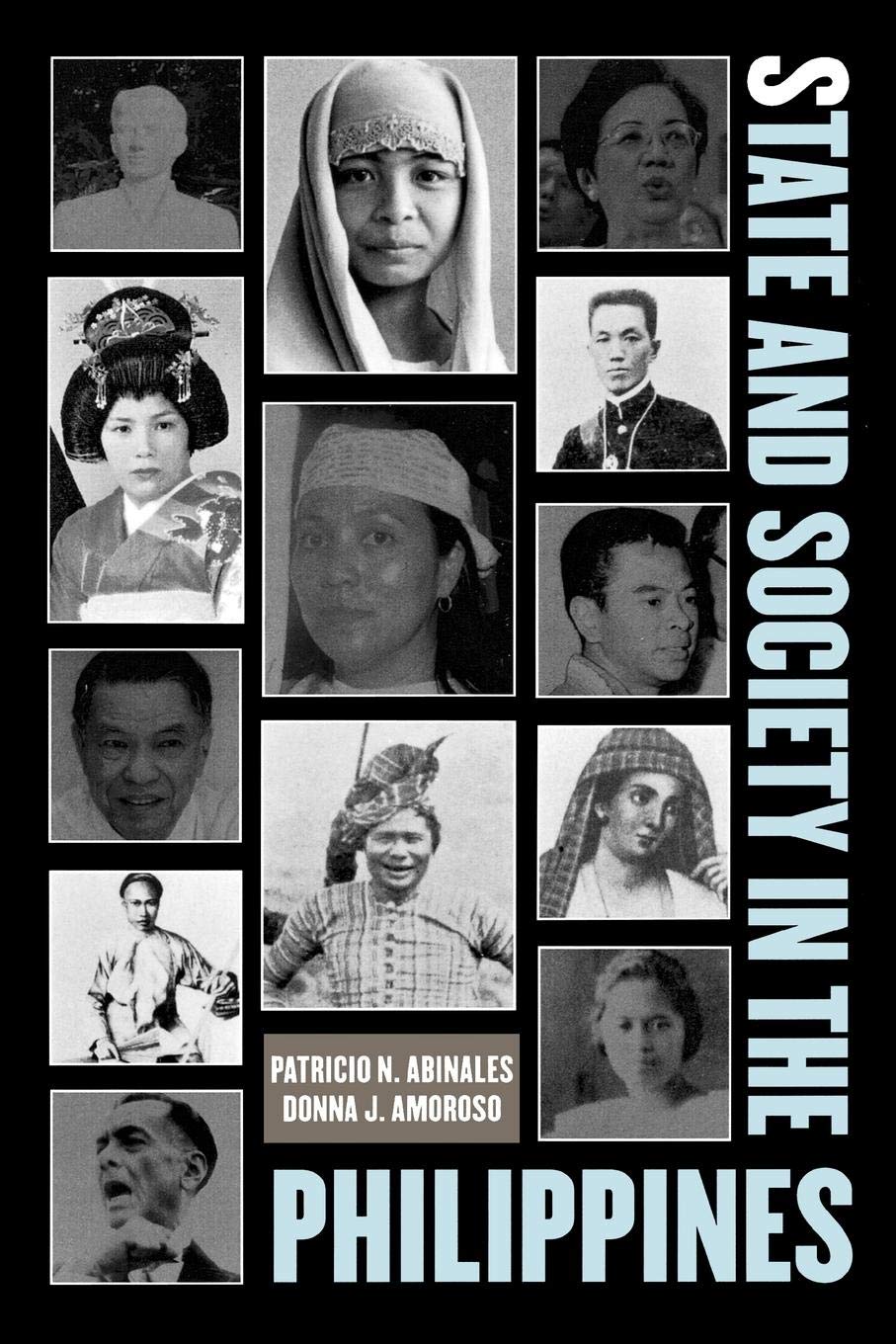
Title
State and Society in the Philippines (State & Society East Asia),Used
Sold by Ergodebooks, an authorized reseller.
Returns accepted within 30 days | support@ergodebooks.com
Shipping Information
- Free Standard Shipping — United States only
- Processing Time: 3–5 business days
- Estimated Delivery: 6–10 business days after dispatch
- Double-boxed, fully insured & discreetly packaged
- Tracking number sent via email once dispatched
Returns & Refund
Returns accepted within 30 days of delivery.
Damaged or Defective Item
Free return shipping + replacement or full refund
Wrong Item Received
Free return shipping + replacement or full refund
Change of Mind
Return shipping at customer's expense · 25% restocking fee applies
Payment Option

People in the Philippines routinely vote, run for office, organize social movements, and call for good governance by the state. Why, then, is there a recurring statesociety dilemma in the Philippines? One horn of the dilemma is the persistent inability of the state to provide basic services, guarantee peace and order, and foster economic development. The other is Filipinos' equally enduring suspicion of a strong state. The idea of a strong Republic evokes President Marcos' martial law regime of the 1970s and 1980s, which spawned two armed rebellions, cost thousands of lives in repression and billions of dollars in corruption, set the nation back years in economic development, and exacerbated suspicion of the state. This dilemma stimulates thinking about the puzzle of state resilience: How has a 'weak state' maintained the territorial integrity of the Philippines in the postwar period in the face of two major rebellions and an armed separatist movement, corruption, mismanagement, intractable poverty, weak sovereignty, and an often chaotic electoral system? Why does the inability to collect taxes, secure citizens' lives and property, and maintain economic infrastructure not result in state failure? State and Society in the Philippines engages the dilemma of statesociety relations through a historical treatment of state formation and the corresponding conflicts and collaborations between state leaders and social forces. It examines the long history of institutional state weakness in the Philippines and the efforts made to overcome the state's structural fragility and strengthen its bond with society. It answers these difficult questions by focusing on how the state has shaped and been shaped by its interaction with social forces, especially in the rituals of popular mobilization that have produced surprising and diverse results.
⚠️ WARNING (California Proposition 65):
This product may contain chemicals known to the State of California to cause cancer, birth defects, or other reproductive harm.
For more information, please visit www.P65Warnings.ca.gov.
- Q: How many pages does the book have? A: The book has three hundred thirty-six pages. It's a comprehensive exploration of state-society relations in the Philippines.
- Q: What is the binding type of this book? A: This book is paperback bound. This makes it lightweight and flexible for easy handling.
- Q: What are the dimensions of the book? A: The book measures six inches wide by nine inches tall and is three-fourths of an inch thick. These dimensions make it portable for reading.
- Q: Who is the author of 'State and Society in the Philippines'? A: The author is Patricio N. Abinales. He provides a detailed analysis of the political landscape in the Philippines.
- Q: What genre does this book fall under? A: This book falls under the genre of social science and political studies. It specifically focuses on the Philippines' state and society dynamics.
- Q: Is this book suitable for beginners? A: Yes, this book is suitable for readers new to Philippine politics. It provides a thorough introduction to complex themes in an accessible manner.
- Q: Can I read this book if I have no prior knowledge of the subject? A: Yes, you can read this book without prior knowledge. The author explains concepts clearly, making it approachable for all readers.
- Q: How should I store this book to keep it in good condition? A: Store the book upright on a shelf, away from direct sunlight. This helps prevent fading and damage to the cover and pages.
- Q: What is the best way to clean the book? A: The best way to clean the book is to gently wipe the cover with a dry cloth. Avoid using liquids to prevent damage.
- Q: What if the book arrives damaged? A: If the book arrives damaged, you should contact customer service for a return or exchange. They will provide instructions for returning the item.
- Q: Is there a warranty for this book? A: No, this book does not come with a warranty. However, you can return it if it is damaged upon arrival.
- Q: How does this book compare to others on Philippine politics? A: This book offers a unique historical perspective compared to others. It focuses on state-society interactions rather than just political events.
- Q: Is this book appropriate for academic research? A: Yes, this book is appropriate for academic research. It provides in-depth analysis and references that can support scholarly work.
- Q: What themes are explored in this book? A: The book explores themes of governance, state resilience, and social movements in the Philippines. It examines the complex relationship between the state and society.
- Q: Can I use this book for my thesis on Philippine governance? A: Yes, this book is a valuable resource for a thesis on Philippine governance. It provides insights into the challenges faced by the state.