
Title
States and the Reemergence of Global Finance: From Bretton Woods to the 1990s,New
Sold by Ergodebooks, an authorized reseller.
Returns accepted within 30 days | support@ergodebooks.com
Shipping Information
- Free Standard Shipping — United States only
- Processing Time: 3–5 business days
- Estimated Delivery: 6–10 business days after dispatch
- Double-boxed, fully insured & discreetly packaged
- Tracking number sent via email once dispatched
Returns & Refund
Returns accepted within 30 days of delivery.
Damaged or Defective Item
Free return shipping + replacement or full refund
Wrong Item Received
Free return shipping + replacement or full refund
Change of Mind
Return shipping at customer's expense · 25% restocking fee applies
Payment Option

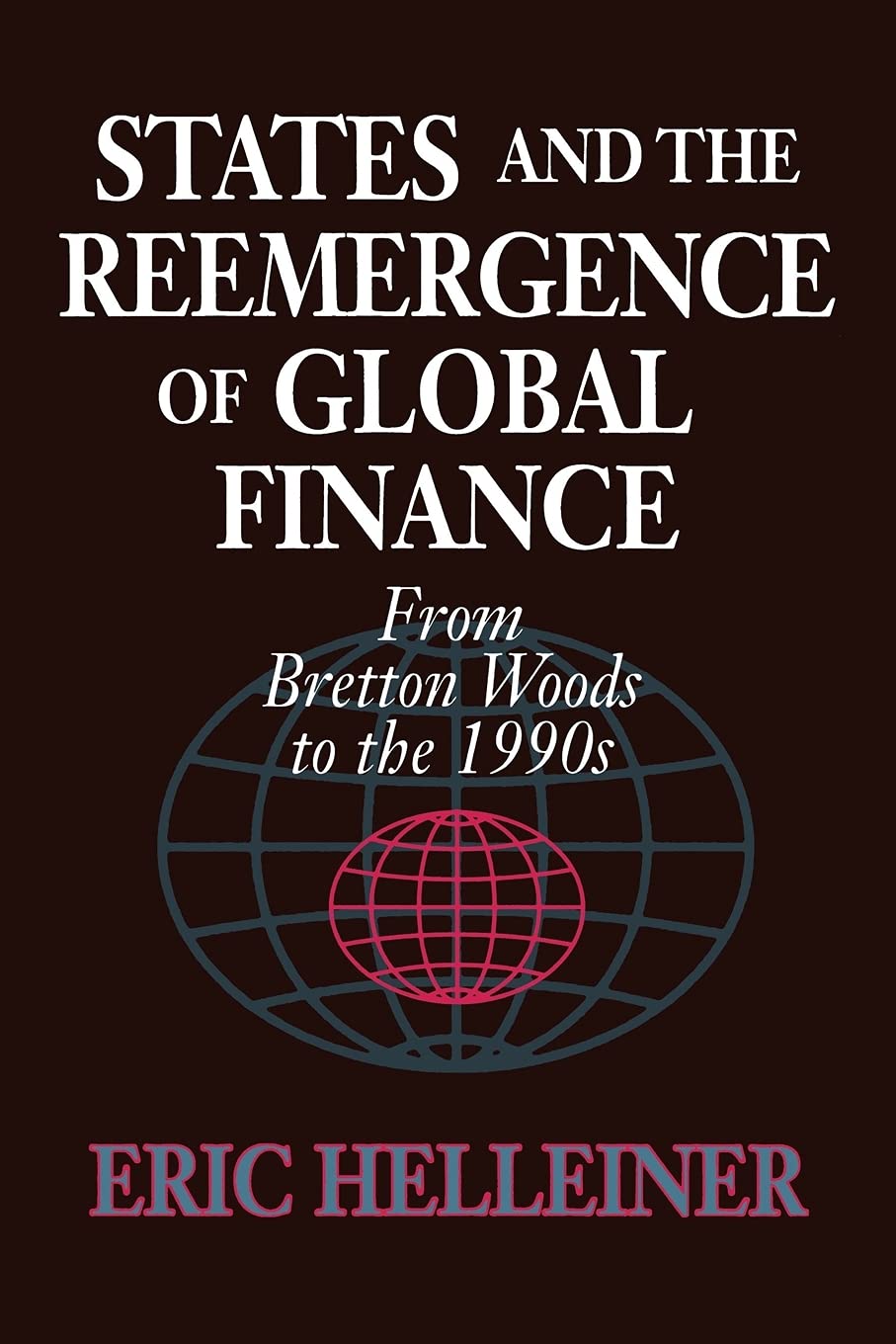
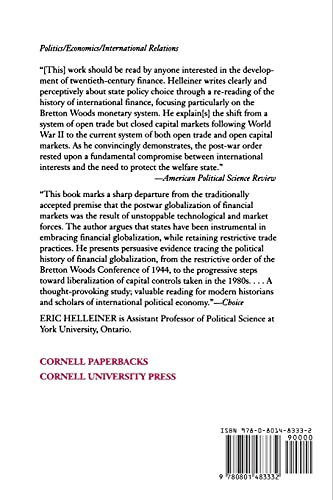
Most accounts explain the postwar globalization of financial markets as a product of unstoppable technological and market forces. Drawing on extensive historical research, Eric Helleiner provides the first comprehensive political history of the phenomenon, one that details and explains the central role played by states in permitting and encouraging financial globalization.Helleiner begins by highlighting the commitment of advanced industrial states to a restrictive international financial order at the 1944 Bretton Woods conference and during the early postwar years. He then explains the growing political support for the globalization of financial markets after the late 1950s by analyzing five sets of episodes: the creation of the Euromarket in the 1960s, the rejection in the early 1970s of proposals to reregulate global financial markets, four aborted initiatives in the late 1970s and early 1980s to implement effective controls on financial movements, the extensive liberalization of capital controls in the 1980s, and the containment of international financial crises at three critical junctures in the 1970s and 1980s.He shows that these developments resulted from various factors, including the unique hegemonic interests of the United States and Britain in finance, a competitive deregulation dynamic, ideological shifts, and the construction of a crisisprevention regime among leading central bankers. In his conclusion Helleiner addresses the question of why states have increasingly embraced an open, liberal international financial order in an era of considerable trade protectionism.
⚠️ WARNING (California Proposition 65):
This product may contain chemicals known to the State of California to cause cancer, birth defects, or other reproductive harm.
For more information, please visit www.P65Warnings.ca.gov.
- Q: What is the main focus of 'States and the Reemergence of Global Finance'? A: The book provides a comprehensive political history of the globalization of financial markets, emphasizing the significant role that states have played in enabling and promoting financial globalization from the Bretton Woods conference to the 1990s.
- Q: Who is the author of this book? A: The author of 'States and the Reemergence of Global Finance' is Eric Helleiner.
- Q: When was 'States and the Reemergence of Global Finance' published? A: The book was published on April 11, 1996.
- Q: What are the key historical events discussed in the book? A: Key events include the Bretton Woods conference, the creation of the Euromarket in the 1960s, rejections of financial market reregulation in the 1970s, and the liberalization of capital controls in the 1980s.
- Q: What is the condition of the book being sold? A: The book is listed as a 'Used Book in Good Condition'.
- Q: How many pages does 'States and the Reemergence of Global Finance' have? A: The book contains 258 pages.
- Q: What is the binding type of this book? A: This book is available in paperback binding.
- Q: What category does this book fall under? A: The book is categorized under 'Economic Conditions'.
- Q: Does the book discuss the role of the United States in financial globalization? A: Yes, the book highlights the hegemonic interests of the United States and Britain in finance and their influence on financial globalization.
- Q: What themes are explored in the conclusion of the book? A: In the conclusion, Helleiner addresses why states have increasingly adopted an open and liberal international financial order despite rising trade protectionism.