If you have any questions, you are always welcome to contact us. We'll get back to you as soon as possible, withing 24 hours on weekdays.
Customer service
All questions about your order, return and delivery must be sent to our customer service team by e-mail at yourstore@yourdomain.com
Sale & Press
If you are interested in selling our products, need more information about our brand or wish to make a collaboration, please contact us at press@yourdomain.com
Help
If you have any questions, you are always welcome to contact us. We'll get back to you as soon as possible, withing 24 hours on weekdays.
Customer service
All questions about your order, return and delivery must be sent to our customer service team by e-mail at yourstore@yourdomain.com
Sale & Press
If you are interested in selling our products, need more information about our brand or wish to make a collaboration, please contact us at press@yourdomain.com
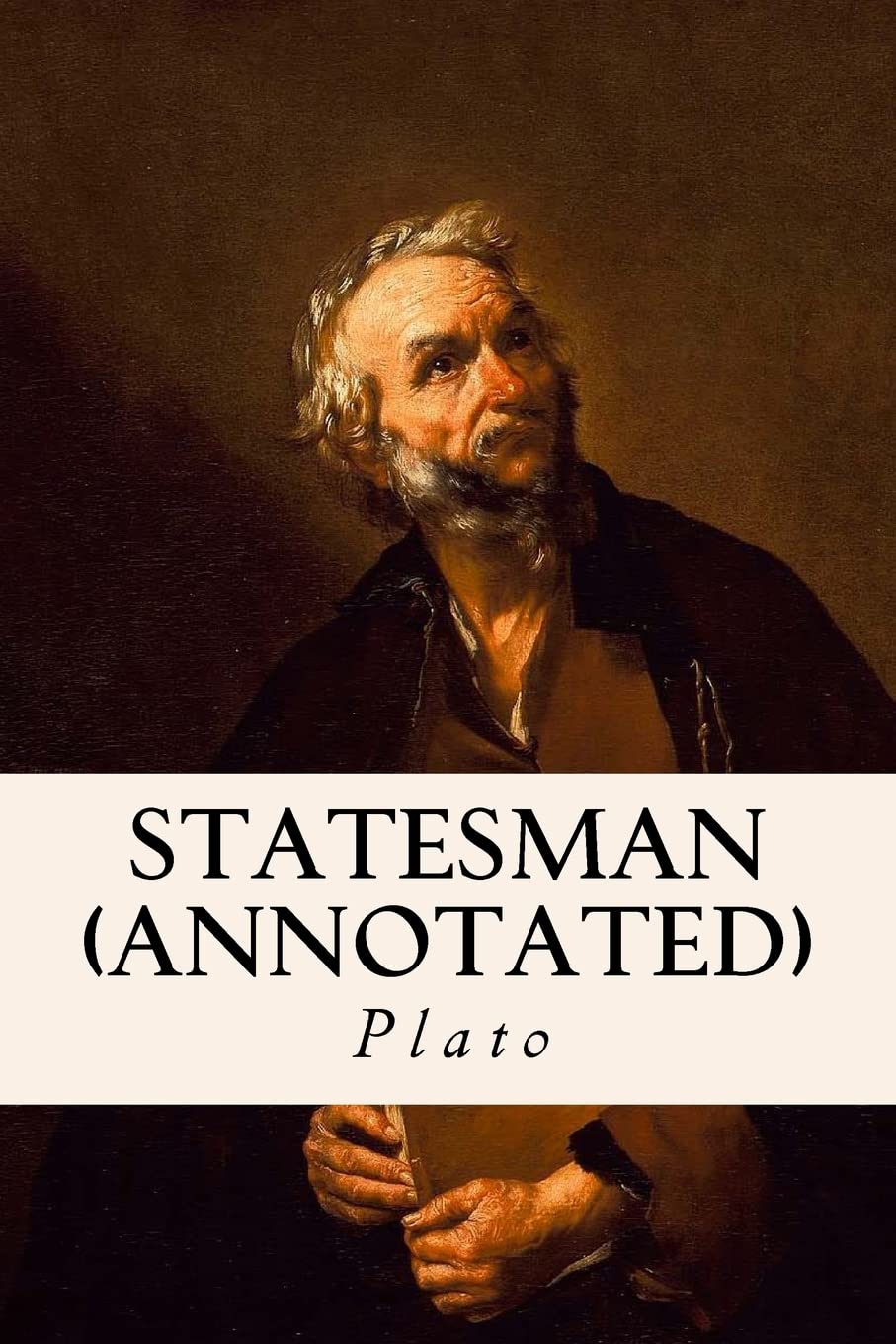
The Statesman, also known by its Latin title, Politicus, is a Socratic dialogue written by Plato. The text describes a conversation among Socrates, the mathematician Theodorus, another person named Socrates (referred to as "Young Socrates"), and an unnamed philosopher from Elea referred to as "the Stranger". It is ostensibly an attempt to arrive at a definition of "statesman," as opposed to "sophist" or "philosopher" and is presented as following the action of the Sophist. According to John M. Cooper, the dialogue's intention was to clarify that to rule or have political power called for a specialized knowledge. The statesman was one who possesses this special knowledge of how to rule justly and well and to have the best interests of the citizens at heart. It is presented that politics should be run by this knowledge, or gnosis. This claim runs counter to those who, the Stranger points out, actually did rule. Those that rule merely give the appearance of such knowledge, but in the end are really sophists or imitators. For, as the Stranger maintains, a sophist is one who does not know the right thing to do, but only appears to others as someone who does. The Stranger's ideal of how one arrives at this knowledge of power is through social divisions. The visitor takes great pains to be very specific about where and why the divisions are needed in order to properly rule the citizenry.
⚠️ WARNING (California Proposition 65):
This product may contain chemicals known to the State of California to cause cancer,
birth defects, or other reproductive harm.
For MAP (Minimum Advertised Price) violations and Intellectual Property (IP) or Trademark concerns, please contact:
support@ergodebooks.com
⚠️ California Proposition 65 Warning: Some products sold on this website may expose you to chemicals known to the State of California to cause cancer, birth defects, or other reproductive harm. For more information, visit www.P65Warnings.ca.gov.