If you have any questions, you are always welcome to contact us. We'll get back to you as soon as possible, withing 24 hours on weekdays.
Customer service
All questions about your order, return and delivery must be sent to our customer service team by e-mail at yourstore@yourdomain.com
Sale & Press
If you are interested in selling our products, need more information about our brand or wish to make a collaboration, please contact us at press@yourdomain.com
Help
If you have any questions, you are always welcome to contact us. We'll get back to you as soon as possible, withing 24 hours on weekdays.
Customer service
All questions about your order, return and delivery must be sent to our customer service team by e-mail at yourstore@yourdomain.com
Sale & Press
If you are interested in selling our products, need more information about our brand or wish to make a collaboration, please contact us at press@yourdomain.com
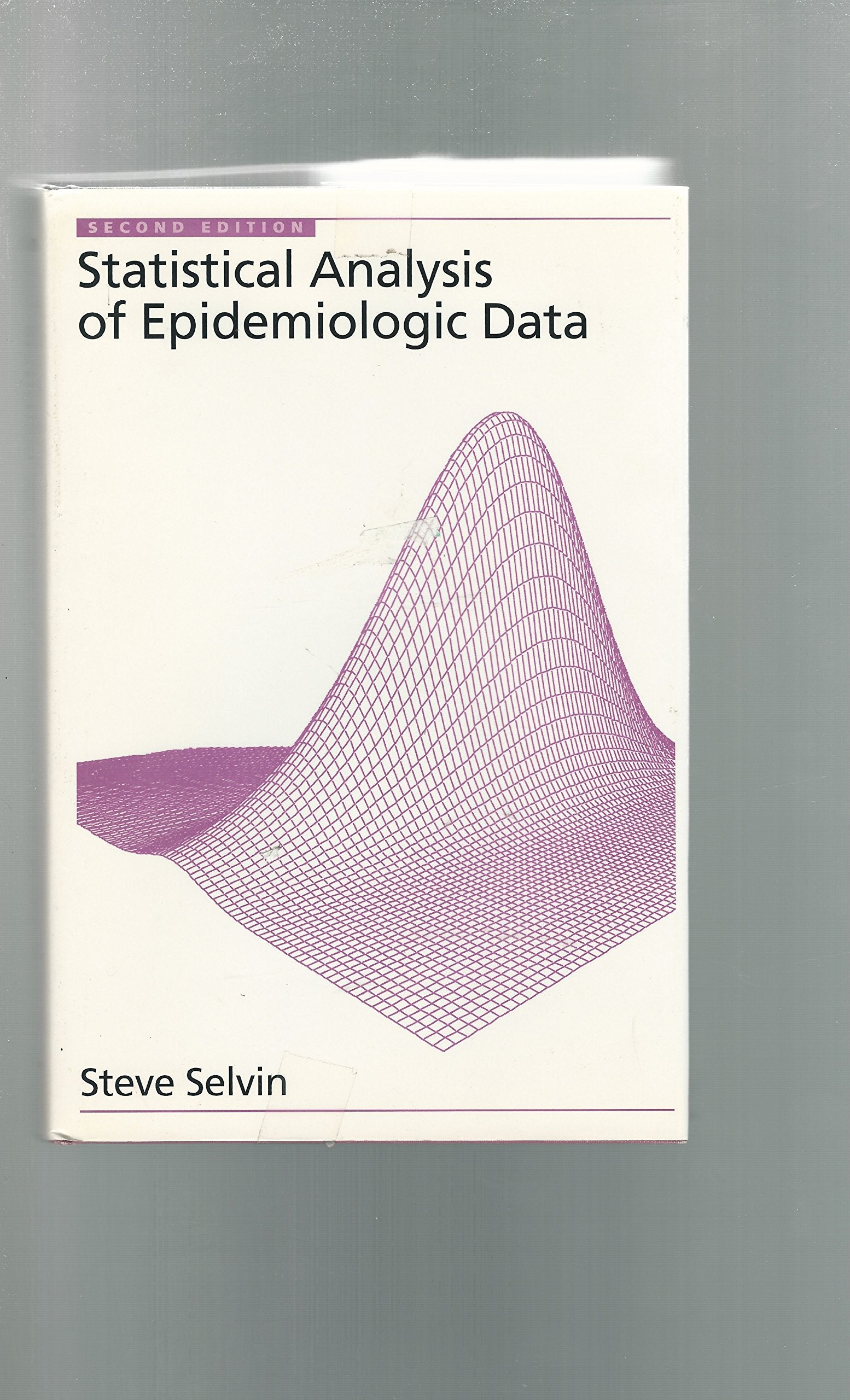
This book combines applied and theoretical approaches to the analysis of epidemiologic issues. It goes beyond elementary material to deal with real problems generated by disease data, and delves into less usual areas such as the analysis of spatial distributions, survival data, proportional hazards regression, and "computerintensive" approaches to statistical estimation. Each method discussed in the text is illustrated with examples which include complete sets of data. Using actual data demonstrates the strengths and weaknesses of different analytic approaches in describing a disease process. The goal of the book is to allow the reader to develop a clear understanding of analytic approaches to problems in epidemiologic data analysis without relying on sophisticated mathematics and advanced statistical theory. For the Second Edition a new chapter on the analysis of matched data has been added. This covers both discrete and continuous outcomes and explains both the classic analytic approach and the conditional logistic regression model. New sections have also been added on contingency table data, misclassification, and additive models underlying tabular data. In all the chapters there are new applications and other revisions that make this Second Edition a clearer and more helpful exposition of the way statistical tools are used to analyze epidemiologic data.
⚠️ WARNING (California Proposition 65):
This product may contain chemicals known to the State of California to cause cancer,
birth defects, or other reproductive harm.
For MAP (Minimum Advertised Price) violations and Intellectual Property (IP) or Trademark concerns, please contact:
support@ergodebooks.com
⚠️ California Proposition 65 Warning: Some products sold on this website may expose you to chemicals known to the State of California to cause cancer, birth defects, or other reproductive harm. For more information, visit www.P65Warnings.ca.gov.