
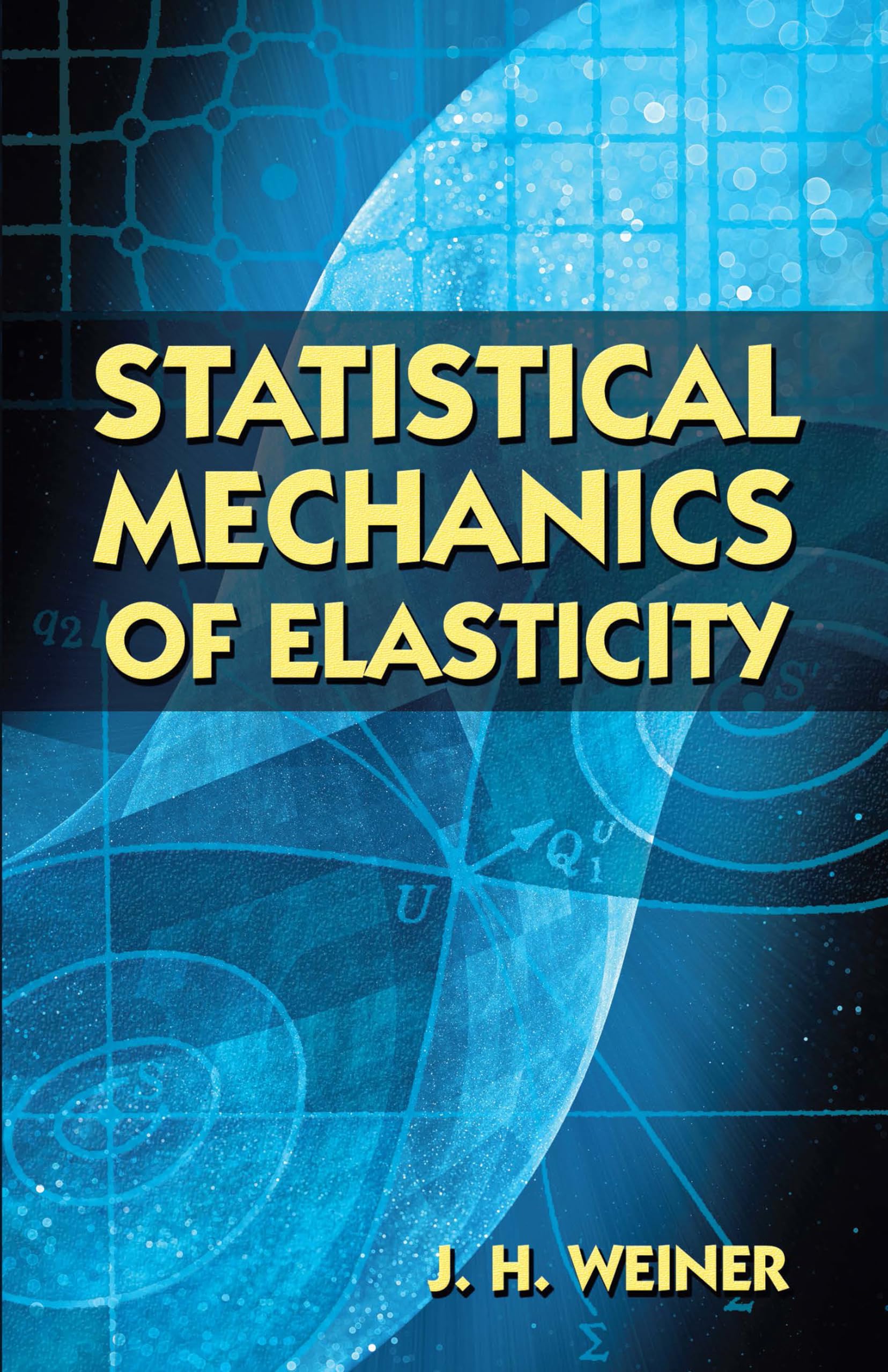
Title
Statistical Mechanics of Elasticity (Dover Books on Physics),Used
Sold by Ergodebooks, an authorized reseller.
Returns accepted within 30 days | support@ergodebooks.com
Shipping Information
- Free Standard Shipping — United States only
- Processing Time: 3–5 business days
- Estimated Delivery: 6–10 business days after dispatch
- Double-boxed, fully insured & discreetly packaged
- Tracking number sent via email once dispatched
Returns & Refund
Returns accepted within 30 days of delivery.
Damaged or Defective Item
Free return shipping + replacement or full refund
Wrong Item Received
Free return shipping + replacement or full refund
Change of Mind
Return shipping at customer's expense · 25% restocking fee applies
Payment Option

An advanced treatment of elasticity from the atomistic viewpoint, this volume offers students and teachers a selfcontained text. Its detailed development of the general principles of statistical mechanics leads to a concentration on the principles' application to the elastic behavior of solids. The first part is based solely on classical mechanics, starting with an introductory chapter that summarizes thermoelasticity from the continuum viewpoint. The principles of classical statistical mechanics are then developed and applied to the study of the thermoelastic behavior of both crystalline and polymeric solids. The second part is based on quantum mechanics, discussing their role in interatomic force laws, the manner in which quantum statistical effects modify the lowtemperature mechanical behavior of solids, and the nature of quantum effects upon the rates of thermally activated processes.This book provides an alternative to the usual course in statistical mechanics, in which the major emphasis is on applications to gases, liquids, and electronic and magnetic phenomena. Graduate students of physics and chemistry will appreciate the treatment of the basic principles of classical statistical mechanics and quantum statistical mechanics, while polymer physicists will find the discussion of curvilinear coordinates, geometric constraints, and the distinction between rigid and flexible polymer models of particular interest.
⚠️ WARNING (California Proposition 65):
This product may contain chemicals known to the State of California to cause cancer, birth defects, or other reproductive harm.
For more information, please visit www.P65Warnings.ca.gov.