
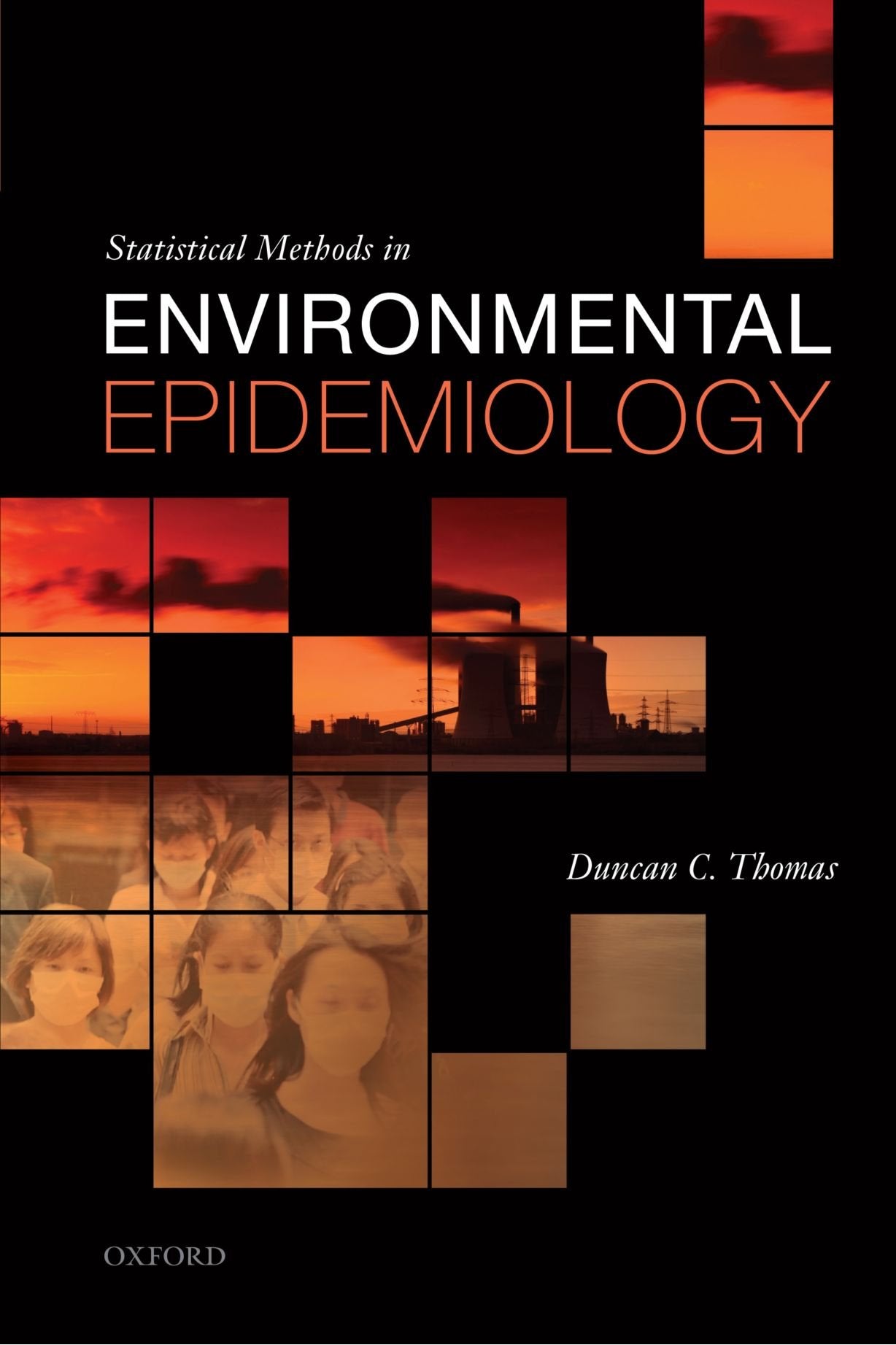
Title
Statistical Methods in Environmental Epidemiology,Used
Sold by Ergodebooks, an authorized reseller.
Returns accepted within 30 days | support@ergodebooks.com
Shipping Information
- Free Standard Shipping — United States only
- Processing Time: 3–5 business days
- Estimated Delivery: 6–10 business days after dispatch
- Double-boxed, fully insured & discreetly packaged
- Tracking number sent via email once dispatched
Returns & Refund
Returns accepted within 30 days of delivery.
Damaged or Defective Item
Free return shipping + replacement or full refund
Wrong Item Received
Free return shipping + replacement or full refund
Change of Mind
Return shipping at customer's expense · 25% restocking fee applies
Payment Option

Environmental epidemiology is the study of the environmental causes of disease in populations and how these risks vary in relation to intensity and duration of exposure and other factors like genetic susceptibility. As such, it is the basic science upon which governmental safety standards and compensation policies for environmental and occupational exposure are based. Profusely illustrated with examples from the epidemiologic literature on ionizing radiation and air ollution, this text provides a systematic treatment of the statistical challenges that arise in environmental health studies and the use of epidemiologic data in formulating public policy, at a level suitable for graduate students and epidemiologic researchers.After a general overview of study design and statistical methods for epidemiology generally, the book goes on to address the problems that are unique to environmental health studies, specialpurpose designs like twophase casecontrol studies and countermatching, statistical methods for modeling exposuretimeresponse relationships, longitudinal and timeseries studies, spatial and ecologic methods, exposure measurement error, interactions, and mechanistic models. It also discusses studies aimed at evaluating the public health benefits of interventions to improve the environment, the use of epidemiologic data to establish environmental safety standards and compensation policy, and concludes with emerging problems in reproductive epidemiology, natural and manmade disasters like global warming, and the global burden of environmentally caused disease. No other book provides such a broad perspective on the methodological challenges in this field at a level accessible to both epidemiologists and statisticians.
⚠️ WARNING (California Proposition 65):
This product may contain chemicals known to the State of California to cause cancer, birth defects, or other reproductive harm.
For more information, please visit www.P65Warnings.ca.gov.
- Q: How many pages are in this book? A: This book contains four hundred fifty pages. It provides comprehensive insights into statistical methods used in environmental epidemiology.
- Q: What is the binding type of this book? A: This book has a paperback binding. This makes it flexible and portable for easy reading and reference.
- Q: What are the dimensions of this book? A: The book measures nine point one inches in length, one point zero two inches in width, and nine point two one inches in height. These dimensions make it a standard size for easy handling.
- Q: Who is the author of this book? A: The author of this book is Duncan C. Thomas. He is well-regarded in the field of environmental epidemiology.
- Q: What is the main subject of this book? A: The main subject of this book is statistical methods in environmental epidemiology. It covers the relationship between environmental factors and health outcomes.
- Q: What is the intended audience for this book? A: This book is intended for graduate students and epidemiologic researchers. It is designed to be accessible yet informative for these audiences.
- Q: How can I apply the methods discussed in this book? A: You can apply the methods by using them in designing studies and analyzing data related to environmental health risks. The book provides systematic treatments for various statistical challenges.
- Q: Is this book suitable for beginners in epidemiology? A: Yes, this book is suitable for beginners. It offers a general overview of study design and statistical methods before delving into more complex topics.
- Q: Are there illustrations in this book? A: Yes, the book includes line illustrations. These visuals help clarify statistical concepts and examples from epidemiologic literature.
- Q: What should I do if I receive a damaged book? A: If you receive a damaged book, you should contact the seller for a return or exchange. Ensure you have your order details ready for a smooth process.
- Q: Is there a warranty for this book? A: No, there is typically no warranty for books. However, you can check the return policy of the seller for any specific conditions.
- Q: Can I find this book in digital format? A: Yes, this book may be available in digital format. Check major online retailers or the publisher's website for eBook options.
- Q: How should I store this book to keep it in good condition? A: Store this book in a cool, dry place away from direct sunlight. This helps preserve the quality of the pages and binding.
- Q: Does this book cover environmental safety standards? A: Yes, this book discusses the use of epidemiologic data to establish environmental safety standards. It is relevant for those involved in public policy formulation.
- Q: What unique topics does this book address? A: The book addresses unique topics like two-phase case-control studies, exposure measurement error, and the public health benefits of environmental interventions.