
Title
STEM Learning with Young Children: Inquiry Teaching with Ramps and Pathways (Early Childhood Education Series),Used
Sold by Ergodebooks, an authorized reseller.
Returns accepted within 30 days | support@ergodebooks.com
Shipping Information
- Free Standard Shipping — United States only
- Processing Time: 3–5 business days
- Estimated Delivery: 6–10 business days after dispatch
- Double-boxed, fully insured & discreetly packaged
- Tracking number sent via email once dispatched
Returns & Refund
Returns accepted within 30 days of delivery.
Damaged or Defective Item
Free return shipping + replacement or full refund
Wrong Item Received
Free return shipping + replacement or full refund
Change of Mind
Return shipping at customer's expense · 25% restocking fee applies
Payment Option

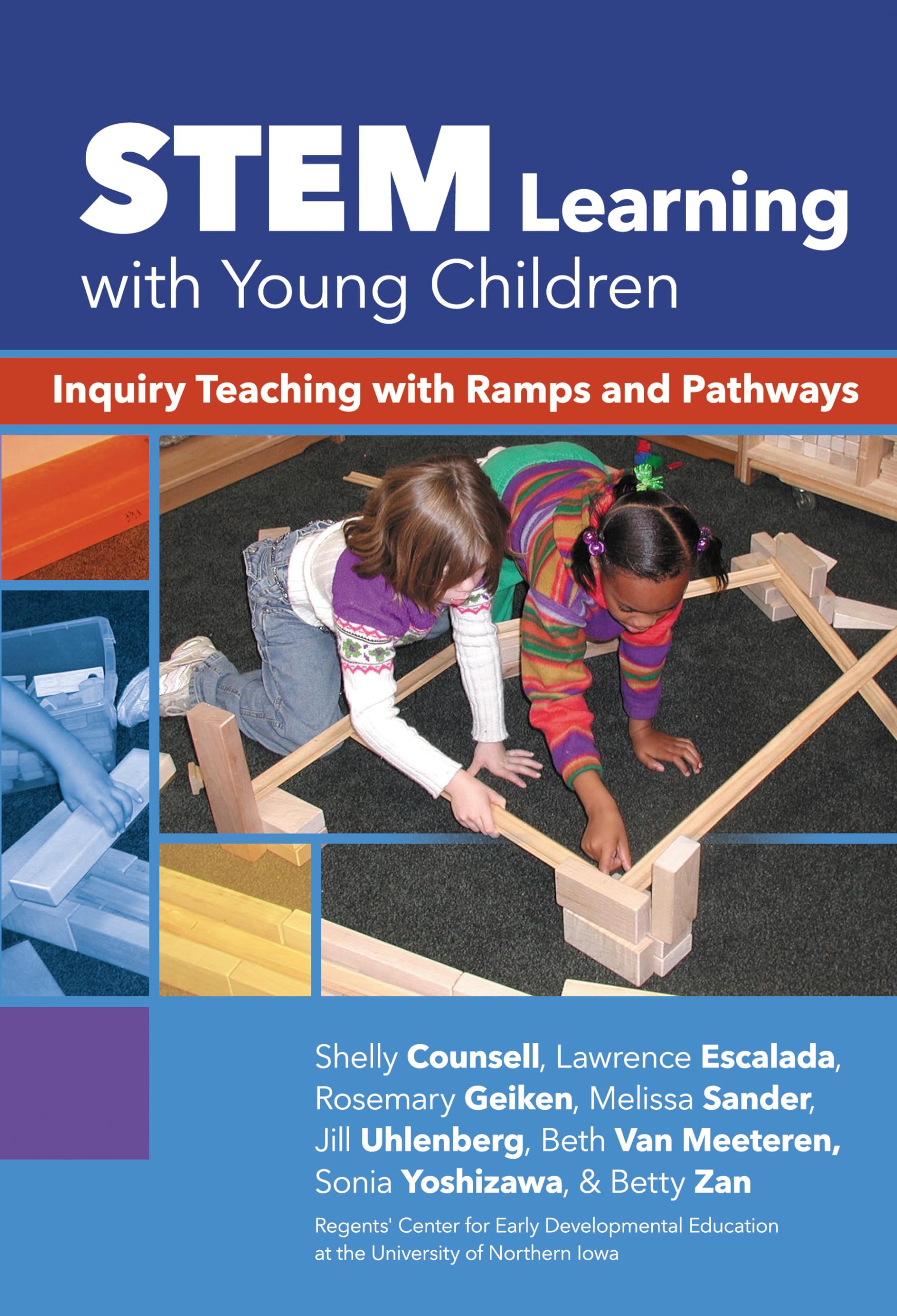
This teachers guide provides the background information, STEM concepts, and strategies needed to successfully implement an early STEM curriculum (Ramps and Pathways) with young children, ages 38. R&P actively engages young children in designing and building ramp structures using wooden cove molding, releasing marbles on the structures, and observing what happens. Children use logicalmathematical thinking and problemsolving skills as they explore science concepts related to motion, force, and energy. This guide helps teachers to: Structure and organize an engaging STEM learning environment. Understand and promote logicalmathematical and scientific thinking during investigations. Promote social settings that enhance communication, cooperation, and collaboration. Make the necessary accommodations and modifications for diverse learners. Integrate STEM concepts and skills with other content areas. Align teaching and learning with Next Generation Science Standards (NGSS) and Common Core State Standards (CCSS). Assess STEM learning using formative and summative assessments. Establish adult learning communities to support ongoing professional development. Help children develop habits and behaviors that contribute to positive attitudes toward STEM.This oneofakind resource uses a newly created Inquiry Teaching Model (ITM) as the conceptual framework and devotes specific attention to the importance of an inclusive and social, STEM learning environment in which children are free to collaborate, take risks, and investigate within the context of exploratory and constructive play.
⚠️ WARNING (California Proposition 65):
This product may contain chemicals known to the State of California to cause cancer, birth defects, or other reproductive harm.
For more information, please visit www.P65Warnings.ca.gov.