If you have any questions, you are always welcome to contact us. We'll get back to you as soon as possible, withing 24 hours on weekdays.
Customer service
All questions about your order, return and delivery must be sent to our customer service team by e-mail at yourstore@yourdomain.com
Sale & Press
If you are interested in selling our products, need more information about our brand or wish to make a collaboration, please contact us at press@yourdomain.com
Help
If you have any questions, you are always welcome to contact us. We'll get back to you as soon as possible, withing 24 hours on weekdays.
Customer service
All questions about your order, return and delivery must be sent to our customer service team by e-mail at yourstore@yourdomain.com
Sale & Press
If you are interested in selling our products, need more information about our brand or wish to make a collaboration, please contact us at press@yourdomain.com
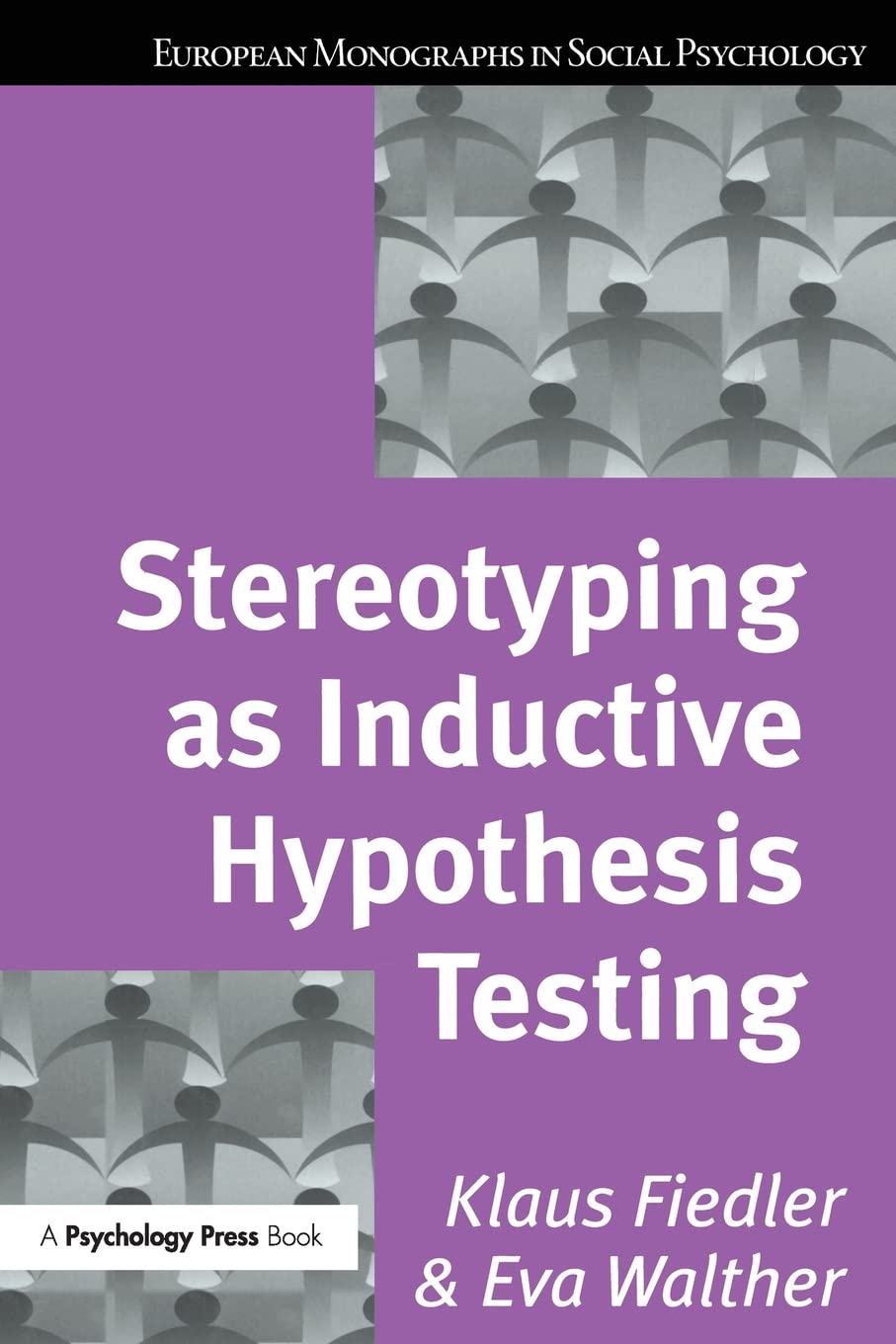
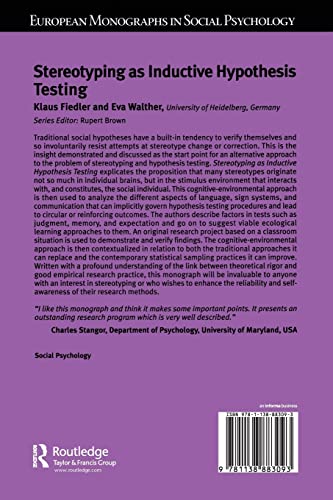
Traditional social hypotheses have a builtin tendency to verify themselves and so involuntarily resist attempts at stereotype change or correction. This is the insight demonstrated and discussed as the start point for an alternative approach to the problem of stereotyping and hypothesis testing. Stereotyping as Inductive Hypothesis Testing explicates the proposition that many stereotypes originate not so much in individual brains, but in the stimulus environment that interacts with and constitutes the social individual. This cognitiveecological approach is then used to analyse the different aspects of language, sign systems and communication that can implicitly govern hypothesis testing procedures and lead to circular or reinforcing outcomes. The authors describe factors in tests such as judgment, memory and expectation and go on to suggest viable ecological learning approaches to them. An original research project based on a classroom situation is used to demonstrate and verify findings. The cognitiveecological approach is then contextualised in relation to both the traditional approaches it can replace and the contemporary statistical sampling practices it can improve. Written with a profound understanding of the link between theoretical rigour and good empirical research practice this monograph will be invaluable to anyone with an interest in stereotyping or who wishes to enhance the reliability and selfawareness of their research methods.
⚠️ WARNING (California Proposition 65):
This product may contain chemicals known to the State of California to cause cancer,
birth defects, or other reproductive harm.
For MAP (Minimum Advertised Price) violations and Intellectual Property (IP) or Trademark concerns, please contact:
support@ergodebooks.com
⚠️ California Proposition 65 Warning: Some products sold on this website may expose you to chemicals known to the State of California to cause cancer, birth defects, or other reproductive harm. For more information, visit www.P65Warnings.ca.gov.