
Title
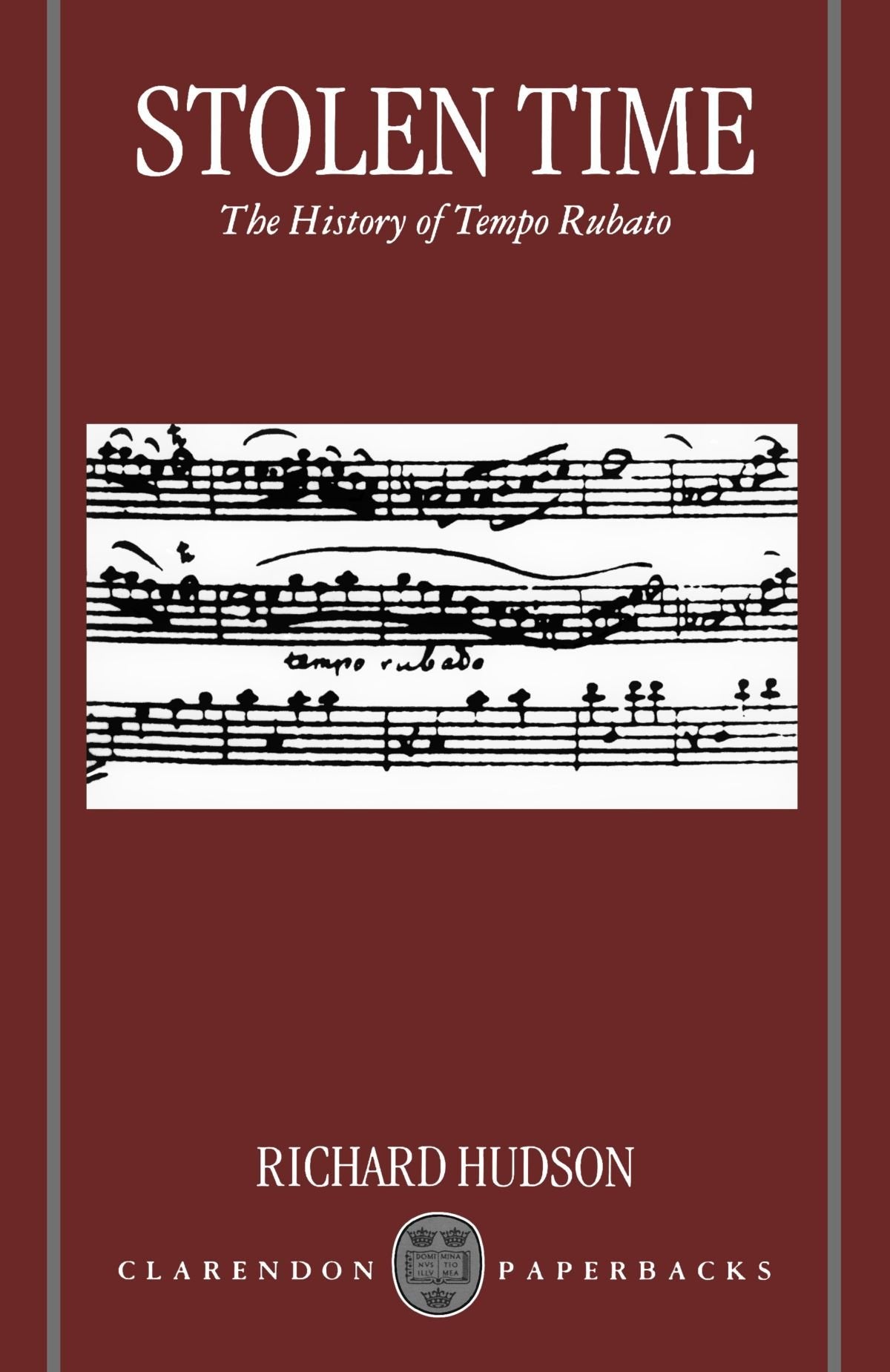
Stolen Time: The History Of Tempo Rubato (Clarendon Paperbacks)
Sold by Ergodebooks, an authorized reseller.
Returns accepted within 30 days | support@ergodebooks.com
Shipping Information
- Free Standard Shipping — United States only
- Processing Time: 3–5 business days
- Estimated Delivery: 6–10 business days after dispatch
- Double-boxed, fully insured & discreetly packaged
- Tracking number sent via email once dispatched
Returns & Refund
Returns accepted within 30 days of delivery.
Damaged or Defective Item
Free return shipping + replacement or full refund
Wrong Item Received
Free return shipping + replacement or full refund
Change of Mind
Return shipping at customer's expense · 25% restocking fee applies
Payment Option

Tracing The Complex History Of Tempo Rubato, This Book Identifies And Traces The Development Of Two Main Types Of Rubato: An Earlier One In Which Note Values In A Melody Are Altered While The Accompaniment Keeps Strict Time, And A Later, More Familiar One In Which The Tempo Of The Entire Musical Substance Fluctuates. In The Course Of His Narrative, Hudson Ranges Widely Over Western Music, From Gregorian Chant To Chopin, From C.P.E. Bach To Jazz, Quoting Extensively From The Writings Of Theorists, Composers, And Performers. In So Doing He Not Only Suggests New Ways Of Approaching The Rubato In The Music Of Nineteenthcentury Composers Like Chopin And Liszt, Where We Expect To Encounter The Term, But Also Illuminates The Music Of Earlier And Later Periods, Revealing Its Use Even In The Music Of That Most Metronomic Of Composers, Stravinsky.
⚠️ WARNING (California Proposition 65):
This product may contain chemicals known to the State of California to cause cancer, birth defects, or other reproductive harm.
For more information, please visit www.P65Warnings.ca.gov.
- Q: What is the binding type of this book? A: This book is a paperback. Paperback bindings are flexible and lightweight, making them ideal for reading and carrying.
- Q: How many pages does this book have? A: This book has four hundred eighty-eight pages. This length allows for an in-depth exploration of its subject matter.
- Q: What are the dimensions of 'Stolen Time: The History of Tempo Rubato'? A: The dimensions of the book are one point zero eight inches in depth, nine point one three inches in width, and six point one four inches in height. These measurements make it a convenient size for bookshelves.
- Q: Who is the author of this book? A: The author is Richard Hudson. Hudson is known for his expertise in music history and criticism.
- Q: What genre does this book belong to? A: This book belongs to the History & Criticism genre. It provides historical insights into musical practices.
- Q: What is the main topic of this book? A: The main topic of this book is the history of tempo rubato in music. It explores how this technique has evolved over different musical periods.
- Q: Is this book suitable for beginners in music theory? A: Yes, this book is suitable for beginners. It offers clear explanations and a historical context that can help newcomers understand complex musical concepts.
- Q: Can I use this book for academic research? A: Yes, this book is suitable for academic research. It includes extensive quotes from theorists, composers, and performers, making it a valuable resource.
- Q: Is there any specific reading level required for this book? A: This book is appropriate for adult readers. Its content is designed for those with an interest in music history and theory.
- Q: How should I store this book to keep it in good condition? A: Store this book in a dry, cool place. Avoid direct sunlight and moisture to maintain its condition over time.
- Q: What is the best way to clean this book? A: To clean this book, use a dry cloth to gently wipe the cover and remove dust. Avoid using water or chemicals.
- Q: Are there any age restrictions for reading this book? A: No, there are no age restrictions for reading this book. However, it is primarily aimed at adult readers.
- Q: What if the book arrives damaged? A: If the book arrives damaged, you should contact the seller for a return or replacement. Most sellers have policies in place for damaged items.
- Q: Is there a warranty for this book? A: No, books typically do not come with a warranty. However, check the seller’s return policy for any guarantees.
- Q: Can I return this book if I don't like it? A: Yes, you can return this book if it falls within the seller's return policy timeframe. Always check the specific terms before purchasing.
- Q: What should I do if I encounter issues while reading this book? A: If you encounter issues while reading, consider discussing with peers or seeking additional resources for clarification. Engaging with others can enhance understanding.