
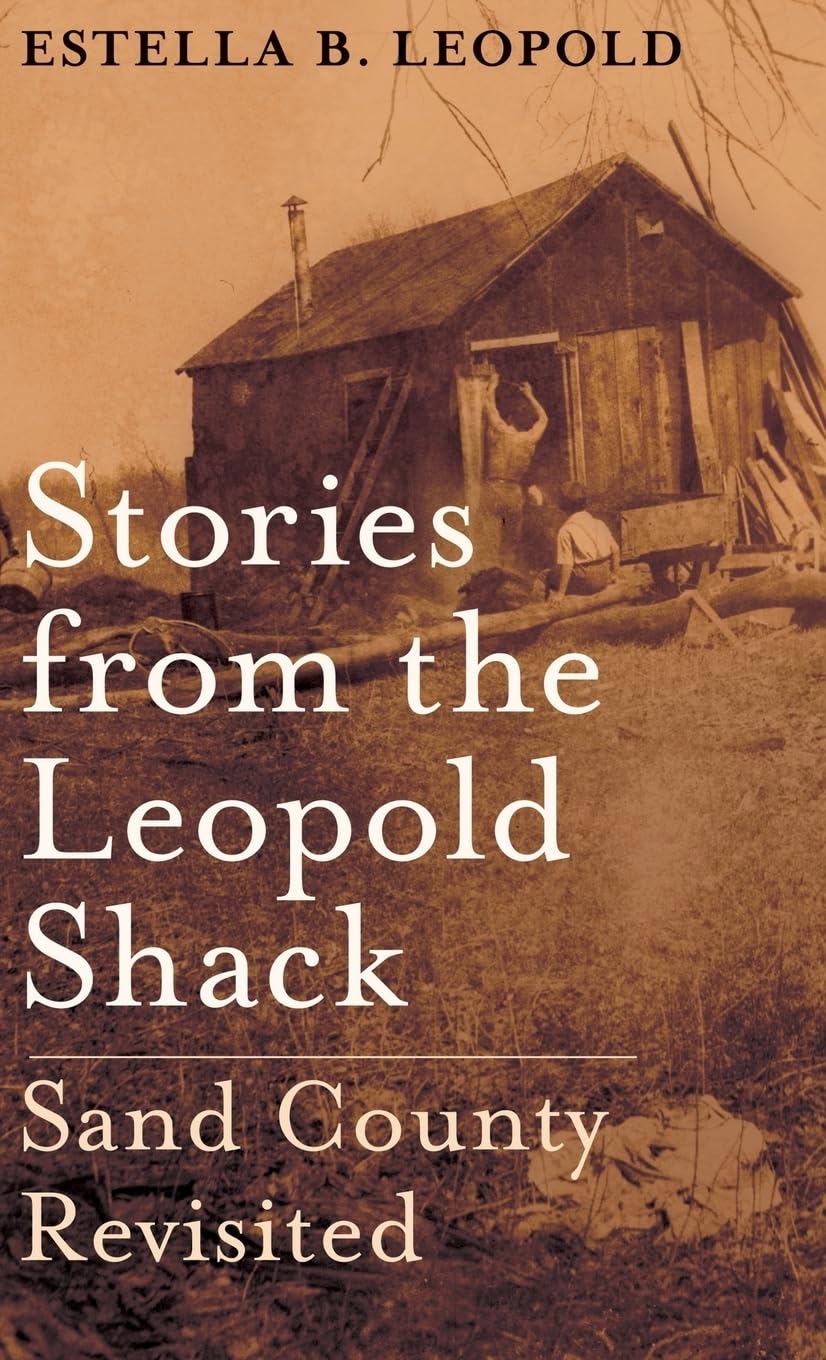
Title
Stories from the Leopold Shack: Sand County Revisited,Used
Sold by Ergodebooks, an authorized reseller.
Returns accepted within 30 days | support@ergodebooks.com
Shipping Information
- Free Standard Shipping — United States only
- Processing Time: 3–5 business days
- Estimated Delivery: 6–10 business days after dispatch
- Double-boxed, fully insured & discreetly packaged
- Tracking number sent via email once dispatched
Returns & Refund
Returns accepted within 30 days of delivery.
Damaged or Defective Item
Free return shipping + replacement or full refund
Wrong Item Received
Free return shipping + replacement or full refund
Change of Mind
Return shipping at customer's expense · 25% restocking fee applies
Payment Option

In 1934, conservationist Aldo Leopold and his wife Estella bought a barn the remnant of a farm and surrounding lands in southcentral Wisconsin. The entire Leopold clan five children in all worked together to put into practice Aldo's 'land ethic,' which involved ecological restoration and sustainability. In the process, they built more than a pleasant weekend getaway; they established a new way of relating to nature. In 1948, A Sand County Almanac was published, and it has become a beloved and foundational text of the conservation movement.Decades later, Estella B. Leopold, the youngest of the Leopold children she was eight when they bought the land now reflects on the 'Shack,' as they called the repurposed barn, and its inhabitants, and recalls with cleareyed fondness the part it played in her and her siblings' burgeoning awareness of nature's miracles, season by season. In Stories from the Leopold Shack: Sand County Revisited, she unforgettably recalls the intensity of those days: the taste of fresh honey on sourdough pancakes; the trumpeting arrival of migrating Canada geese; the awesome power of river ice driven by currents and each description is accompanied by stunning photographs by her brother, A. Carl Leopold. As the Leopolds worked to restore degraded farmland back to its original prairie and woods, they noted and celebrated all of the flora and fauna that came to share the Shack lands.As first evoked in A Sand County Almanac, and now revisited in Stories from the Leopold Shack, the Leopold family's efforts of ecological restoration were among the earliest in the United States, and their work, collectively and individually, continues to have a profound impact on land management and conservationism. All of Aldo and Estella Leopold's children went on to become distinguished scientists and to devote themselves to a life of conservation; their work continues through the Aldo Leopold Foundation. Estella B. Leopold book offers a voyage back to the place where it all began.
⚠️ WARNING (California Proposition 65):
This product may contain chemicals known to the State of California to cause cancer, birth defects, or other reproductive harm.
For more information, please visit www.P65Warnings.ca.gov.
- Q: What is the main theme of 'Stories from the Leopold Shack: Sand County Revisited'? A: The main theme revolves around ecological restoration and sustainability, as highlighted by Aldo Leopold's land ethic and the experiences of the Leopold family in their efforts to restore their Wisconsin land.
- Q: Who is the author of the book? A: The author of the book is Estella B. Leopold, the youngest child of Aldo Leopold, who shares her memories of growing up in the Leopold Shack.
- Q: What kind of content can I expect in this book? A: The book features personal reflections, vivid descriptions of nature, and stunning photographs, capturing the family's experiences and the beauty of the surrounding environment.
- Q: Is 'Stories from the Leopold Shack' suitable for children? A: Yes, the book is suitable for children as it shares engaging stories and experiences that promote an understanding of nature and conservation.
- Q: How many pages does this book contain? A: The book contains 344 pages.
- Q: What type of binding does the book have? A: The book is available in hardcover binding, which is durable and suitable for long-term use.
- Q: When was 'Stories from the Leopold Shack' published? A: The book was published on June 10, 2016.
- Q: What is the condition of the book? A: The book is in new condition.
- Q: Can this book enhance my understanding of conservation practices? A: Yes, it provides insights into early conservation efforts in the United States and the importance of ecological restoration.
- Q: How does this book relate to 'A Sand County Almanac'? A: This book revisits themes and experiences first introduced in 'A Sand County Almanac,' further exploring the Leopold family's impact on conservation.