
Title
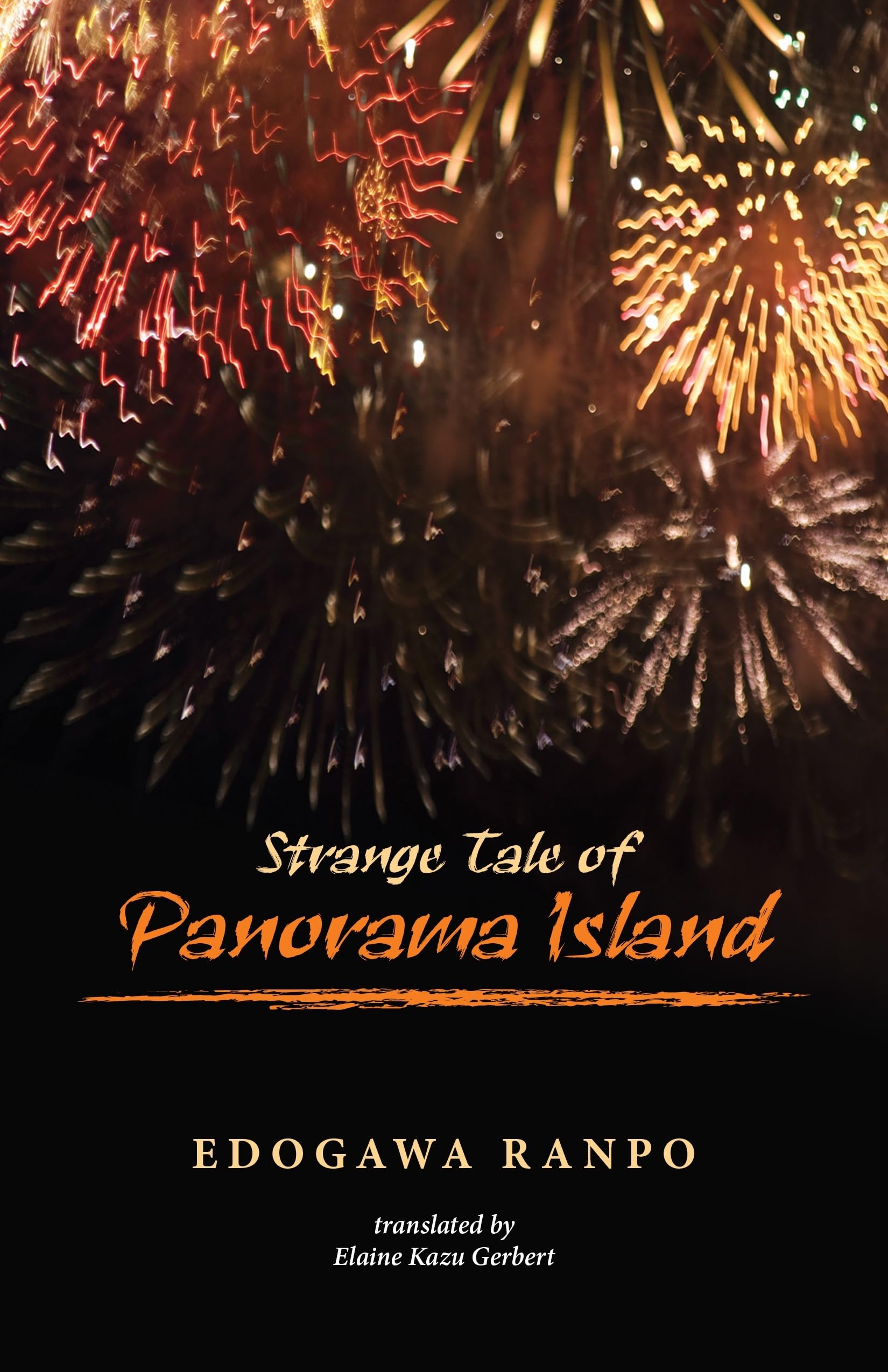
Strange Tale of Panorama Island,New
Sold by Ergodebooks, an authorized reseller.
Returns accepted within 30 days | support@ergodebooks.com
Shipping Information
- Free Standard Shipping — United States only
- Processing Time: 3–5 business days
- Estimated Delivery: 6–10 business days after dispatch
- Double-boxed, fully insured & discreetly packaged
- Tracking number sent via email once dispatched
Returns & Refund
Returns accepted within 30 days of delivery.
Damaged or Defective Item
Free return shipping + replacement or full refund
Wrong Item Received
Free return shipping + replacement or full refund
Change of Mind
Return shipping at customer's expense · 25% restocking fee applies
Payment Option

Edogawa Ranpo (18941965) was a great admirer of Edgar Allan Poe and like Poe drew on his penchant for the grotesque and the bizarre to explore the boundaries of conventional thought. Best known as the founder of the modern Japanese detective novel, Ranpo wrote for a youthful audience, and a taste for playacting and theatre animates his stories. His writing is often associated with the era of ero guro nansense (erotic grotesque nonsense), which accompanied the rise of mass culture and mass media in urban Japan in the 1920s. Characterized by an almost lurid fascination with simulacra and illusion, the eras sensibility permeates Ranpo's first major work and one of his finest achievements, Strange Tale of Panorama Island (Panoramato kidan), published in 1926.Ranpos panorama island is filled with cleverly designed optical illusions: a staircase rises into the sky; white feathered birds speak in womens voices and offer to serve as vehicles; clusters of naked men and women romp on slopes carpeted with rainbowcolored flowers. His fantastical utopia is filled with entrancing music and strange sweet odors, and nothing is ordinary, predictable, or boring. The novella reflected the new culture of mechanically produced simulated realities (movies, photographs, advertisements, stereoscopic and panoramic images) and focused on themes of the doppelganger and appropriated identities: its main character steals the identity of an acquaintance. The novellas utopian vision, argues translator Elaine Gerbert, mirrors the expansionist dreams that fed Japan's colonization of the Asian continent, its ending an eerie harbinger of the collapse of those dreams.Today just as a new generation of technologies is transforming the way we thinkand becoming ever more invasive and pervasiveRanpo's work is attracting a new generation of readers. In the past few decades his writing has inspired films, anime, plays, and manga, and many translations of his stories, essays, and novels have appeared, but to date no Englishlanguage translation of Panoramato kidan has been available. This volume, which includes a critical introduction and notes, fills that gap and uncovers for Englishlanguage readers an important new dimension of an ever stimulating, provocative talent.
⚠️ WARNING (California Proposition 65):
This product may contain chemicals known to the State of California to cause cancer, birth defects, or other reproductive harm.
For more information, please visit www.P65Warnings.ca.gov.