
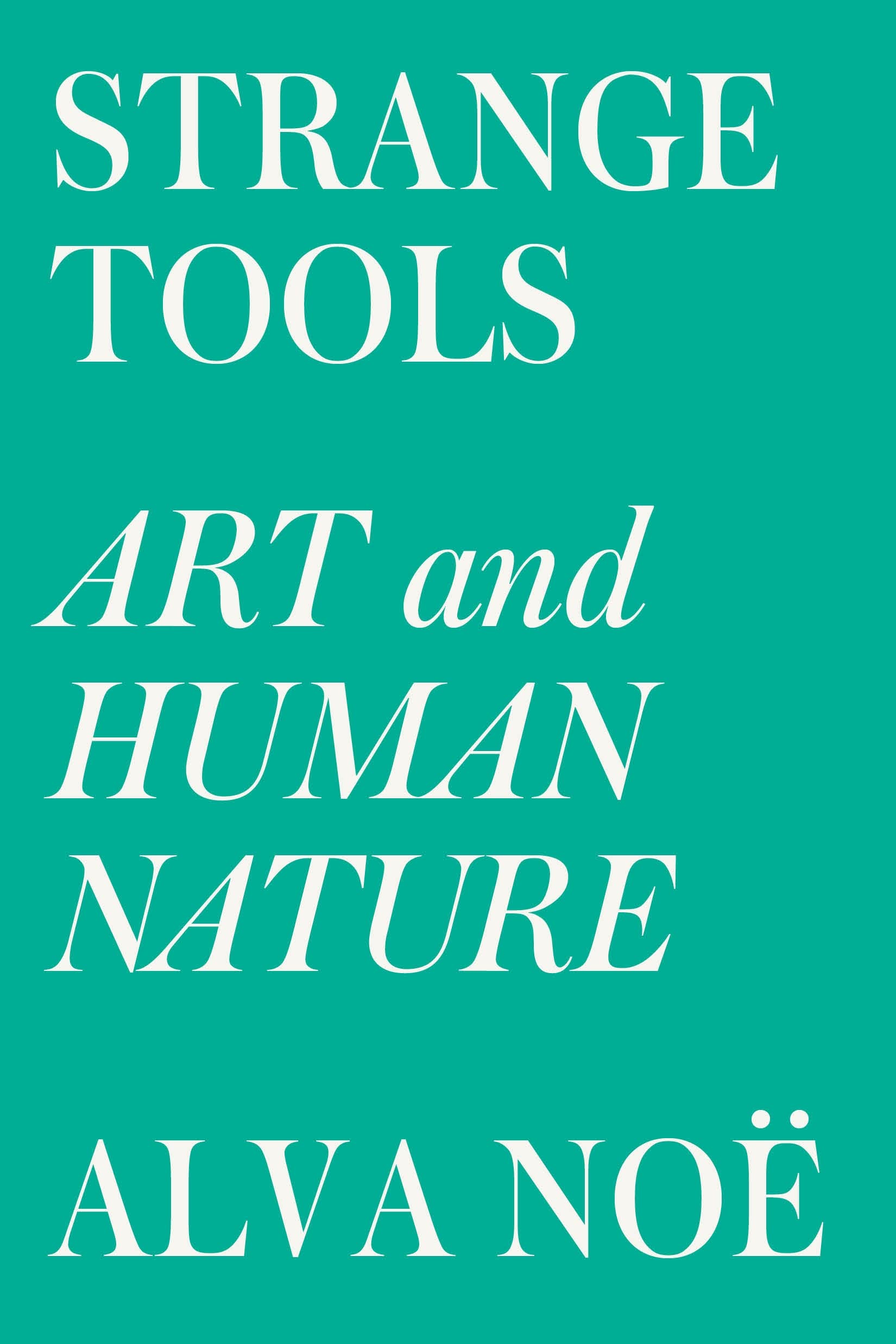
Title
Strange Tools: Art and Human Nature,Used
Sold by Ergodebooks, an authorized reseller.
Returns accepted within 30 days | support@ergodebooks.com
Shipping Information
- Free Standard Shipping — United States only
- Processing Time: 3–5 business days
- Estimated Delivery: 6–10 business days after dispatch
- Double-boxed, fully insured & discreetly packaged
- Tracking number sent via email once dispatched
Returns & Refund
Returns accepted within 30 days of delivery.
Damaged or Defective Item
Free return shipping + replacement or full refund
Wrong Item Received
Free return shipping + replacement or full refund
Change of Mind
Return shipping at customer's expense · 25% restocking fee applies
Payment Option

A philosopher makes the case for thinking of works of art as tools for investigating ourselvesIn Strange Tools: Art and Human Nature, the philosopher and cognitive scientist Alva No argues that our obsession with works of art has gotten in the way of understanding how art works on us. For No, art isn't a phenomenon in need of an explanation but a mode of research, a method of investigating what makes us humana strange tool. Art isn't just something to look at or listen toit is a challenge, a dare to try to make sense of what it is all about. Art aims not for satisfaction but for confrontation, intervention, and subversion. Through diverse and provocative examples from the history of artmaking, No reveals the transformative power of artistic production. By staging a dance, choreographers cast light on the way bodily movement organizes us. Painting goes beyond depiction and representation to call into question the role of pictures in our lives. Accordingly, we cannot reduce art to some natural aesthetic sense or trigger; recent efforts to frame questions of art in terms of neurobiology and evolutionary theory alone are doomed to fail.By engaging with art, we are able to study ourselves in profoundly novel ways. In fact, art and philosophy have much more in common than we might think. Reframing the conversation around artists and their craft, Strange Tools is a daring and stimulating intervention in contemporary thought.
⚠️ WARNING (California Proposition 65):
This product may contain chemicals known to the State of California to cause cancer, birth defects, or other reproductive harm.
For more information, please visit www.P65Warnings.ca.gov.
- Q: How many pages does this book have? A: This book has three hundred four pages. It provides a comprehensive exploration of art and human nature.
- Q: What is the binding type of 'Strange Tools: Art and Human Nature'? A: The binding type is paperback. This makes the book lightweight and easy to handle.
- Q: What are the dimensions of this book? A: The dimensions are six inches in length, zero point six eight inches in width, and nine point zero two inches in height. These measurements make it portable and easy to store.
- Q: Who is the author of this book? A: The author is Alva Noë. He is a philosopher and cognitive scientist known for his work on the philosophy of art.
- Q: What is the main theme of 'Strange Tools: Art and Human Nature'? A: The main theme is the exploration of art as a tool for self-investigation. It challenges traditional views on the purpose of art.
- Q: Is this book suitable for academic study? A: Yes, it is suitable for academic study. The book presents philosophical arguments that can enrich discussions in art and cognitive science.
- Q: How should I read this book for optimal understanding? A: For optimal understanding, read it slowly and take notes. Engaging with the provocative examples will enhance your comprehension.
- Q: Is this book appropriate for children? A: No, this book is not appropriate for children. It discusses complex philosophical ideas that may not be suitable for younger audiences.
- Q: What kind of reader would benefit from this book? A: Readers interested in philosophy, art, and cognitive science will benefit the most. It's designed for those who enjoy deep thinking about human nature.
- Q: How should I store this book to keep it in good condition? A: Store it in a cool, dry place and avoid direct sunlight. This will prevent damage to the cover and pages.
- Q: Can this book be returned if I don't like it? A: Yes, you can return the book if it is in good condition. Check the retailer's return policy for specific details.
- Q: What should I do if the book arrives damaged? A: If the book arrives damaged, contact customer service immediately. They will guide you through the return or exchange process.
- Q: Do I need any prior knowledge to understand this book? A: No prior knowledge is required, but familiarity with philosophical concepts may enhance understanding. The book is accessible to a general audience.
- Q: What makes 'Strange Tools' different from other art books? A: It emphasizes art as a mode of research rather than merely an aesthetic experience. This unique perspective sets it apart.
- Q: How does the author support his arguments in the book? A: The author supports his arguments through diverse examples from art history and philosophical reasoning. This approach invites critical thinking.