
Title
Strategic Negotiations: A Theory of Change in LaborManagement Relations,Used
Sold by Ergodebooks, an authorized reseller.
Returns accepted within 30 days | support@ergodebooks.com
Shipping Information
- Free Standard Shipping — United States only
- Processing Time: 3–5 business days
- Estimated Delivery: 6–10 business days after dispatch
- Double-boxed, fully insured & discreetly packaged
- Tracking number sent via email once dispatched
Returns & Refund
Returns accepted within 30 days of delivery.
Damaged or Defective Item
Free return shipping + replacement or full refund
Wrong Item Received
Free return shipping + replacement or full refund
Change of Mind
Return shipping at customer's expense · 25% restocking fee applies
Payment Option

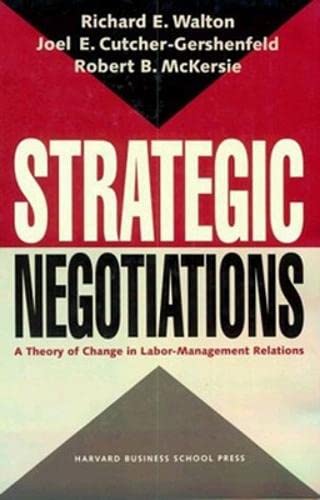
Strategic Negotiations identifies three fundamental negotiating strategies that are being used to effect changes in labormanagement relations. The first, called forcing, involves making labor accept unwanted substantive terms while simultaneously reducing the union's influence in the workplace. This strategy carries severe risks, including uncontrolled escalation, defeat, and a legacy of intergroup distrust. In contrast, the second strategy of fostering emphasizes finding solutions to common problems and building trust and consensus between the parties. A major risk with fostering is that difficult problems may not be addressed for fear of straining the new relationship. The third strategy, escape, entails withdrawing from the negotiating relationship altogether by physically transferring operations to another location. Using detailed case studies of individual firms and entire industries to analyze the tactical advantages and risks of each approach, the authors ultimately recommend a mixed strategy of forcing and fostering.Part I of Strategic Negotiations reviews the contemporary labormanagement landscape and presents the authors' theory about how the strategies are being used to reshape relationships between American management and labor. Part II offers case histories of thirteen companies drawn from the pulp and paper, auto supply, and railroad industries to illustrate that theory. Part III examines the case studies in greater depth to assess the influences on the negotiators and their ensuing strategic choices, and Part IV identifies the specific tactics companies use to implement their negotiating strategies.Throughout the book, the authors note evidence that explains why certain negotiations were successful while others failed, and provide guidelines to help practitioners decide which strategy or combination of strategies is best for their situation. While labor and management must continue to attend to their different and often conflicting interests, each must give equal or greater attention to the parties' common interests to survive in today's competitive business arena. By establishing a clear framework for understanding how the U.S. labor market is evolving, Strategic Negotiations offers the parties a way to address both their differences and their expanding mutual interests.
⚠️ WARNING (California Proposition 65):
This product may contain chemicals known to the State of California to cause cancer, birth defects, or other reproductive harm.
For more information, please visit www.P65Warnings.ca.gov.