
Title
Streetwalking On A Ruined Map,New
Sold by Ergodebooks, an authorized reseller.
Returns accepted within 30 days | support@ergodebooks.com
Shipping Information
- Free Standard Shipping — United States only
- Processing Time: 3–5 business days
- Estimated Delivery: 6–10 business days after dispatch
- Double-boxed, fully insured & discreetly packaged
- Tracking number sent via email once dispatched
Returns & Refund
Returns accepted within 30 days of delivery.
Damaged or Defective Item
Free return shipping + replacement or full refund
Wrong Item Received
Free return shipping + replacement or full refund
Change of Mind
Return shipping at customer's expense · 25% restocking fee applies
Payment Option

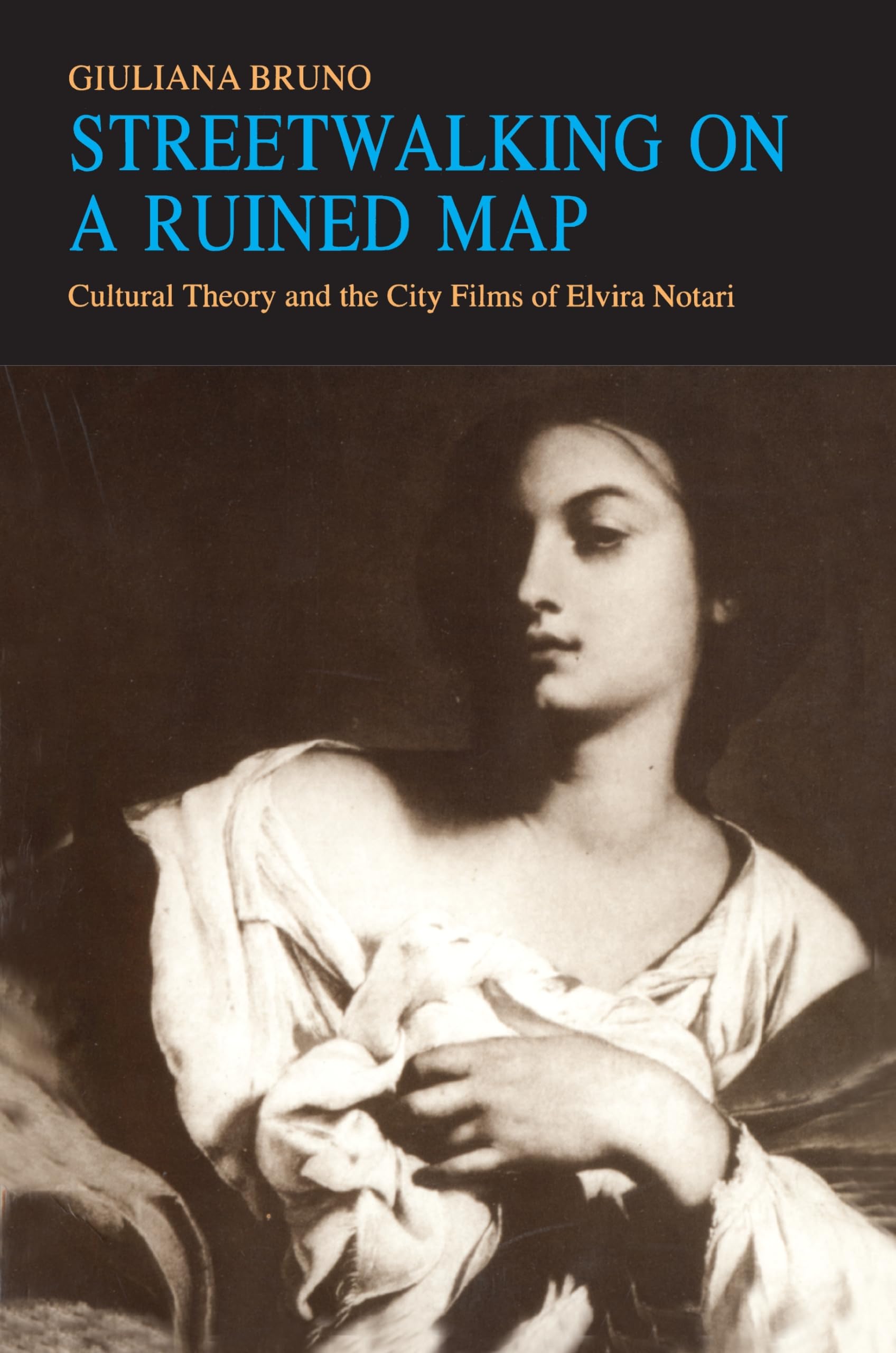
Emphasizing The Importance Of Cultural Theory For Film History, Giuliana Bruno Enriches Our Understanding Of Early Italian Film As She Guides Us On A Series Of 'Inferential Walks' Through Italian Culture In The First Decades Of This Century. This Innovative Approachthe Interweaving Of Examples Of Cinema With Architecture, Art History, Medical Discourse, Photography, And Literatureaddresses The Challenge Posed By Feminism To Film Study While Calling Attention To Marginalized Artists. An Object Of This Critical Remapping Is Elvira Notari (18751946), Italy'S First And Most Prolific Woman Filmmaker, Whose Documentarystyle Work On Street Life In Naples, A Forerunner Of Neorealism, Was Popularly Acclaimed In Italy And The United States Until Its Suppression During The Fascist Regime. Since Only Fragments Of Notari'S Films Exist Today, Bruno Illuminates The Filmmaker'S Contributions To Early Italian Cinematography By Evoking The Cultural Terrain In Which She Operated. What Emerges Is An Intertextual Montage Of Urban Film Culture Highlighting A Woman'S View On Love, Violence, Poverty, Desire, And Death. This Panorama Ranges From The City'S Exteriors To The Body'S Interiors. Reclaiming An Alternative History Of Women'S Filmmaking And Reception, Bruno Draws A Cultural History That Persuasively Argues For A Spatial, Corporal Interpretation Of Film Language.
⚠️ WARNING (California Proposition 65):
This product may contain chemicals known to the State of California to cause cancer, birth defects, or other reproductive harm.
For more information, please visit www.P65Warnings.ca.gov.
- Q: How many pages does 'Streetwalking on a Ruined Map' have? A: This book has four hundred thirty-six pages. It provides an in-depth exploration of early Italian film and cultural theory.
- Q: What is the binding type of this book? A: The binding type is paperback. This makes it lightweight and portable for easy reading.
- Q: What dimensions does the book measure? A: The book measures six point two six inches in length, one inch in width, and nine point two five inches in height. These dimensions make it a convenient size for handling.
- Q: Who is the author of 'Streetwalking on a Ruined Map'? A: The author is Giuliana Bruno. She is recognized for her contributions to film studies and cultural theory.
- Q: What genre does this book fall under? A: The book falls under the Performing Arts genre. It focuses on film history and cultural analysis.
- Q: Is 'Streetwalking on a Ruined Map' suitable for academic study? A: Yes, it is suitable for academic study. The book offers critical insights into early Italian cinema and cultural contexts.
- Q: What themes are explored in this book? A: The book explores themes of love, violence, poverty, desire, and death. It provides a unique perspective on women's filmmaking.
- Q: How does this book address feminism in film studies? A: It addresses feminism by highlighting marginalized artists and offering a critical remapping of women's contributions to film. This is particularly evident in the work of Elvira Notari.
- Q: Is this book intended for general readers or specialists? A: It is intended for both general readers and specialists. The engaging writing style makes complex ideas accessible.
- Q: How should I care for this book? A: To care for the book, keep it in a dry place and avoid exposure to direct sunlight. This will help maintain its condition.
- Q: Can I return the book if I don't like it? A: Yes, you can return the book if you are unsatisfied. Check the return policy for specific details.
- Q: What if the book arrives damaged? A: If the book arrives damaged, contact customer support for assistance. They typically offer replacements or refunds.
- Q: Is there a warranty for this book? A: No, books generally do not come with a warranty. However, you can refer to the return policy for options.
- Q: Is this book safe for young readers? A: While it may be suitable for older teenagers, the content is complex and involves themes not appropriate for younger readers.
- Q: How can I best store this book? A: Store the book upright on a shelf. Avoid placing heavy items on it to prevent damage to the spine.
- Q: What makes this book unique compared to others in the genre? A: This book is unique for its interdisciplinary approach, blending film with architecture, art history, and feminist discourse.