If you have any questions, you are always welcome to contact us. We'll get back to you as soon as possible, withing 24 hours on weekdays.
Customer service
All questions about your order, return and delivery must be sent to our customer service team by e-mail at yourstore@yourdomain.com
Sale & Press
If you are interested in selling our products, need more information about our brand or wish to make a collaboration, please contact us at press@yourdomain.com
Help
If you have any questions, you are always welcome to contact us. We'll get back to you as soon as possible, withing 24 hours on weekdays.
Customer service
All questions about your order, return and delivery must be sent to our customer service team by e-mail at yourstore@yourdomain.com
Sale & Press
If you are interested in selling our products, need more information about our brand or wish to make a collaboration, please contact us at press@yourdomain.com
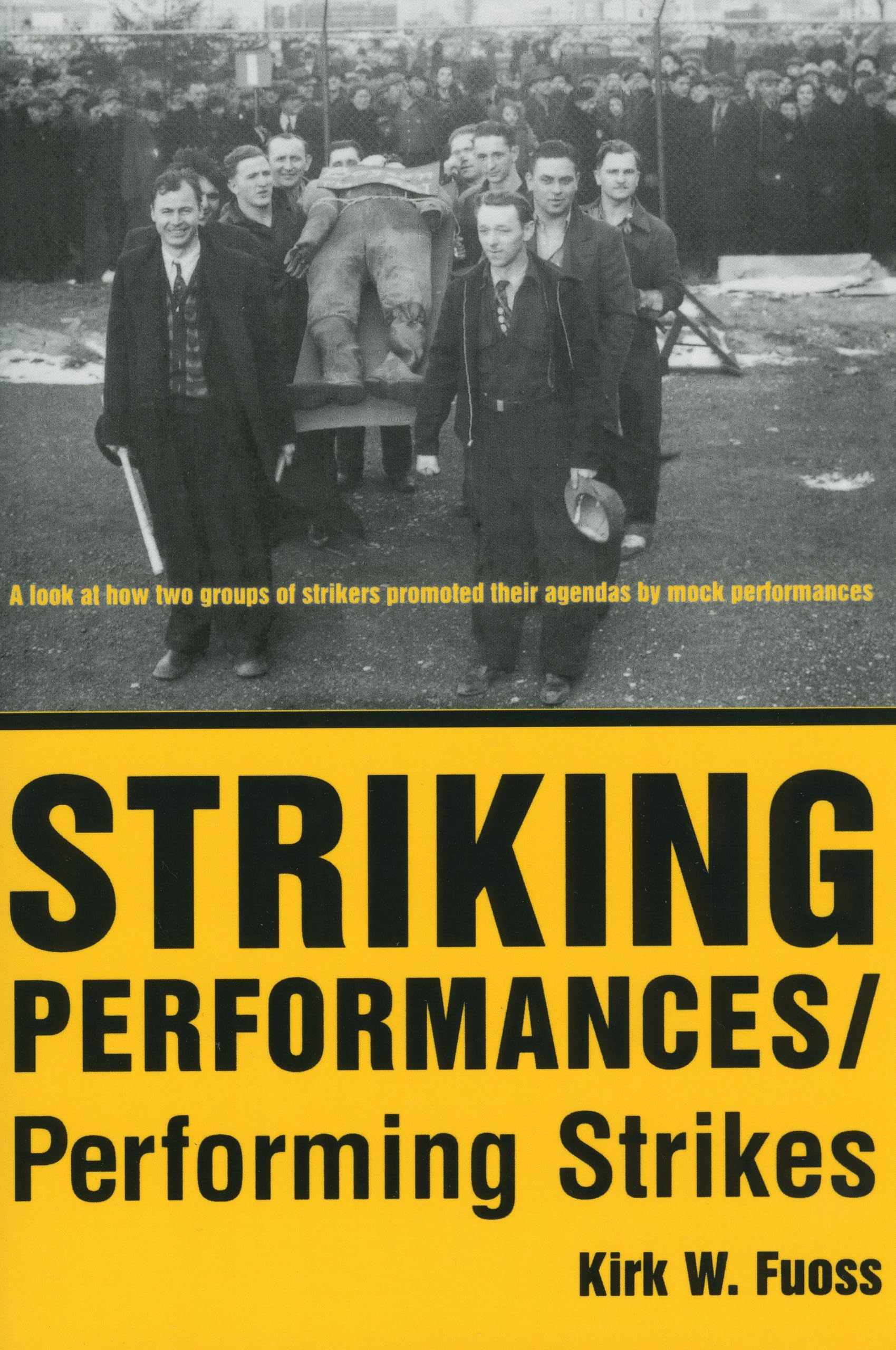
In the 1930s two protest groups gained the public eye by role playing. They brought their social grievances to attention in their communities by staging mock performances. In this fascinating study of two strikes, Kirk W. Fuoss reports how the novel incidents of these protests unite the seemingly opposing forces of community and contestation.The two extended case studiesthe Workers Alliance of America's 1936 takeover of the New Jersey State Assembly and the General Motors sitdown strike of 193637illustrate group interdependence rather than opposition and demonstrate the irony of fostering a sense of community while fomenting conflict.The New Jersey case rose out of the state's depletion of relief appropriations and the cutting off of payments to the unemployed. As a result, the state branch of the union seized the State Assembly and for ten days staged a 'pauper's parliament' in which members alternately performed roles of ideal legislators and parodied the actual legislators.A similar cultural performance was staged in Flint, Michigan, during the General Motors sitdown strike. Because the local media maintained an antistrike stance, union forces frequently deployed cultural performances to simulate an alternative press. To achieve their ends, they also staged kangaroo court sessions, dancing pickets, daily concerts by strikers' orchestras, auto parades, mock funerals, games of labor charades, and skits written and performed by the strikers themselves.These two case studies show how the theatrical stagings by strikers threw the spotlight of public attention on their causes.
⚠️ WARNING (California Proposition 65):
This product may contain chemicals known to the State of California to cause cancer,
birth defects, or other reproductive harm.
For MAP (Minimum Advertised Price) violations and Intellectual Property (IP) or Trademark concerns, please contact:
support@ergodebooks.com
⚠️ California Proposition 65 Warning: Some products sold on this website may expose you to chemicals known to the State of California to cause cancer, birth defects, or other reproductive harm. For more information, visit www.P65Warnings.ca.gov.