
Title
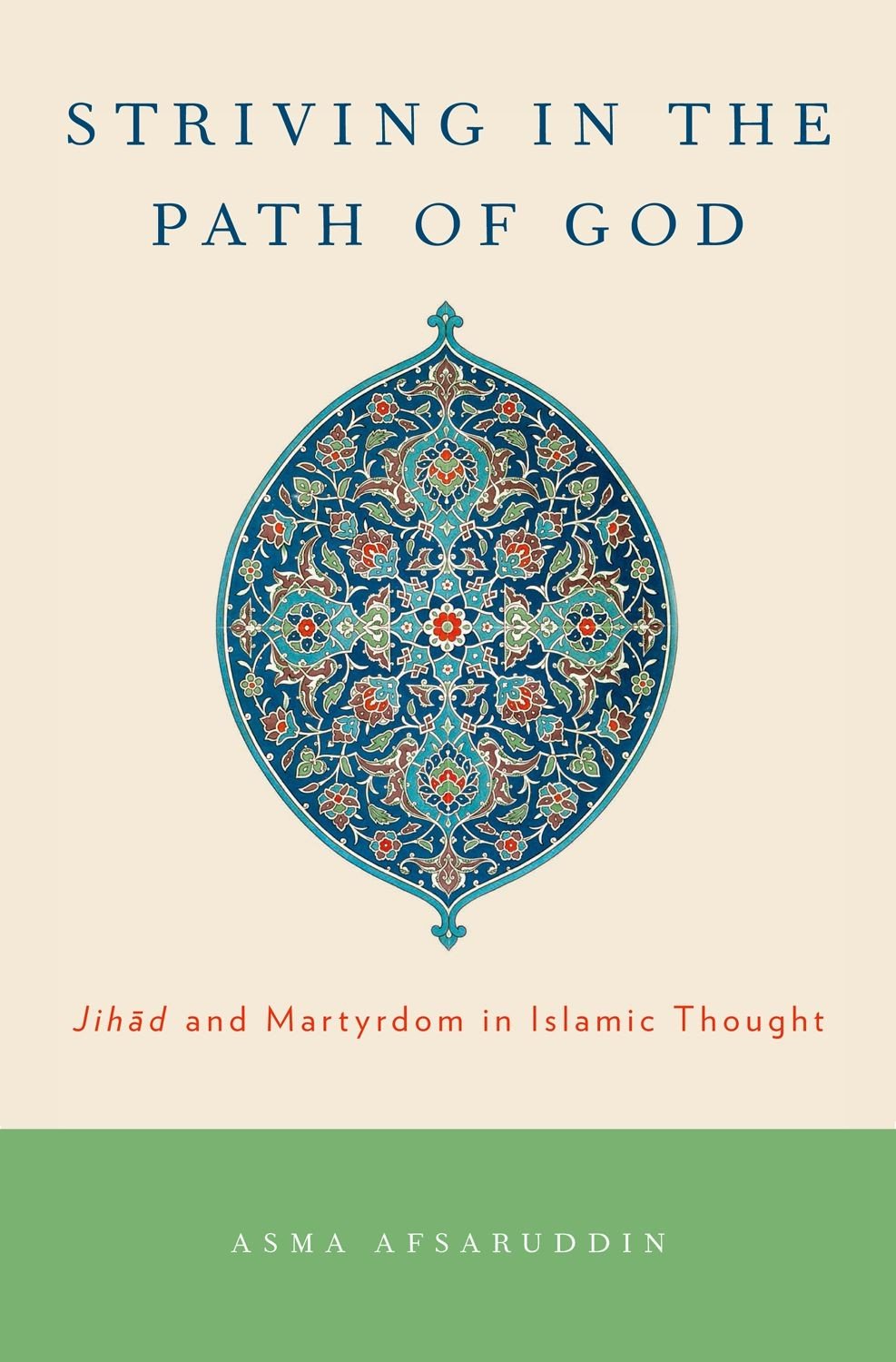
Striving in the Path of God: Jihad and Martyrdom in Islamic Thought,Used
Sold by Ergodebooks, an authorized reseller.
Returns accepted within 30 days | support@ergodebooks.com
Shipping Information
- Free Standard Shipping — United States only
- Processing Time: 3–5 business days
- Estimated Delivery: 6–10 business days after dispatch
- Double-boxed, fully insured & discreetly packaged
- Tracking number sent via email once dispatched
Returns & Refund
Returns accepted within 30 days of delivery.
Damaged or Defective Item
Free return shipping + replacement or full refund
Wrong Item Received
Free return shipping + replacement or full refund
Change of Mind
Return shipping at customer's expense · 25% restocking fee applies
Payment Option

In popular and academic literature, jihad is predominantly assumed to refer exclusively to armed combat, and martyrdom in the Islamic context is understood to be invariably of the military kind. This perspective, derived mainly from legal texts, has led to discussions of jihad and martyrdom as concepts with fixed, universal meanings divorced from the sociopolitical circumstances in which they have been deployed through the centuries. Asma Afsaruddin studies in a more holistic manner the range of significations that can be ascribed to the term jihad from the earliest period to the present and historically contextualizes the competing discourses that developed over time. Many assumptions about the military jihad and martyrdom in Islam are thereby challenged and deconstructed. A comprehensive interrogation of varied sources reveals early and multiple competing definitions of a word that in combination with the phrase fi sabil Allah translates literally to 'striving in the path of God.'Contemporary radical Islamists have appropriated this language to exhort their cadres to armed political opposition, which they legitimize under the rubric of jihad. Afsaruddin shows that the multivalent connotations of jihad and shahid recovered from the formative period lead us to question the assertions of those who maintain that belligerent and militant interpretations preserve the earliest and only authentic understanding of these two key terms. Retrieval of these multiple perspectives has important implications for our world today in which the concepts of jihad and martyrdom are still being fiercely debated.
⚠️ WARNING (California Proposition 65):
This product may contain chemicals known to the State of California to cause cancer, birth defects, or other reproductive harm.
For more information, please visit www.P65Warnings.ca.gov.