
Title
Strong Imagination,Used
Sold by Ergodebooks, an authorized reseller.
Returns accepted within 30 days | support@ergodebooks.com
Shipping Information
- Free Standard Shipping — United States only
- Processing Time: 3–5 business days
- Estimated Delivery: 6–10 business days after dispatch
- Double-boxed, fully insured & discreetly packaged
- Tracking number sent via email once dispatched
Returns & Refund
Returns accepted within 30 days of delivery.
Damaged or Defective Item
Free return shipping + replacement or full refund
Wrong Item Received
Free return shipping + replacement or full refund
Change of Mind
Return shipping at customer's expense · 25% restocking fee applies
Payment Option

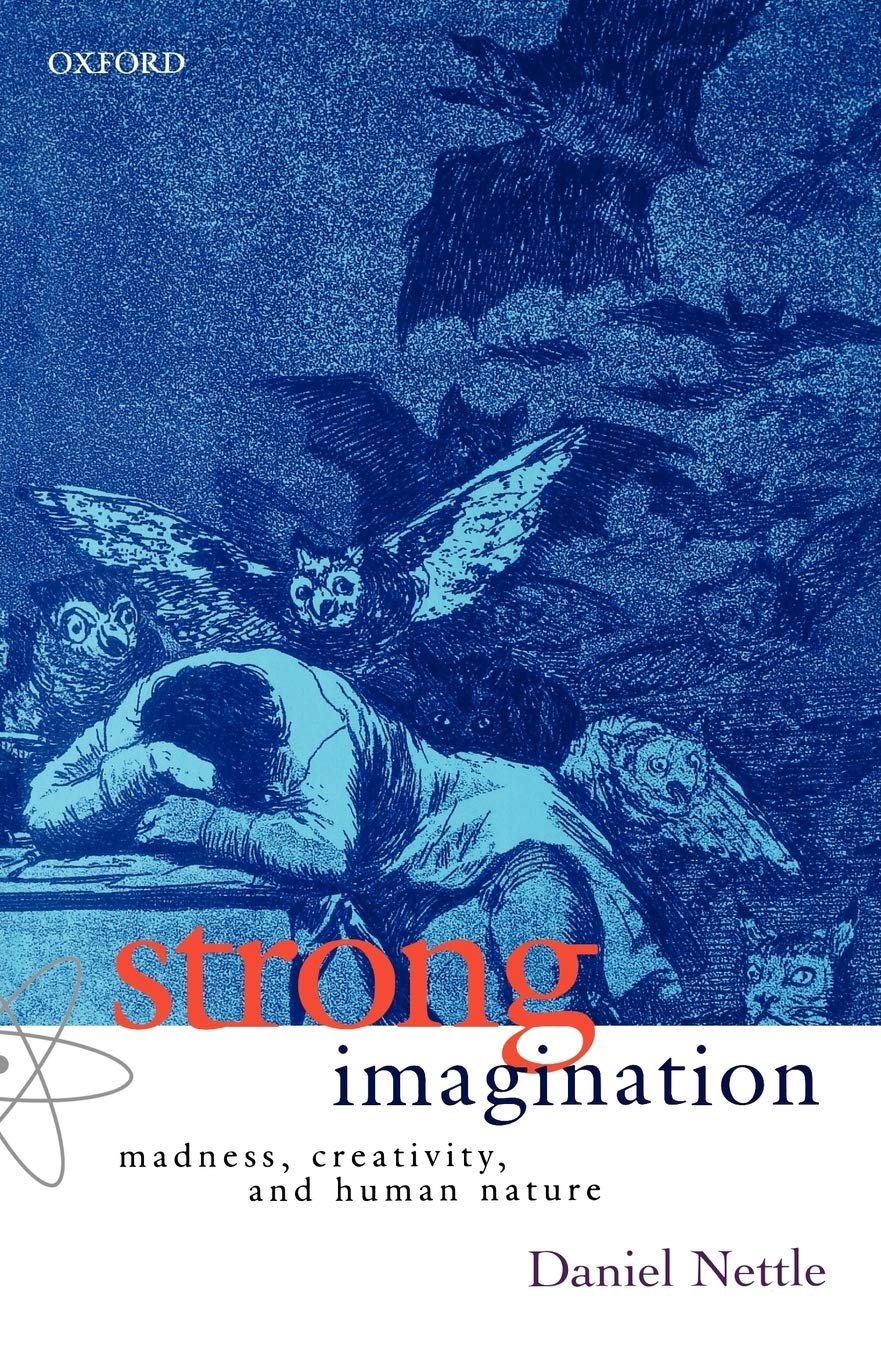
Madness is the central mystery of the human psyche. Our minds evolved to give us a faithful understanding of reality, to allow us to integrate into our communities, and to help us to adapt our behaviour to our environment. Yet in serious mental illness, the mind does exactly the opposite of these things. The sufferer builds castles of imaginative delusion, fails to adapt, and becomes a stranger among their own people. Mental illness is no marginal phenomenon: it is found in all societies and all historical epochs, and the genes that underlie it are quite common. Furthermore, the traits that identify the madman are found in attenuated form in normal thinking and feeling. The persistence of madness, then, is a terrible puzzle from both an evolutionary and a human point of view. In A Midsummer Night's Dream, Shakespeare suggested a link between madness and artistic creativity: 'The lunatic, the lover, and the poet', he wrote, 'Are of imagination all compact'. Recent studies have shown that there is indeed a connection. Rates of mental illness are hugely elevated in the families of poets, writers, and artists, suggesting that the same genes, the same temperaments, and the same imaginative capacities are at work in insanity and in creative ability. Thus the reason madness continues to exist is that the traits behind it have psychological benefits as well as psychological costs. In Strong Imagination, Daniel Nettle explores the nature of mental illness, the biological mechanisms that underlie it, and its link to creative genius. He goes on to consider the place of both madness and creative imagination in the evolution of our species.
⚠️ WARNING (California Proposition 65):
This product may contain chemicals known to the State of California to cause cancer, birth defects, or other reproductive harm.
For more information, please visit www.P65Warnings.ca.gov.