
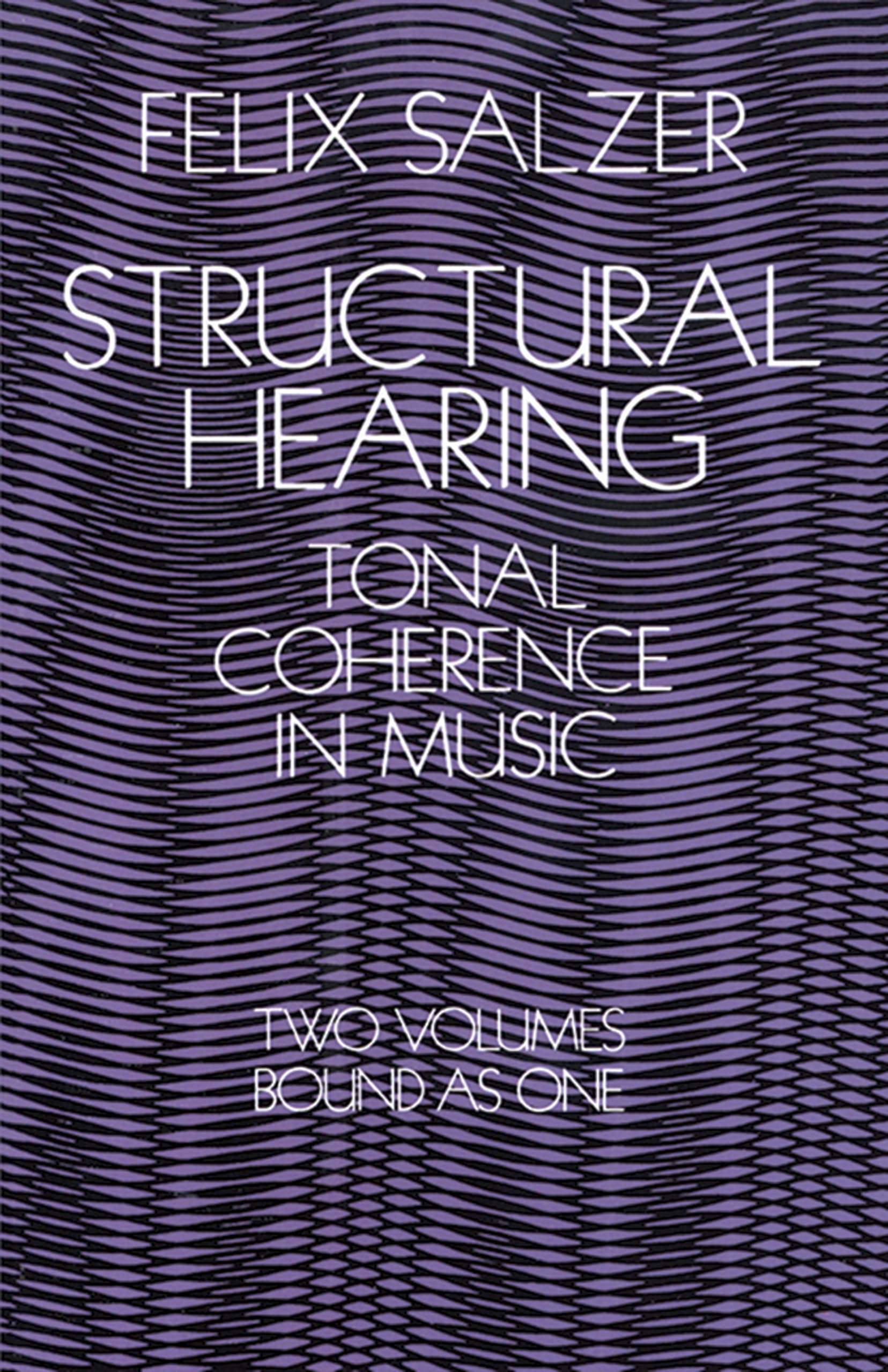
Title
Structural Hearing: Tonal Coherence In Music (Dover Books On Music: Analysis),New
Sold by Ergodebooks, an authorized reseller.
Returns accepted within 30 days | support@ergodebooks.com
Shipping Information
- Free Standard Shipping — United States only
- Processing Time: 3–5 business days
- Estimated Delivery: 6–10 business days after dispatch
- Double-boxed, fully insured & discreetly packaged
- Tracking number sent via email once dispatched
Returns & Refund
Returns accepted within 30 days of delivery.
Damaged or Defective Item
Free return shipping + replacement or full refund
Wrong Item Received
Free return shipping + replacement or full refund
Change of Mind
Return shipping at customer's expense · 25% restocking fee applies
Payment Option

Written By A Pupil Of The Late Heinrich Schenker, This Outstanding Work Is The Most Thorough Exposition In English Of Schenker'S Work. Developing And Extending The Schenker Approach To Include Modern Music, It Explores The Phenomenon Of Tonal Organization In Western Music By Means Of A Detailed Analysis And Discussion Of More Than 500 Musical Examples Ranging In Time From The Middle Ages To Such Moderns As Bartok, Hindemith, Prokofiev, And Stravinsky.Heinrich Schenker'S Great Contribution Was The Discovery Of Fundamental Principles Of Tonal Organization, Continuity, And Coherence. In Theory He Was The First To Define These Organic Forces Of The Musical Language, Particularly The Tonal Functions And Relationships Which Form Both The Generative And Cohesive Forces Of Great Music.Dr. Salzer, In Expanding And Formulating Anew Many Of Schenker'S Ideas, Has Embarked Upon A Systematic Approach. Using The Concept Of Chord Functions As A Basis, He Differentiates Sharply Between Chord Grammar (Or Labeling) And Significance, Showing That Function Rather Than The Ordinary Label Is Really Significant. Further Distinctions Between Chords Of Structure And Chords Of Prolongation, Harmonic And Contrapuntal Uses, And The Concept Of Musical Direction Provide Effective Tools For The Analysis Of Music.This Set, Which Is A Standard Work Used In All Important Music Schools, Starts With Basic Definitions And Simple Examples, And Trains The Reader Not Only To Hear Successions Of Tones, Melodic Lines, And Progressions Of Chords, But Also To Understand Their Structural Coherence And Significance. It Is Invaluable For Musicians And For All Who Are Seriously Interested In Music, Whether As A Student, Critic, Performer, Or Conductor.'Since Its Publication In 1952 . . . Has Been The Foundation On Which All Teaching In Music Theory Has Been Based At This College.' Leopold Mannes, President, The Mannes College Of Music. 'Never Likely To Be Improved Upon For Soundness And Comprehensiveness.' Ernest Newman, The Times. 'A Thoughtful And Provocative Contribution To The Fields Of Music Theory, Aesthetics, And Criticism, And Performance. Dr. Salzer Is To Be Congratulated On Having Helped Us Take A Long Step Out Of The Dark Ages.' Norman Lloyd, Juilliard School Of Music, In Notes.
⚠️ WARNING (California Proposition 65):
This product may contain chemicals known to the State of California to cause cancer, birth defects, or other reproductive harm.
For more information, please visit www.P65Warnings.ca.gov.
- Q: How many pages does this book have? A: This book has six hundred eighty-eight pages. It provides an extensive exploration of tonal coherence in music.
- Q: What are the dimensions of this book? A: The dimensions of the book are five point five one inches in length, one point two six inches in width, and eight point seven five inches in height.
- Q: What type of binding does this book have? A: This book is published in paperback binding. This makes it lightweight and easy to handle for reading.
- Q: Who is the author of this book? A: The author is Felix Salzer. He was a pupil of the renowned music theorist Heinrich Schenker.
- Q: What genre does this book belong to? A: This book belongs to the Classical genre. It focuses on music theory and analysis.
- Q: What is the primary focus of this book? A: The primary focus is on tonal coherence in music. It aims to deepen understanding of musical organization.
- Q: Is this book suitable for beginners? A: Yes, this book is suitable for beginners. It starts with basic definitions and simple examples.
- Q: Can this book help with music theory studies? A: Yes, this book is highly regarded for music theory studies. It is used in important music schools.
- Q: Is this book appropriate for music critics? A: Yes, this book is appropriate for music critics. It offers a thoughtful contribution to music theory and aesthetics.
- Q: What should I do if the book arrives damaged? A: If the book arrives damaged, you should contact customer support for assistance. Most retailers provide a return or exchange policy.
- Q: How can I keep this book in good condition? A: To keep this book in good condition, store it in a dry place and avoid exposure to direct sunlight. Handle it gently to prevent wear.
- Q: Is there a warranty for this book? A: No, there typically isn't a warranty for books. Check the seller's return policy for more information.
- Q: What if I don't understand a concept in the book? A: If you don't understand a concept, consider referencing additional resources or discussing with a music educator. The book is designed to build foundational knowledge.
- Q: Is this book recommended for conductors? A: Yes, this book is recommended for conductors. It provides insights into musical structure and coherence, which are vital for conducting.
- Q: Are there any reviews of this book? A: Yes, there are positive reviews from notable figures in music education. It has been praised for its soundness and comprehensiveness.
- Q: Does this book cover modern music? A: Yes, this book covers modern music. It includes analyses of works by composers like Bartok and Stravinsky.