
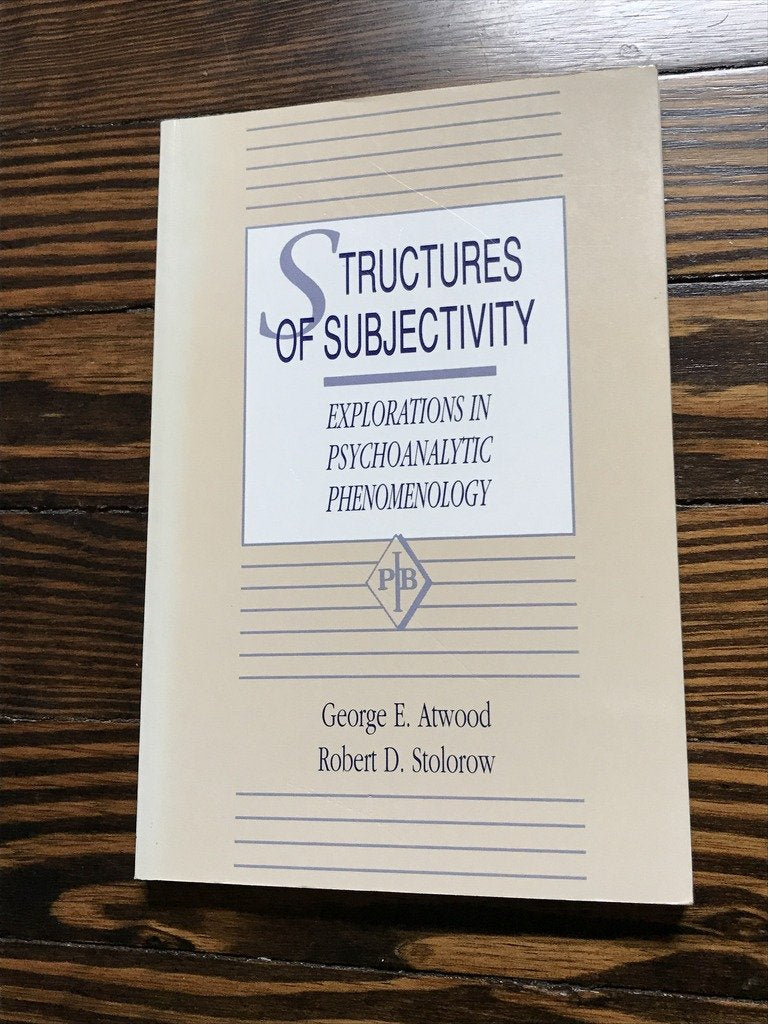
Title
Structures Of Subjectivity: Explorations In Psychoanalytic Phenomenology (Psychoanalytic Inquiry, Vol. 4),Used
Sold by Ergodebooks, an authorized reseller.
Returns accepted within 30 days | support@ergodebooks.com
Shipping Information
- Free Standard Shipping — United States only
- Processing Time: 3–5 business days
- Estimated Delivery: 6–10 business days after dispatch
- Double-boxed, fully insured & discreetly packaged
- Tracking number sent via email once dispatched
Returns & Refund
Returns accepted within 30 days of delivery.
Damaged or Defective Item
Free return shipping + replacement or full refund
Wrong Item Received
Free return shipping + replacement or full refund
Change of Mind
Return shipping at customer's expense · 25% restocking fee applies
Payment Option

The First Of The Three Analytic Press Books In Which Stolorow And Atwood (Later With The Collaboration Of Bernard Brandchaft) Reformulate Psychoanalysis As A Science Of Human Intersubjectivity. Here The Authors Explore The 'Structures Of Subjectivity' That Organize The Subjective World, Focusing On Intersubjectivity In Development, In Pathogenesis, And In The Therapeutic Situation.
⚠️ WARNING (California Proposition 65):
This product may contain chemicals known to the State of California to cause cancer, birth defects, or other reproductive harm.
For more information, please visit www.P65Warnings.ca.gov.
- Q: How many pages does this book have? A: This book has one hundred forty-four pages. It provides an in-depth exploration of psychoanalytic phenomenology.
- Q: What are the dimensions of this book? A: The dimensions of this book are six point twenty-six inches in length, zero point fifty-one inches in width, and nine point twenty-five inches in height. These measurements make it easy to handle and store.
- Q: What type of binding does this book have? A: This book features paperback binding. This makes it lightweight and suitable for easy reading.
- Q: Who is the author of this book? A: The author of this book is George E. Atwood. He is known for his contributions to psychoanalytic theory and intersubjectivity.
- Q: What is the main theme of this book? A: The main theme of this book is the exploration of human intersubjectivity. It reformulates psychoanalysis as a science of subjective experience.
- Q: Is this book suitable for beginners in psychology? A: Yes, this book is suitable for beginners in psychology. It provides foundational insights into psychoanalytic phenomenology and intersubjectivity.
- Q: How should I approach reading this book? A: You should take your time to digest the concepts presented. It's helpful to reflect on the ideas and perhaps discuss them with others interested in psychology.
- Q: Is this book appropriate for academic study? A: Yes, this book is appropriate for academic study. It is part of a series that focuses on advanced psychological concepts.
- Q: Can this book be used for therapy training? A: Yes, this book can be used for therapy training. It delves into therapeutic situations and intersubjectivity, valuable for aspiring therapists.
- Q: How do I keep this book in good condition? A: To keep this book in good condition, store it in a cool, dry place and avoid exposing it to direct sunlight. Handle it gently to prevent wear.
- Q: Is there a warranty or return policy for this book? A: Yes, there is usually a return policy for books. Check with the retailer for specific details on returns or exchanges.
- Q: What if my book arrives damaged? A: If your book arrives damaged, contact the retailer immediately for a resolution. They often provide options for refunds or replacements.
- Q: What kind of readers would benefit from this book? A: Readers interested in psychology, particularly those focused on psychoanalysis and intersubjectivity, would benefit from this book. It's insightful for both students and professionals.
- Q: How does this book compare to others in the genre? A: This book is distinct in its focus on intersubjectivity within psychoanalysis. It contrasts with more traditional approaches by emphasizing relational aspects.
- Q: Is this book considered a classic in psychological literature? A: Yes, this book is considered a classic in psychological literature. It has significantly influenced contemporary psychoanalytic thought.