
Title
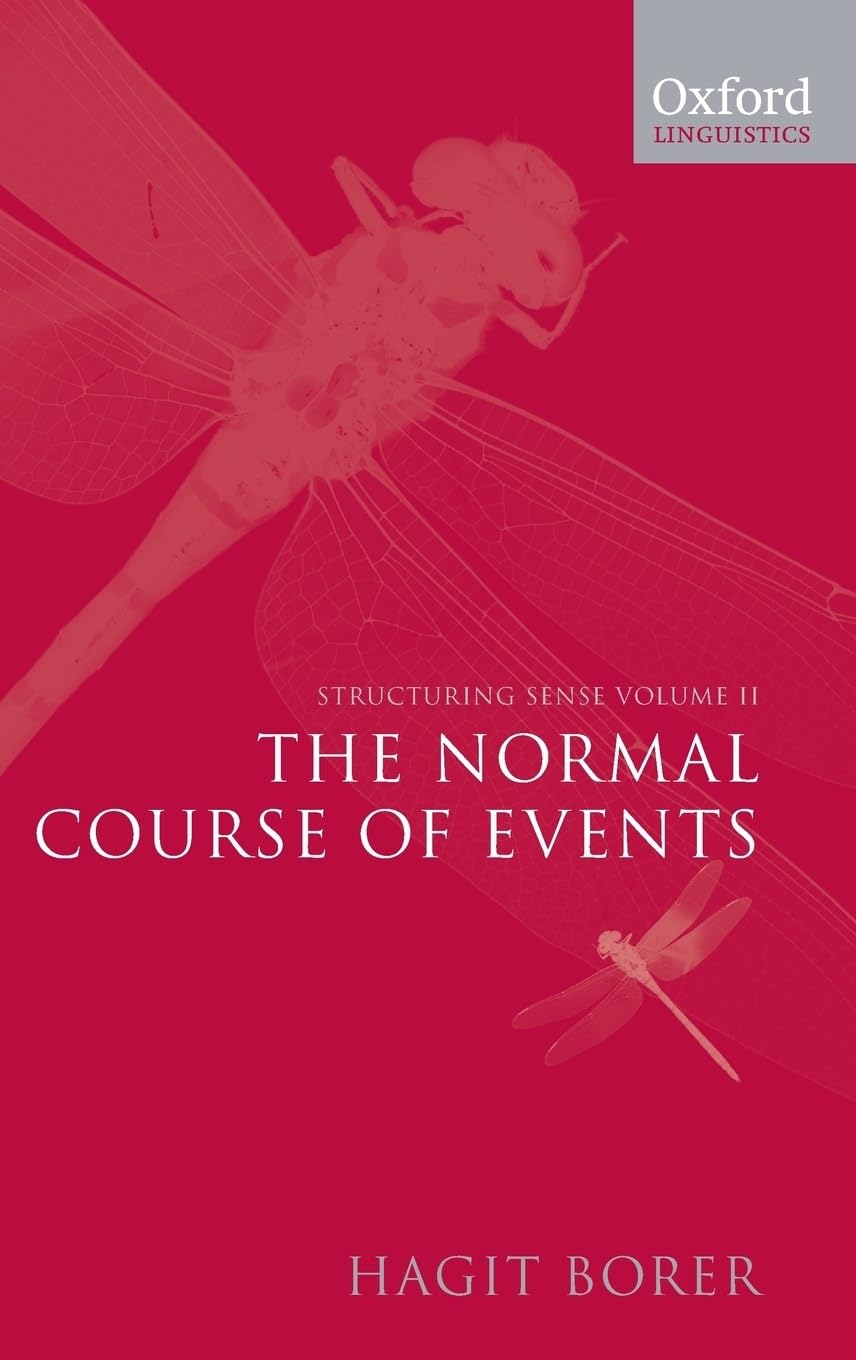
Structuring Sense: Volume II: The Normal Course of Events (Oxford Linguistics),Used
Sold by Ergodebooks, an authorized reseller.
Returns accepted within 30 days | support@ergodebooks.com
Shipping Information
- Free Standard Shipping — United States only
- Processing Time: 3–5 business days
- Estimated Delivery: 6–10 business days after dispatch
- Double-boxed, fully insured & discreetly packaged
- Tracking number sent via email once dispatched
Returns & Refund
Returns accepted within 30 days of delivery.
Damaged or Defective Item
Free return shipping + replacement or full refund
Wrong Item Received
Free return shipping + replacement or full refund
Change of Mind
Return shipping at customer's expense · 25% restocking fee applies
Payment Option

Structuring Sense explores the difference between words however defined and structures however constructed. It sets out to demonstrate over three volumes, of which this is the first, that the explanation of linguistic competence should be shifted from lexical entry to syntactic structure, from memory of words to manipulation of rules. Its reformulation of how grammar and lexicon interact has profound implications for linguistic, philosophical, and psychological theories about human mind and language.Hagit Borer departs from both constructional approaches to syntax and the long generative tradition that uses the word as the nucleus around which the syntax grows. She argues that the hierarchical, abstract structures of language are universal, not language specific, and that language variation emerges from the morphological and phonological properties of inflectional material.The Normal Course of Events applies this radical approach to event structure. Integrating research results in syntax, semantics, and morphology, the author shows that argument structure is based on the syntactic realization of semantic event units. The topics she addresses include the structure of internal arguments and of telic and atelic interpretations, accusative and partitive case, perfective and imperfective marking, the unaccusativeunergative distinction, existential interpretation and postverbal subjects, and resultative constructions. The languages discussed include English, Catalan, Finnish, Hebrew, Czech, Polish, Russian, and Spanish.
⚠️ WARNING (California Proposition 65):
This product may contain chemicals known to the State of California to cause cancer, birth defects, or other reproductive harm.
For more information, please visit www.P65Warnings.ca.gov.