
Title
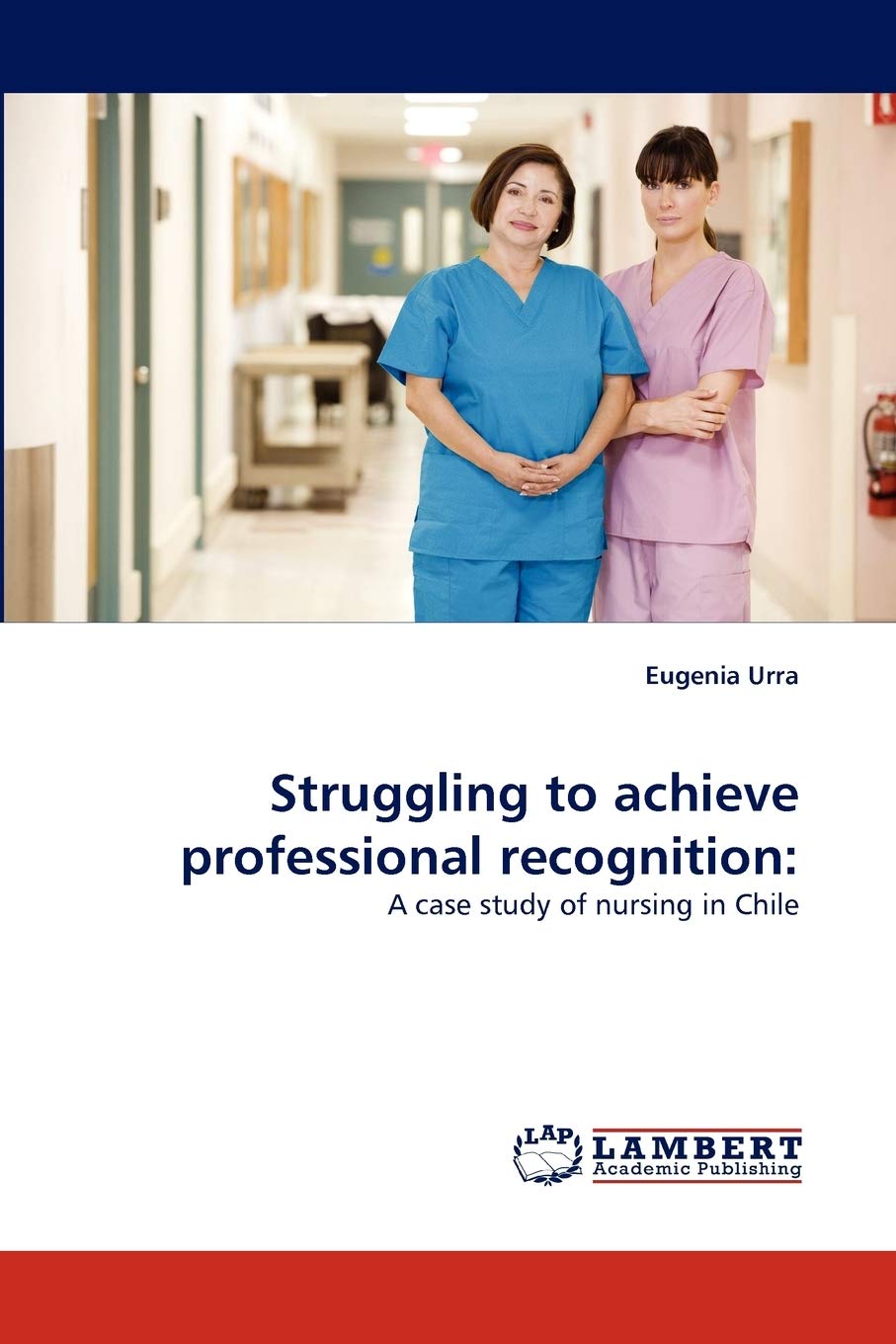
Struggling to achieve professional recognition:: A case study of nursing in Chile,Used
Sold by Ergodebooks, an authorized reseller.
Returns accepted within 30 days | support@ergodebooks.com
Shipping Information
- Free Standard Shipping — United States only
- Processing Time: 3–5 business days
- Estimated Delivery: 6–10 business days after dispatch
- Double-boxed, fully insured & discreetly packaged
- Tracking number sent via email once dispatched
Returns & Refund
Returns accepted within 30 days of delivery.
Damaged or Defective Item
Free return shipping + replacement or full refund
Wrong Item Received
Free return shipping + replacement or full refund
Change of Mind
Return shipping at customer's expense · 25% restocking fee applies
Payment Option

This project consists of a case study of professional nurses who live in three regions of Chile and who work in public and private institutions. In this qualitative research I examined how the Chilean, South American, and global contexts influenced nurses? perceptions of the nursing profession in 2002. Participants included professional nursing educators, nursing students, nursing leaders, and nurses in practice in Chile. Criteria designed by Turner and Hodge (1970) were used to determine the extent to which nursing is a profession in Chile. Critical and feminist theories, postmodernism, and poststructuralism were the theoretical lenses that I used to analyze the data. The findings reveal that professional nurses in Chile have been affected by external and internal forces that have limited their effort to achieve autonomy. From a historical, regional, and global perspective, the position of professional nurses has been influenced by the increasing privatization of health and education sectors related to structural adjustments advocated by World Bank policies. Key issues related to credentialing, such as licensure and registration, to clarity in nursing roles in practice.
⚠️ WARNING (California Proposition 65):
This product may contain chemicals known to the State of California to cause cancer, birth defects, or other reproductive harm.
For more information, please visit www.P65Warnings.ca.gov.