
Title
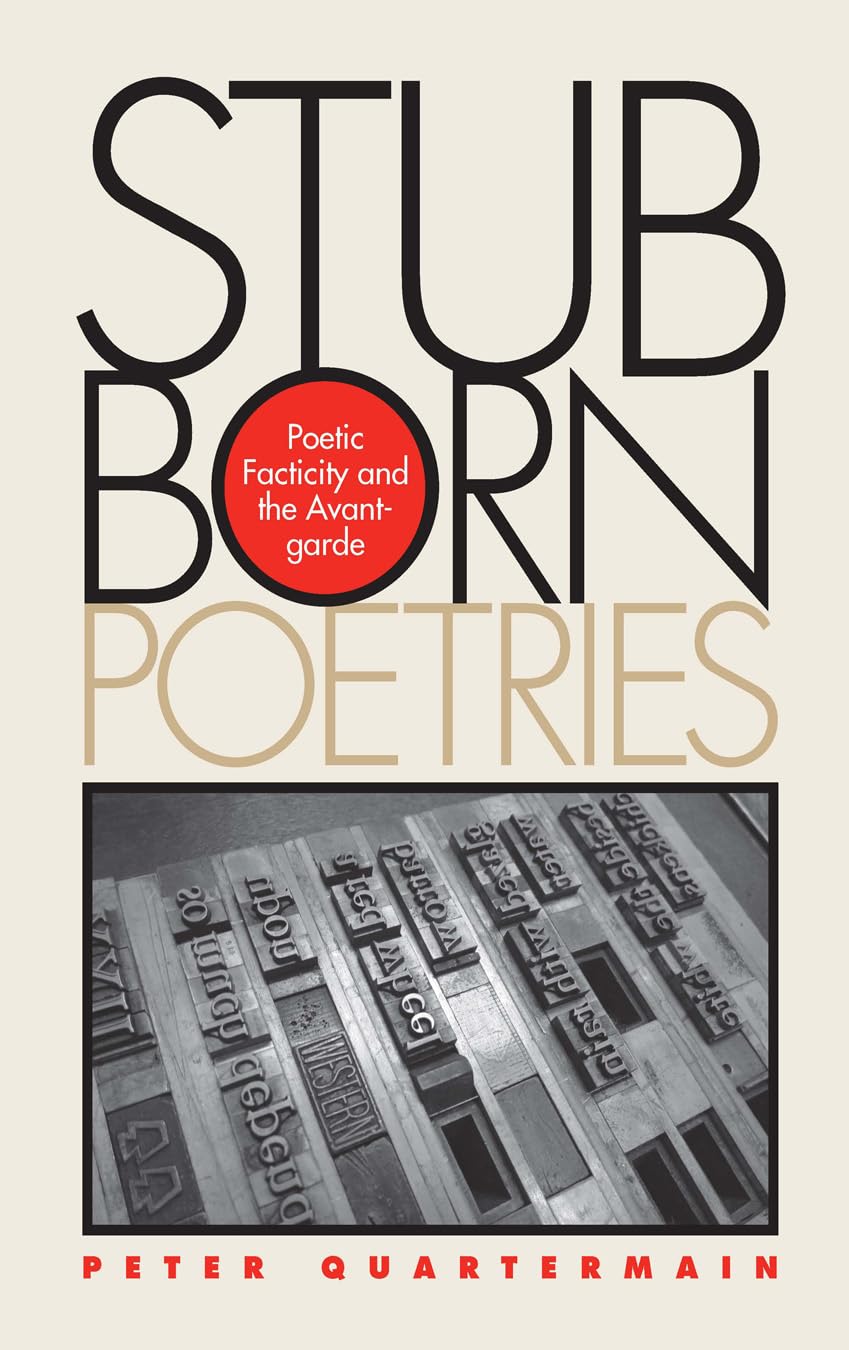
Stubborn Poetries: Poetic Facticity and the AvantGarde (Modern and Contemporary Poetics),Used
Sold by Ergodebooks, an authorized reseller.
Returns accepted within 30 days | support@ergodebooks.com
Shipping Information
- Free Standard Shipping — United States only
- Processing Time: 3–5 business days
- Estimated Delivery: 6–10 business days after dispatch
- Double-boxed, fully insured & discreetly packaged
- Tracking number sent via email once dispatched
Returns & Refund
Returns accepted within 30 days of delivery.
Damaged or Defective Item
Free return shipping + replacement or full refund
Wrong Item Received
Free return shipping + replacement or full refund
Change of Mind
Return shipping at customer's expense · 25% restocking fee applies
Payment Option

Stubborn Poetries is a study of poets whose work, because of its difficulty, apparent obduracy, or simple resistance to conventional explication, remains moreorless firmly outside the canon.The focus of the essays in Stubborn Poetries by Peter Quartermain is on nonmainstream poetsoften unknown, unstudied, and neglected writers whose work bucks preconceived notions of what constitutes the avantgarde. Canonical Strategies and the Question of Authority: T.S. Eliot and William Carlos Williams opens the collection and sounds a central theme: Quartermain argues that Williams, especially in his early work, soughtnoncanonical status, in contrast to Eliot, who rapidly identified his work with a literary and critical establishment. As is well known, Eliot attracted early critical and academic attention; Williams did not. Williamss insistence that the personal and individual constituted his sole authority is echoed again and again in the work of the writers examined in the subsequent essays.In considering the question What makes the poems the way they are?most of the essays offer close readings (etymological, social, linguistic, and even political) of linguistically innovative twentiethcentury poets. Linguistic innovation, as Marjorie Perloff and many other critics have shown, shows no reverence for national boundaries; two of the poets discussed are British (Basil Bunting and Richard Caddel) and two Canadian (Robin Blaser and Steve McCaffery). The last four essays in the book consider more general topics: the shape and nature of the book, the nature of poetic fact, the performance of the poem (is it possible to read a poem aloud well?), andclosing the bookan excursus (via the Greek myth of Io and the typography of Geofroy Tory) on the alphabet.
⚠️ WARNING (California Proposition 65):
This product may contain chemicals known to the State of California to cause cancer, birth defects, or other reproductive harm.
For more information, please visit www.P65Warnings.ca.gov.