
Title
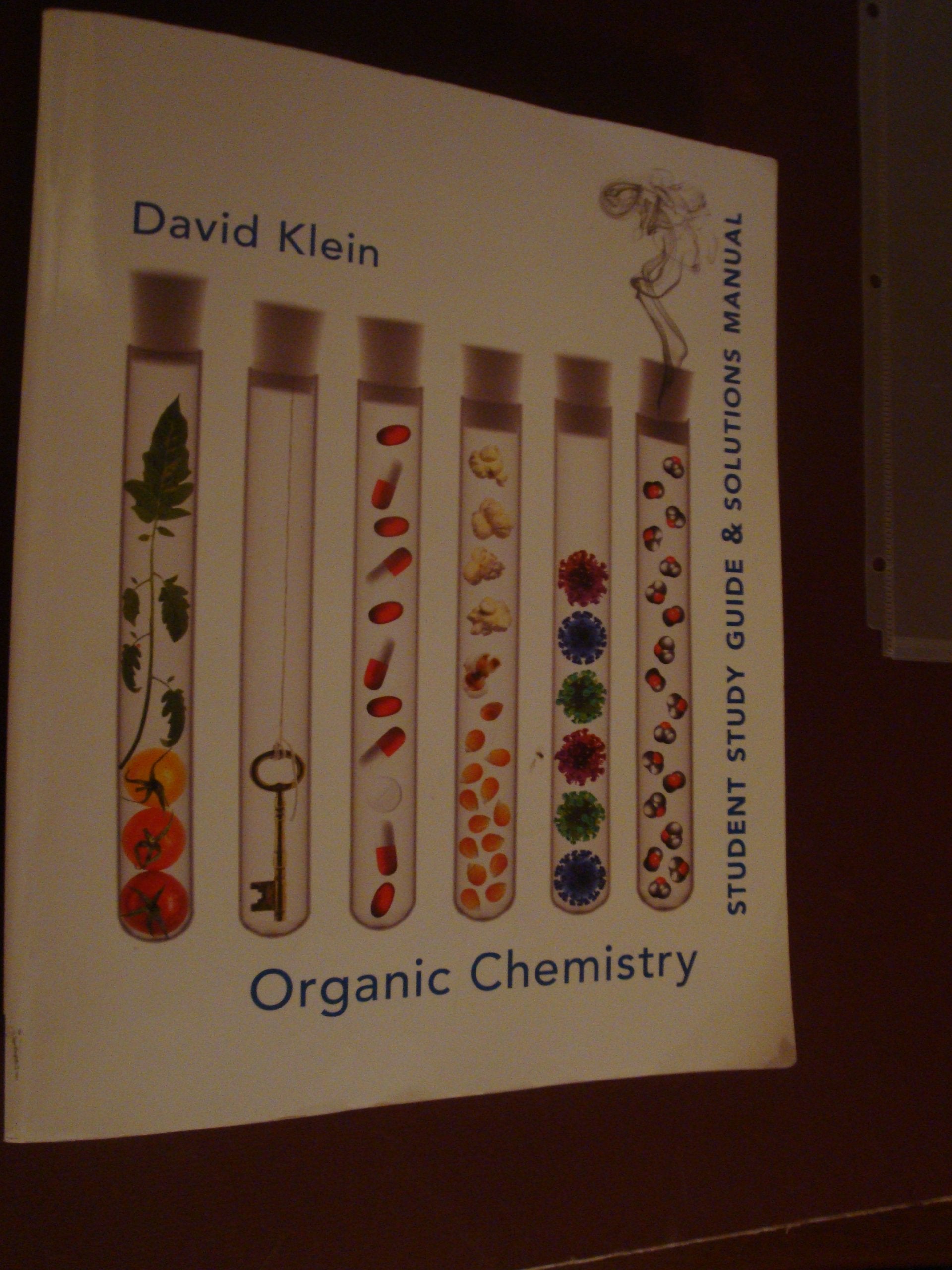
Student Study Guide and Solutions Manual for Organic Chemistry,New
Sold by Ergodebooks, an authorized reseller.
Returns accepted within 30 days | support@ergodebooks.com
Shipping Information
- Free Standard Shipping — United States only
- Processing Time: 3–5 business days
- Estimated Delivery: 6–10 business days after dispatch
- Double-boxed, fully insured & discreetly packaged
- Tracking number sent via email once dispatched
Returns & Refund
Returns accepted within 30 days of delivery.
Damaged or Defective Item
Free return shipping + replacement or full refund
Wrong Item Received
Free return shipping + replacement or full refund
Change of Mind
Return shipping at customer's expense · 25% restocking fee applies
Payment Option

Students often say, 'I studied 40 hours for this exam and I still didn't do well. Where did I go wrong?' Most instructors hear this complaint every year. In many cases, it is true that the student invested countless hours, only to produce abysmal results. Often, inefficient study habits are to blame. The important question is: why do so many students have difficulty preparing themselves for organic chemistry exams? There are certainly several factors at play here, but perhaps the most dominant factor is a fundamental disconnect between what students learn and the tasks expected of them. To address the disconnect in organic chemistry instruction, David Klein has developed a textbook that utilizes a skillsbased approach to instruction. The textbook includes all of the concepts typically covered in an organic chemistry textbook, but special emphasis is placed on skills development to support these concepts. This emphasis upon skills development will provide students with a greater opportunity to develop proficiency in the key skills necessary to succeed in organic chemistry.As an example, resonance structures are used repeatedly throughout the course, and students must become masters of resonance structures early in the course. Therefore, a significant portion of chapter 1 is devoted to drawing resonance structures.Two chapters (6 and 12) are devoted almost entirely to skill development. Chapter 6 emphasizes skills that are necessary for drawing mechanisms, while chapter 12 prepares the student for proposing syntheses.In addition, each chapter contains numerous Skillbuilders, each of which is designed to foster a specific skill. Each skillbuildercontains three parts:1. Learn the Skill: a solved problem that demonstrates a particular skill;2. Practice the Skill: numerous problems (similar to the solved problem) that give the students an opportunity to practice and master the skill;3. Apply the Skill: one or two morechallenging problems in which the student must apply the skill in a slightly different environment. These problems include conceptual, cumulative, and applied problems that encourage students to think out of the box. Sometimes problems that foreshadow concepts introduced in later chapters are also included.All SkillBuilders are visually summarized at the end of each chapter (Skillbuilder review), followed by a list of suggested inchapter and endofchapter practice problems.
⚠️ WARNING (California Proposition 65):
This product may contain chemicals known to the State of California to cause cancer, birth defects, or other reproductive harm.
For more information, please visit www.P65Warnings.ca.gov.
- Q: What are the dimensions of the Student Study Guide and Solutions Manual for Organic Chemistry? A: The dimensions are eight point four four inches in length, one point two three inches in width, and ten point eight nine inches in height.
- Q: How many pages does this study guide contain? A: This study guide contains seven hundred twenty pages, making it comprehensive for organic chemistry studies.
- Q: What type of binding does this book have? A: The book is paperback bound, providing flexibility and ease of use for students.
- Q: Who is the author of the Student Study Guide and Solutions Manual for Organic Chemistry? A: The author is David R. Klein, known for his expertise in organic chemistry education.
- Q: Is this study guide suitable for beginners in organic chemistry? A: Yes, this study guide is suitable for beginners as it emphasizes skills development necessary for mastering organic chemistry.
- Q: What approach does the textbook take to teach organic chemistry? A: The textbook utilizes a skills-based approach to instruction, focusing on developing key skills for success.
- Q: How should I use the Skillbuilders in this study guide? A: Each Skillbuilder includes three parts: learn the skill with a solved problem, practice the skill with similar problems, and apply the skill with more challenging problems.
- Q: Are there practice problems included in the study guide? A: Yes, the study guide includes numerous practice problems at the end of each chapter to reinforce learning.
- Q: What safety precautions should I take when using this book? A: Although the study guide is not hazardous, it's best to keep it in a safe, clean environment to maintain its condition.
- Q: How do I store the Student Study Guide and Solutions Manual for Organic Chemistry? A: Store the book in a cool, dry place, ideally upright on a shelf to avoid damage.
- Q: Can I return this study guide if I am not satisfied? A: Yes, typically you can return the study guide if you are not satisfied, but check the seller's return policy for specific details.
- Q: What should I do if the book arrives damaged? A: If the book arrives damaged, contact the seller immediately to discuss return or replacement options.
- Q: Is there a warranty for this study guide? A: There is usually no warranty for books, but check with the seller for any specific guarantees.
- Q: How can I ensure I am using effective study habits with this guide? A: Utilize the Skillbuilders and practice problems regularly to develop and reinforce your understanding of organic chemistry concepts.
- Q: Does this study guide cover all concepts in organic chemistry? A: Yes, it covers all typical concepts found in organic chemistry textbooks, with a focus on skills development.