
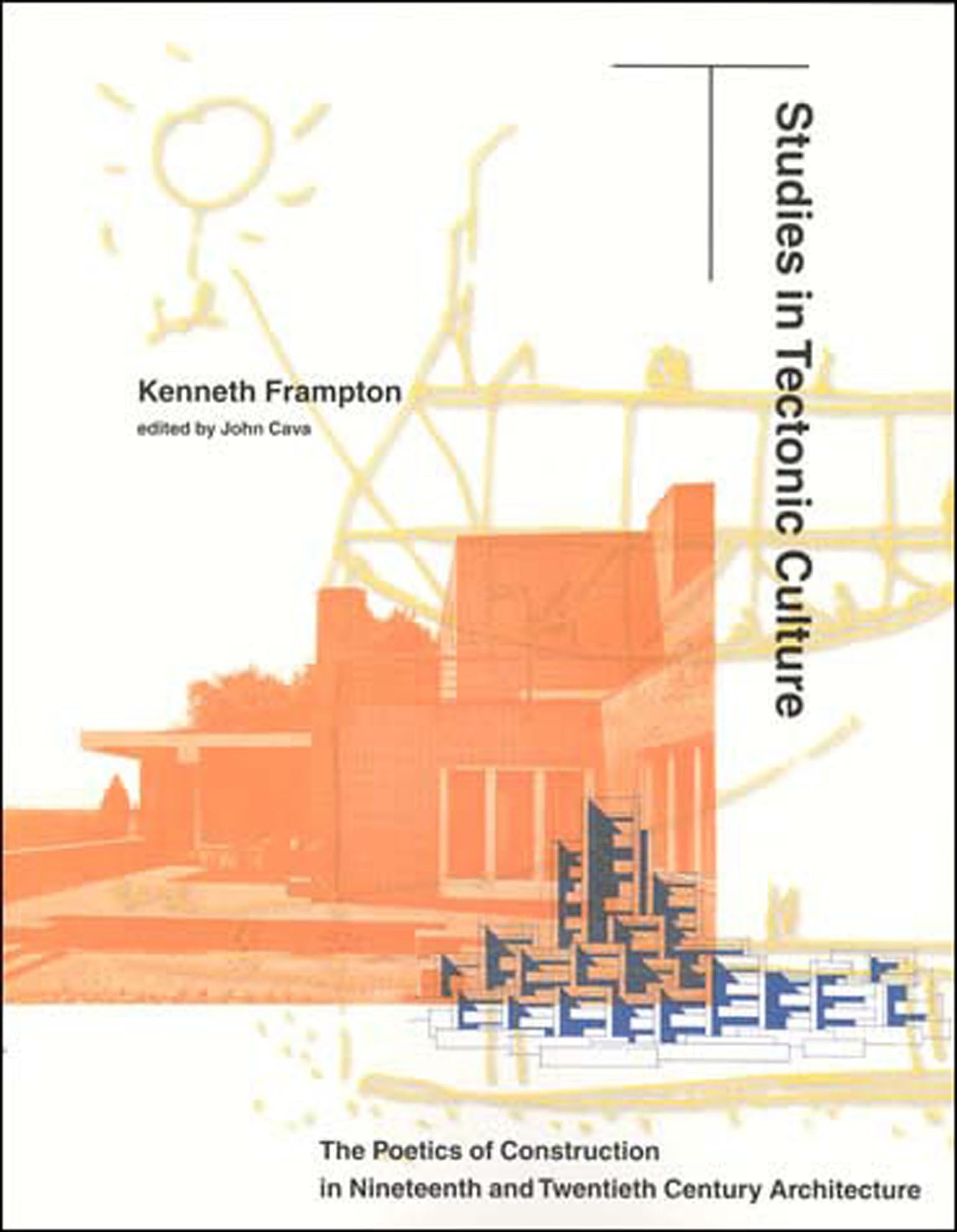
Title
Studies In Tectonic Culture: The Poetics Of Construction In Nineteenth And Twentieth Century Architecture
Sold by Ergodebooks, an authorized reseller.
Returns accepted within 30 days | support@ergodebooks.com
Shipping Information
- Free Standard Shipping — United States only
- Processing Time: 3–5 business days
- Estimated Delivery: 6–10 business days after dispatch
- Double-boxed, fully insured & discreetly packaged
- Tracking number sent via email once dispatched
Returns & Refund
Returns accepted within 30 days of delivery.
Damaged or Defective Item
Free return shipping + replacement or full refund
Wrong Item Received
Free return shipping + replacement or full refund
Change of Mind
Return shipping at customer's expense · 25% restocking fee applies
Payment Option

Composed Of Ten Essays And An Epilogue That Trace The History Of Contemporary Form As An Evolving Poetic Of Structure And Construction, The Book'S Analytical Framework Rests On Frampton'S Close Readings Of Key French And German, And English Sources From The Eighteenth Century To The Present.Kenneth Frampton'S Longawaited Followup To His Classic A Critical History Of Modern Architecture Is Certain To Influence Any Future Debate On The Evolution Of Modern Architecture. Studies In Tectonic Culture Is Nothing Less Than A Rethinking Of The Entire Modern Architectural Tradition. The Notion Of Tectonics As Employed By Framptonthe Focus On Architecture As A Constructional Craftconstitutes A Direct Challenge To Current Mainstream Thinking On The Artistic Limits Of Postmodernism, And Suggests A Convincing Alternative. Indeed, Frampton Argues, Modern Architecture Is Invariably As Much About Structure And Construction As It Is About Space And Abstract Form.Composed Of Ten Essays And An Epilogue That Trace The History Of Contemporary Form As An Evolving Poetic Of Structure And Construction, The Book'S Analytical Framework Rests On Frampton'S Close Readings Of Key French And German, And English Sources From The Eighteenth Century To The Present. He Clarifies The Various Turns That Structural Engineering And Tectonic Imagination Have Taken In The Work Of Such Architects As Perret, Wright, Kahn, Scarpa, And Mies, And Shows How Both Constructional Form And Material Character Were Integral To An Evolving Architectural Expression Of Their Work. Frampton Also Demonstrates That The Way In Which These Elements Are Articulated From One Work To The Next Provides A Basis Upon Which To Evaluate The Works As A Whole. This Is Especially Evident In His Consideration Of The Work Of Perret, Mies, And Kahn And The Continuities In Their Thought And Attitudes That Linked Them To The Past.Frampton Considers The Conscious Cultivation Of The Tectonic Tradition In Architecture As An Essential Element In The Future Development Of Architectural Form, Casting A Critical New Light On The Entire Issue Of Modernity And On The Place Of Much Work That Has Passed As Avantgarde.A Copublication Of The Graham Foundation For Advanced Studies And The Mit Press.
⚠️ WARNING (California Proposition 65):
This product may contain chemicals known to the State of California to cause cancer, birth defects, or other reproductive harm.
For more information, please visit www.P65Warnings.ca.gov.
- Q: How many pages does the book have? A: The book has four hundred forty-eight pages. It offers a comprehensive exploration of architecture through essays and analyses.
- Q: What are the dimensions of this book? A: The book measures eight point four three inches in length, zero point eight seven inches in width, and ten point nine four inches in height. These dimensions make it a manageable size for reading.
- Q: What is the binding type of this book? A: The book is available in paperback binding. This makes it lightweight and easy to handle.
- Q: Who is the author of the book? A: The author of the book is Kenneth Frampton. He is a renowned figure in architecture and criticism.
- Q: What genre does this book belong to? A: This book falls under the genre of criticism. It critically examines the evolution of architectural practices.
- Q: Is this book suitable for beginners in architecture? A: Yes, this book is suitable for beginners. It provides foundational insights into modern architecture and its critical analysis.
- Q: Can I use this book for academic purposes? A: Yes, this book can be used for academic purposes. It contains essays that are informative for architectural studies.
- Q: What is the reading level for this book? A: The reading level is appropriate for college students and above. It engages with complex architectural concepts.
- Q: Are there any illustrations in the book? A: Yes, the book includes illustrations. They complement the textual analysis and enhance understanding.
- Q: What should I do if the book arrives damaged? A: If the book arrives damaged, you should contact customer service for a replacement. They will assist you with the return process.
- Q: What is the return policy for this book? A: The return policy allows returns within a specified period. Check the retailer's site for exact terms.
- Q: Is there a warranty for the book? A: No, there is no warranty for this book. However, it is covered under the return policy.
- Q: How should I store this book to keep it in good condition? A: Store the book upright in a dry place. Avoid exposure to direct sunlight to prevent fading.
- Q: Can I gift this book? A: Yes, this book makes a great gift for architecture enthusiasts. It offers valuable insights into modern architectural thought.
- Q: Is this book part of a series? A: No, this book is not part of a series. It stands alone as a significant contribution to architectural criticism.