If you have any questions, you are always welcome to contact us. We'll get back to you as soon as possible, withing 24 hours on weekdays.
Customer service
All questions about your order, return and delivery must be sent to our customer service team by e-mail at yourstore@yourdomain.com
Sale & Press
If you are interested in selling our products, need more information about our brand or wish to make a collaboration, please contact us at press@yourdomain.com
Help
If you have any questions, you are always welcome to contact us. We'll get back to you as soon as possible, withing 24 hours on weekdays.
Customer service
All questions about your order, return and delivery must be sent to our customer service team by e-mail at yourstore@yourdomain.com
Sale & Press
If you are interested in selling our products, need more information about our brand or wish to make a collaboration, please contact us at press@yourdomain.com
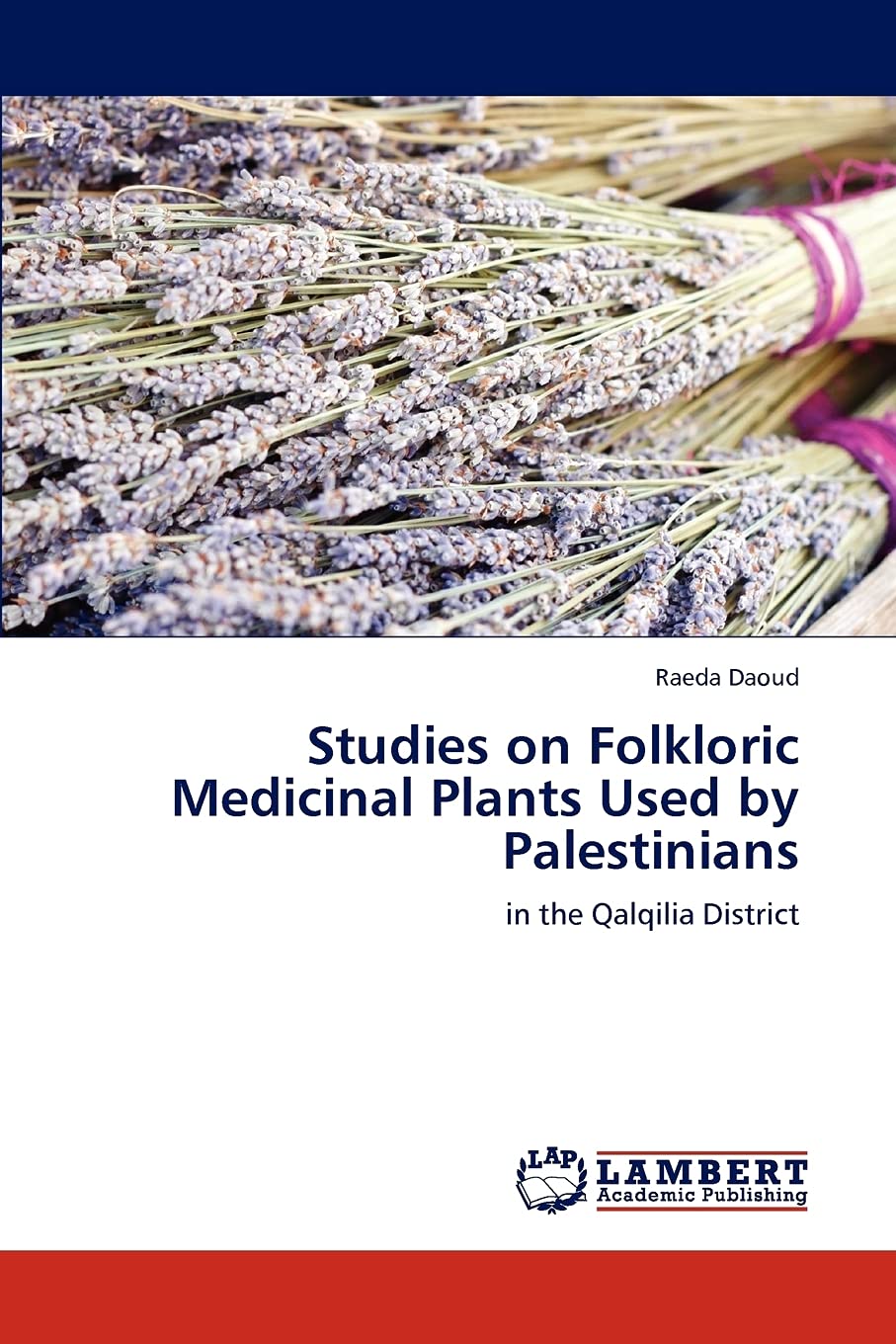
An ethnobotanical study was conducted in the Qalqilia district, a semicoastal area in the northern West Bank, Palestine from January 2006 to April 2007. The study aimed at evaluating the current status of the Traditional Arabic Palestinian Herbal Medicine (TAPHM) in the Qalqilia District, determining medicinal plants still in use, their primary health care importance at the household level, economic value, conservation status, and their healing potentials. The work also aimed at documenting and preserving the traditional knowledge associated with the use of medicinal plants before its disappearance. Information was collected from 200 people: 174 women and 26 men, using specially designed questionnaires. The participants included 3 local healers, and 197 well known informants. One hundred and sixteen medicinal plants were reported to be used as a cure for 62 ailments. The studied plants belong to 46 families and 103 genera. The fidelity level (FL), relative popularity level (RPL), and rank order priority (ROP) of the medicinal plants were determined
⚠️ WARNING (California Proposition 65):
This product may contain chemicals known to the State of California to cause cancer,
birth defects, or other reproductive harm.
For MAP (Minimum Advertised Price) violations and Intellectual Property (IP) or Trademark concerns, please contact:
support@ergodebooks.com
⚠️ California Proposition 65 Warning: Some products sold on this website may expose you to chemicals known to the State of California to cause cancer, birth defects, or other reproductive harm. For more information, visit www.P65Warnings.ca.gov.