
Title
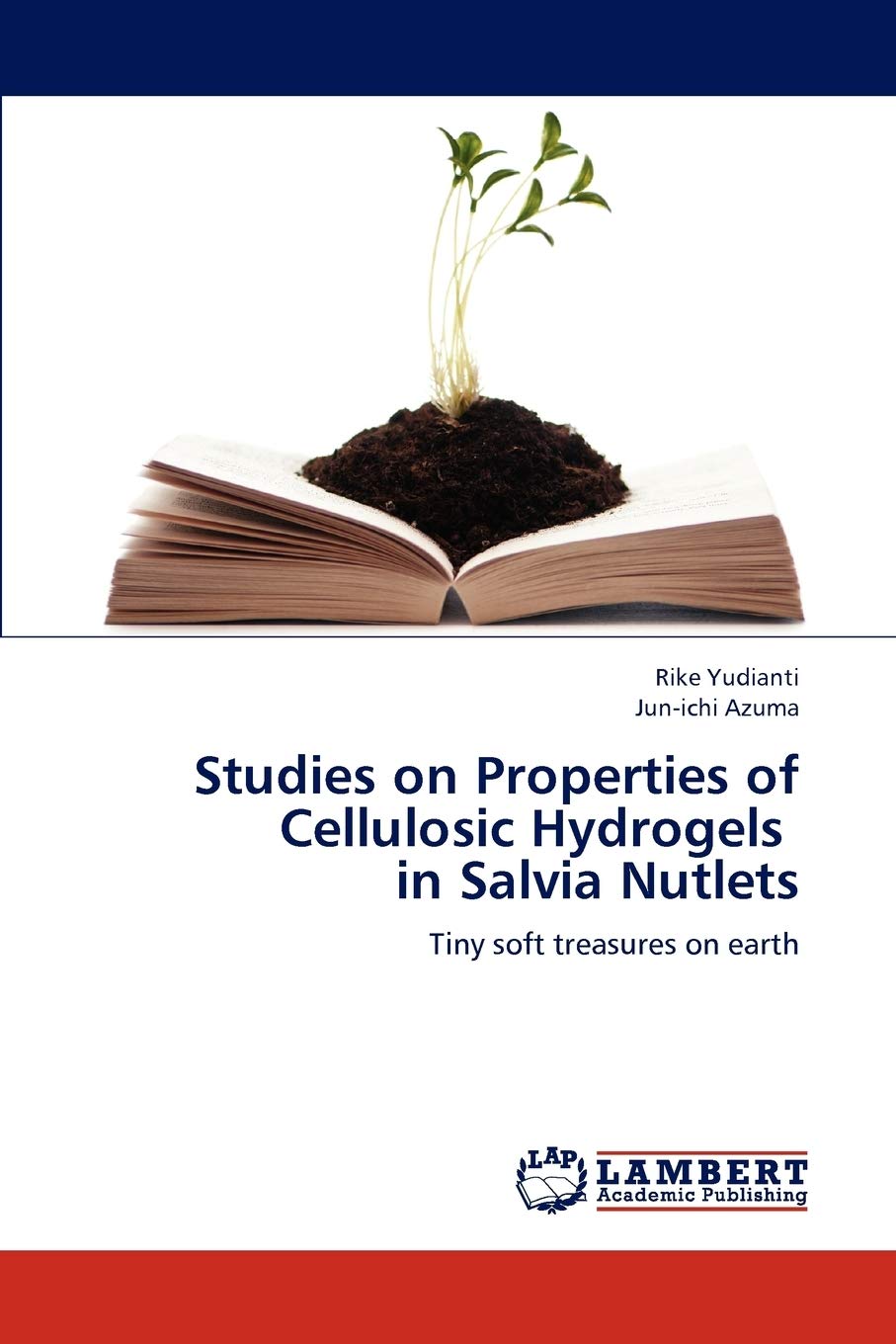
Studies on Properties of Cellulosic Hydrogels in Salvia Nutlets: Tiny soft treasures on earth,Used
Sold by Ergodebooks, an authorized reseller.
Returns accepted within 30 days | support@ergodebooks.com
Shipping Information
- Free Standard Shipping — United States only
- Processing Time: 3–5 business days
- Estimated Delivery: 6–10 business days after dispatch
- Double-boxed, fully insured & discreetly packaged
- Tracking number sent via email once dispatched
Returns & Refund
Returns accepted within 30 days of delivery.
Damaged or Defective Item
Free return shipping + replacement or full refund
Wrong Item Received
Free return shipping + replacement or full refund
Change of Mind
Return shipping at customer's expense · 25% restocking fee applies
Payment Option

What a tiny treasure in Salvia nutlets produces! Topics include pericarp structure of the nutlets, chemical physicochemical properties of their hydrogels, and thermal stability of the hydrogels. Firstly nutlets of Salvia were grouped into 4 types in relation to the hydrogel productivity. Good corelationship was observed between hydrogel content and pericarp thickness. Precise chemical analysis of the hydrogels from the nutlets of three species of Salvia, S. miltiorrhiza (SM), S. sclarea (SC) and S. viridis (SV), lead to the key finding that shows presence of composite structure of cellulose and hemicellulosic polysaccharides consisting of neutral galactan or arabinogalactan and acidic (1,4)linked xylan highly substituted with glucuronic and 4Omethylglucuronic acids (SC and SV) or glucuronic acid (SM). Cooperations of electrostatic repulsion, crosslinkage through calcium ions and hydrogen bond were important for formation of the hydrogel structure. Importance of water structure and interactions between cellulose and acidic xylan was also evidenced. The summative results will provide utilization of Salvia hydrogels as future innovative biomaterials.
⚠️ WARNING (California Proposition 65):
This product may contain chemicals known to the State of California to cause cancer, birth defects, or other reproductive harm.
For more information, please visit www.P65Warnings.ca.gov.