
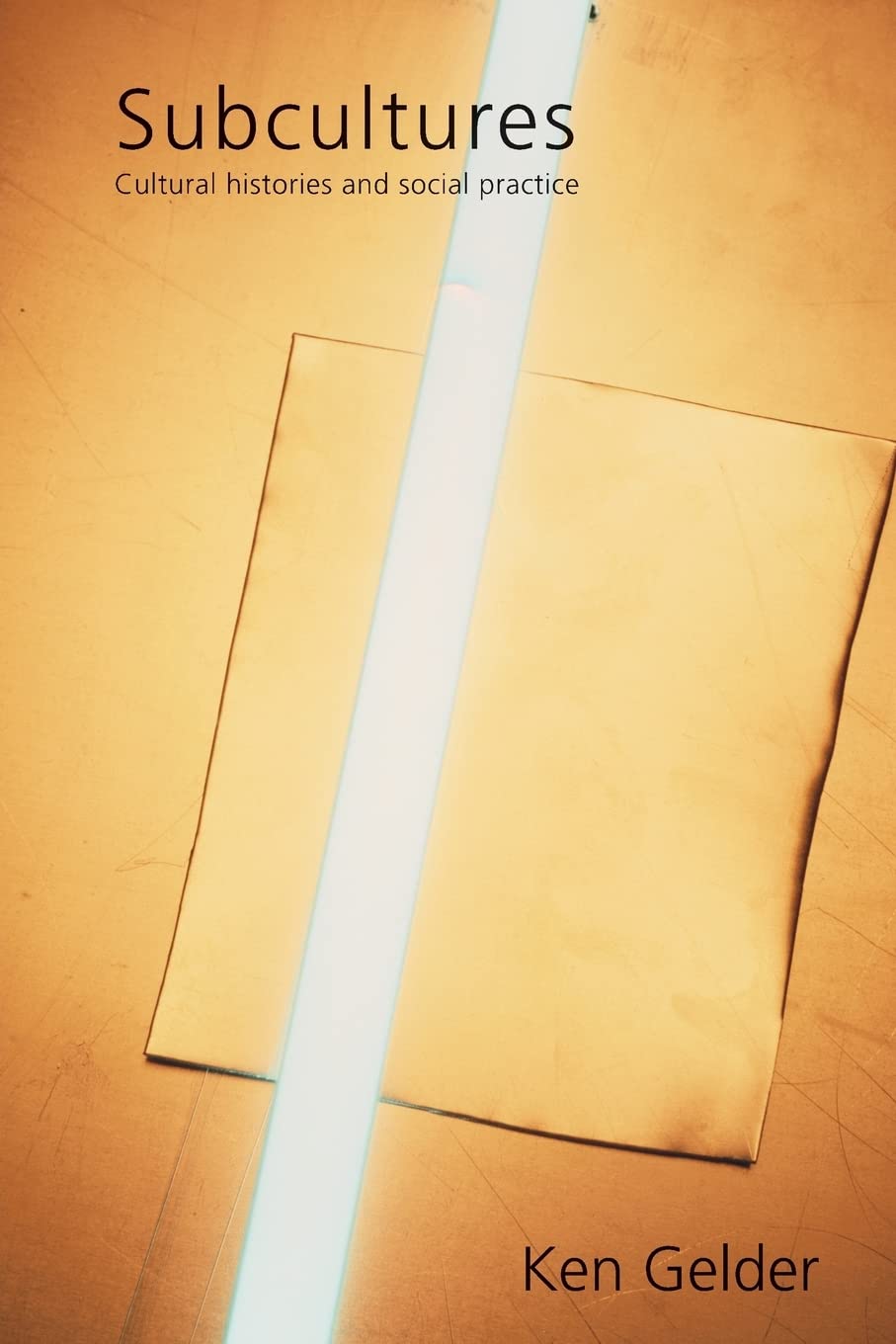
Title
Subcultures,Used
Sold by Ergodebooks, an authorized reseller.
Returns accepted within 30 days | support@ergodebooks.com
Shipping Information
- Free Standard Shipping — United States only
- Processing Time: 3–5 business days
- Estimated Delivery: 6–10 business days after dispatch
- Double-boxed, fully insured & discreetly packaged
- Tracking number sent via email once dispatched
Returns & Refund
Returns accepted within 30 days of delivery.
Damaged or Defective Item
Free return shipping + replacement or full refund
Wrong Item Received
Free return shipping + replacement or full refund
Change of Mind
Return shipping at customer's expense · 25% restocking fee applies
Payment Option

This book presents a cultural history of subcultures, covering a remarkable range of subcultural forms and practices. It begins with Londons Elizabethan underworld, taking the rogue and vagabond as subcultural prototypes: the basis for Marxs later view of subcultures as the lumpenproletariat, and Henry Mayhews view of subcultures as those that will not work. Subcultures are always in some way nonconforming or dissenting. They are social with their own shared conventions, values, rituals, and so on but they can also seem immersed or selfabsorbed. This book identifies six key ways in which subcultures have generally been understood: through their often negative relation to work: idle, parasitical, hedonistic, criminal their negative or ambivalent relation to class their association with territory the street, the hood, the club rather than property their movement away from home into nondomestic forms of belonging their ties to excess and exaggeration (as opposed to restraint and moderation) their refusal of the banalities of ordinary life and in particular, of massification.Subcultures looks at the way these features find expression across many different subcultural groups: from the Ranters to the riot grrrls, from taxi dancers to drag queens and kings, from bebop to hip hop, from dandies to punk, from hobos to leatherfolk, and from hippies and bohemians to digital pirates and virtual communities. It argues that subcultural identity is primarily a matter of narrative and narration, which means that its focus is literary as well as sociological. It also argues for the idea of a subcultural geography: that subcultures inhabit places in particular ways, their investment in them being as much imaginary as real and, in some cases, strikingly utopian.
⚠️ WARNING (California Proposition 65):
This product may contain chemicals known to the State of California to cause cancer, birth defects, or other reproductive harm.
For more information, please visit www.P65Warnings.ca.gov.