
Title
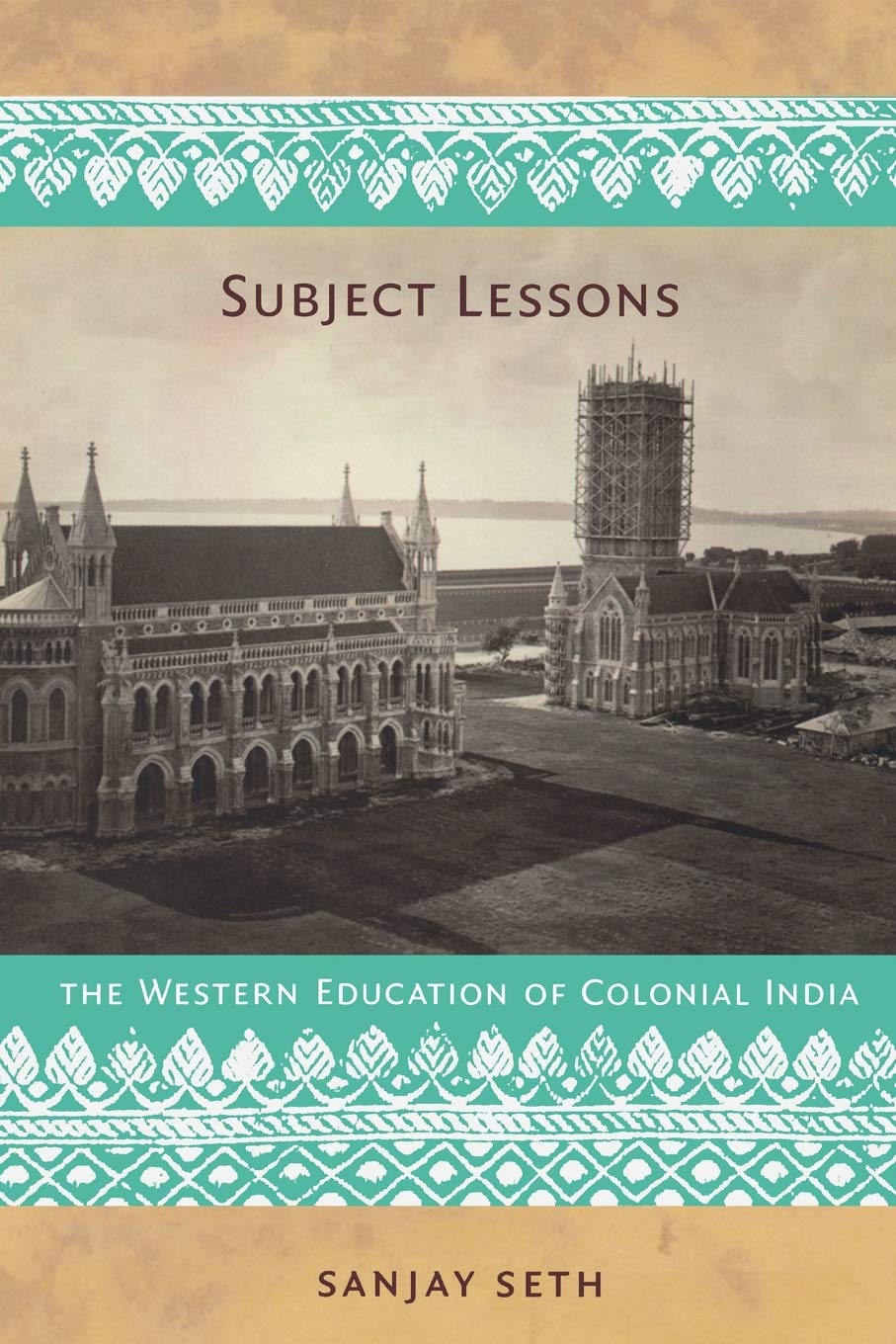
Subject Lessons: The Western Education Of Colonial India (Politics, History, And Culture),New
Sold by Ergodebooks, an authorized reseller.
Returns accepted within 30 days | support@ergodebooks.com
Shipping Information
- Free Standard Shipping — United States only
- Processing Time: 3–5 business days
- Estimated Delivery: 6–10 business days after dispatch
- Double-boxed, fully insured & discreetly packaged
- Tracking number sent via email once dispatched
Returns & Refund
Returns accepted within 30 days of delivery.
Damaged or Defective Item
Free return shipping + replacement or full refund
Wrong Item Received
Free return shipping + replacement or full refund
Change of Mind
Return shipping at customer's expense · 25% restocking fee applies
Payment Option

Subject Lessons offers a fascinating account of how western knowledge traveled to India, changed that which it encountered, and was itself transformed in the process. Beginning in 1835, Indias British rulers funded schools and universities to disseminate modern, western knowledge in the expectation that it would gradually replace indigenous ways of knowing. From the start, western education was endowed with great significance in India, not only by the colonizers but also by the colonized, to the extent that today almost all serious knowledge about Indiaeven within Indiais based on western epistemologies. In Subject Lessons, Sanjay Seths investigation into how western knowledge was received by Indians under colonial rule becomes a broader inquiry into how modern, western epistemology came to be seen not merely as one way of knowing among others but as knowledge itself.Drawing on history, political science, anthropology, and philosophy, Seth interprets the debates and controversies that came to surround western education. Central among these were concerns that Indian students were acquiring western education by rote memorizationand were therefore not acquiring true knowledgeand that western education had plunged Indian students into a moral crisis, leaving them torn between modern, western knowledge and traditional Indian beliefs. Seth argues that these concerns, voiced by the British as well as by nationalists, reflected the anxiety that western education was failing to produce the modern subjects it presupposed. This failure suggested that western knowledge was not the universal epistemology it was thought to be. Turning to the production of collective identities, Seth illuminates the nationalists position visvis western educationwhich they both sought and criticizedthrough analyses of discussions about the education of Muslims and women.
⚠️ WARNING (California Proposition 65):
This product may contain chemicals known to the State of California to cause cancer, birth defects, or other reproductive harm.
For more information, please visit www.P65Warnings.ca.gov.
- Q: What is the binding type of this book? A: The binding type is paperback. This makes the book flexible and lightweight, suitable for easy reading.
- Q: How many pages does this book have? A: This book has two hundred seventy-six pages. It offers in-depth insights into the western education of colonial India.
- Q: What are the dimensions of the book? A: The book measures six point fourteen inches in length, zero point seventy-one inches in width, and nine point twenty-five inches in height. These dimensions make it a convenient size for handling.
- Q: Who is the author of this book? A: The author is Sanjay Seth. He provides a critical examination of the impact of western education in India.
- Q: What is the main subject of this book? A: The main subject is the western education system in colonial India. It explores how this system influenced Indian knowledge and culture.
- Q: Is this book suitable for students? A: Yes, this book is suitable for students. It offers valuable insights into the historical context of education in India, making it relevant for academic studies.
- Q: How do I read this book? A: You can read this book like any other paperback. Simply open it and start from the beginning, following the chapters as they unfold.
- Q: Is this book appropriate for young readers? A: No, this book is not specifically designed for young readers. It contains complex themes related to politics, history, and culture.
- Q: How can I take care of this paperback book? A: To take care of this paperback book, store it upright in a cool, dry place. Avoid exposing it to moisture or direct sunlight.
- Q: What if the book arrives damaged? A: If the book arrives damaged, you should contact the seller for a return or exchange. Most sellers have policies in place for such issues.
- Q: Can I highlight or write in this book? A: Yes, you can highlight or write in this book. Many readers find it helpful to annotate important sections.
- Q: Is this book a good resource for understanding colonial India? A: Yes, this book is an excellent resource for understanding colonial India. It delves into the complexities of educational practices during that period.
- Q: What are the key themes discussed in the book? A: The key themes include the transformation of knowledge, the moral dilemmas faced by students, and the critique of western education. These themes are central to understanding the author's arguments.
- Q: Does this book include illustrations or photographs? A: No, this book does not include illustrations or photographs. It focuses primarily on textual analysis and historical context.
- Q: How does this book compare to other works on colonial education? A: This book offers a unique perspective by analyzing both the positive and negative impacts of western education, making it stand out among similar works.
- Q: Is this book written in an academic tone? A: Yes, the book is written in an academic tone. It includes analyses that are suitable for scholarly discussion.