
Title
Subjects Of Advice: Drama And Counsel From More To Shakespeare (Published In Cooperation With Folger Shakespeare Library),Used
Sold by Ergodebooks, an authorized reseller.
Returns accepted within 30 days | support@ergodebooks.com
Shipping Information
- Free Standard Shipping — United States only
- Processing Time: 3–5 business days
- Estimated Delivery: 6–10 business days after dispatch
- Double-boxed, fully insured & discreetly packaged
- Tracking number sent via email once dispatched
Returns & Refund
Returns accepted within 30 days of delivery.
Damaged or Defective Item
Free return shipping + replacement or full refund
Wrong Item Received
Free return shipping + replacement or full refund
Change of Mind
Return shipping at customer's expense · 25% restocking fee applies
Payment Option

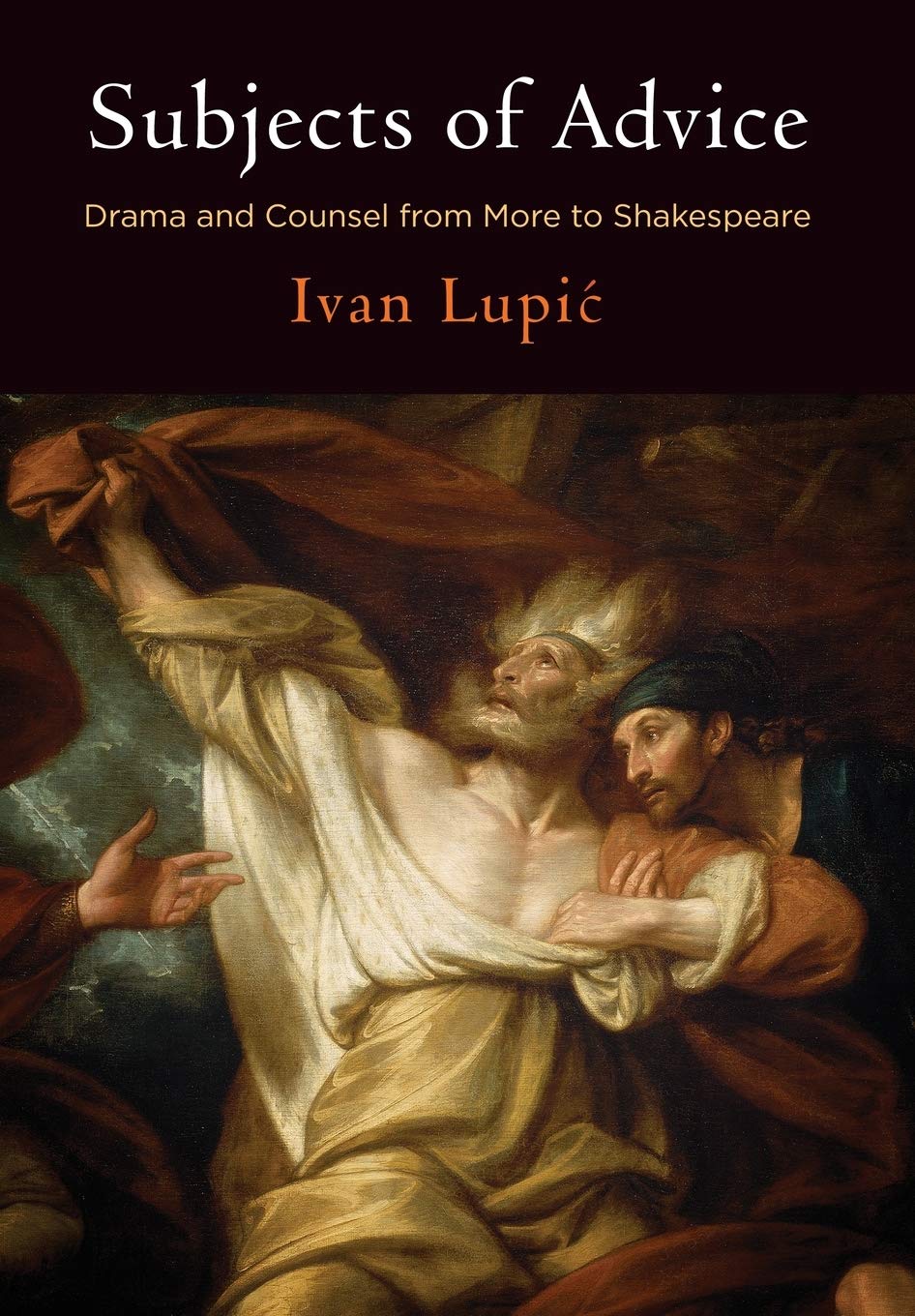
In Subjects of Advice, Ivan Lupic uncovers the rich interconnectedness of dramatic art and the culture of counsel in the early modern period. While counsel was an important form of practical knowledge, with concrete political consequences, it was also an ingrained cultural habit, a feature of obligatory mental, moral, and political hygiene. To be a Renaissance subject, Lupic claims, one had to reckon with the advice of others. Lupic examines this reckoning in a variety of sixteenthcentury dramatic contexts. The result is an original account of the foundational role that counsel played in the development of Renaissance drama.Lupic begins by considering the figure of Thomas More, whose influential argument about counsel as a form of performance in Utopia set the agenda for the entire century. Resisting linear narratives and recovering, instead, the simultaneity of radically different kinds of dramatic experience, he shows the vitality of later dramatic engagements with More's legacy through an analysis of the moral interlude staged within Sir Thomas More, a play possibly coauthored by Shakespeare. More also helps explain the complex use of counsel in Senecan drama, from the neoLatin plays of George Buchanan, discussed in connection with Buchanan's political writings, to the historical tragedies of the midsixteenth century.If tyranny and exemplarity are the keywords for early Elizabethan drama of counsel, for the plays of Christopher Marlowe it is friendship. Lupic considers Marlowe's interest in friendship and counsel, most notably in Edward II, alongside earlier dramatic treatments, thus exposing the pervasive fantasy of the ideal counselor as another self. Subjects of Advice concludes by placing King Lear in relation to its dramatic sources to demonstrate Shakespeare's deliberate dispersal of counsel throughout his play. Counsel's customary link to plain and fearless speech becomes in Shakespeare's hands a powerful instrument of poetic and dramatic expression.
⚠️ WARNING (California Proposition 65):
This product may contain chemicals known to the State of California to cause cancer, birth defects, or other reproductive harm.
For more information, please visit www.P65Warnings.ca.gov.