
Title
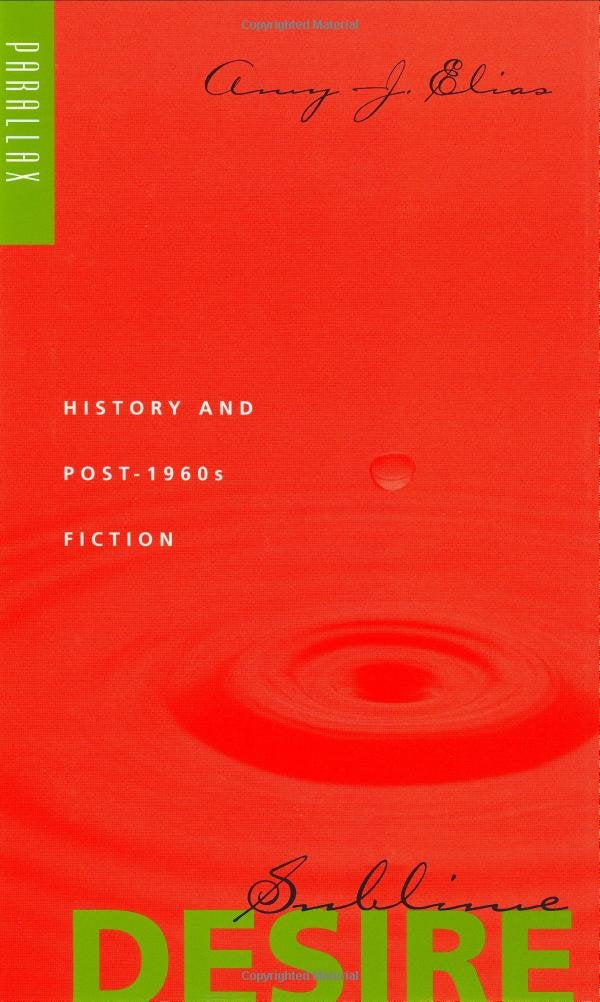
Sublime Desire: History and Post1960s Fiction (Parallax: Revisions of Culture and Society),Used
Sold by Ergodebooks, an authorized reseller.
Returns accepted within 30 days | support@ergodebooks.com
Shipping Information
- Free Standard Shipping — United States only
- Processing Time: 3–5 business days
- Estimated Delivery: 6–10 business days after dispatch
- Double-boxed, fully insured & discreetly packaged
- Tracking number sent via email once dispatched
Returns & Refund
Returns accepted within 30 days of delivery.
Damaged or Defective Item
Free return shipping + replacement or full refund
Wrong Item Received
Free return shipping + replacement or full refund
Change of Mind
Return shipping at customer's expense · 25% restocking fee applies
Payment Option

Cowinner of the Perkins Prize from the Society for the Study of Narrative LiteratureHas twentiethcentury political violence destroyed faith in historical knowledge? What happens to historical fiction when history is seen as either a form of Western imperialism or a form of postmodern simulation?In Sublime Desire, Amy Elias examines our changing relationship to history and how fiction since 1960 reflects that change. She contends that postmodernism is a posttraumatic imagination that is pulled between two desires: the political desire to acknowledge the physical violence of twentiethcentury history, and the yearning for an escape from that history into a ravishing realm of historical certainty. Torn between these desires, both historical fiction and historiography after 1960 redefine history as the 'sublime,' a territory beyond lived experience that is both unknowable and seductive. In the face of a failure of Enlightenment ideals about knowledge and the West's own history of violence, postWorld War II history becomes a desire for the 'secular sacred' sublimefor awe, certainty, and belief.Sublime Desire is an eloquent melding of theory and practice. Mixing the canonical with the unexpected, Elias analyzes developments in the historical romance genre from Walter Scott's novels to novels written today. She correlates developments in the historical romance to similar changes in historiography and philosophy. Sublime Desire draws engagingly on more than thirty relevant texts, from Tolstoy's War and Peace to Jeanette Winterson's Sexing the Cherry, Charles Johnson's Dreamer, and Charles Frazier's Cold Mountain. But the book also examines theories of postmodern space and time and defines the difference between postmodern and postcolonial historical perspectives. The final chapter draws from trauma theory in Holocaust studies to define how fiction can pose an ethical alternative to aestheticized history while remaining open to pluralism and democratic values. In its range and sophistication, Sublime Desire is a valuable addition to postmodernist studies as well as to studies of the historical romance novel.
⚠️ WARNING (California Proposition 65):
This product may contain chemicals known to the State of California to cause cancer, birth defects, or other reproductive harm.
For more information, please visit www.P65Warnings.ca.gov.