
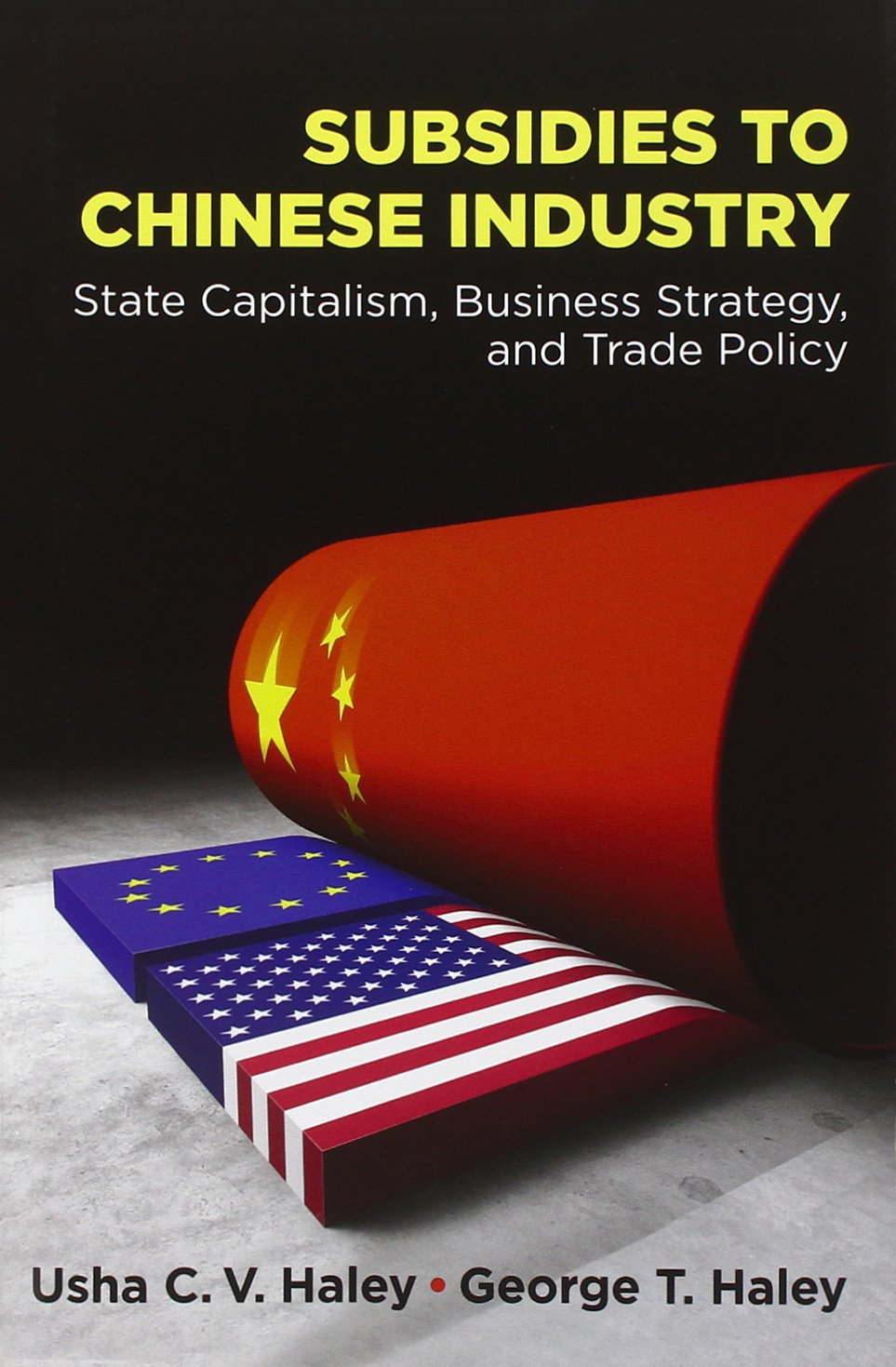
Title
Subsidies To Chinese Industry: State Capitalism, Business Strategy, And Trade Policy
Sold by Ergodebooks, an authorized reseller.
Returns accepted within 30 days | support@ergodebooks.com
Shipping Information
- Free Standard Shipping — United States only
- Processing Time: 3–5 business days
- Estimated Delivery: 6–10 business days after dispatch
- Double-boxed, fully insured & discreetly packaged
- Tracking number sent via email once dispatched
Returns & Refund
Returns accepted within 30 days of delivery.
Damaged or Defective Item
Free return shipping + replacement or full refund
Wrong Item Received
Free return shipping + replacement or full refund
Change of Mind
Return shipping at customer's expense · 25% restocking fee applies
Payment Option

How Did China Move So Swiftly In Capitalintensive Industries Without Laborcost Or Scale Advantage From Bit Player To The Largest Manufacturer And Exporter In The World? This Book Argues That Subsidies Contributed Significantly To China'S Success. Industrial Subsidies In Key Chinese Manufacturing Industries May Exceed Thirty Percent Of Industrial Output. Economic Theories Have Mostly Portrayed Subsidies As Distortive, Inefficiently Reallocating Resources According To Nonmarket Criteria. However, China'S Statecapitalist Regime Uses Subsidies To Promote The Governments' And The Communist Party Of China'S Interests. Rather Than Aberrations, Subsidies Help Chinese Businesses And Governments Produce, Stabilize And Create Common Understandings Of Markets; The Flows Of Capital Reflect Struggles Between Critical Chinese Actors Including Central And Provincial Governments. Concepts Of State Capitalism Including Markettransition Theory, The Multiorganizational Chinese State, And State As Paramount Shareholder, Create Complex And Relevant Understandings Of Chinese Subsidies. The Authors Develop Independent Measures Of Industrial Subsidies Using Publiclyreported Data At Firm And Industry Levels From Governmental And Private Sources. Subsidies Include Free To Lowcost Loans, Subsidies To Energy (Coal, Electricity, Natural Gas, Heavy Oil) And To Key Inputs, Land And Technology. Four Sequential Studies Identify The Growth Of Subsidies To Chinese Manufacturing Over Time And Effects On World Industry: Steel (20002007), Glass (20042008), Paper (20022009) And Auto Parts (20012011). Subsidies To Chinese Industry Affect And Are Affected By Business Strategy And Trade Policy. Business Strategies Include Lobbying For Subsidies And For Protection From Subsidized Foreign Competitors And Managing Supply Chains To Guard Against Whiplash Effects Of Uncoordinated Subsidies. The Subsidized Solar Industry Highlights How Global Business Strategies And Decisions On Production Location And Technology Development Respond To Production Or Consumption Subsidies And Include Market (Competitive) And Nonmarket (Political) Strategies. The Book Also Covers Government Policies And Regulation On Subsidies Broadly Focusing On Domestic Consumption (Antidumping And Countervailing Duties) And Domestic Production (Indigenous Innovation).
⚠️ WARNING (California Proposition 65):
This product may contain chemicals known to the State of California to cause cancer, birth defects, or other reproductive harm.
For more information, please visit www.P65Warnings.ca.gov.
- Q: What is the page count of this book? A: This book has two hundred seventy-two pages. It provides an in-depth analysis of subsidies in Chinese industry.
- Q: What are the dimensions of this book? A: The book measures nine point five seven inches in length, six point three four inches in width, and zero point seven one inches in height.
- Q: What type of binding does this book have? A: This book is bound in hardcover. Hardcover bindings are typically more durable and suitable for frequent use.
- Q: Who is the author of this book? A: The author of this book is Usha C.V. Haley. She is recognized for her expertise in economics and trade policy.
- Q: What genre does this book belong to? A: This book falls under the Development & Growth genre. It discusses state capitalism and its impact on Chinese industry.
- Q: How can I apply the insights from this book? A: You can apply the insights by analyzing business strategies and lobbying practices in state capitalism. It’s useful for students and professionals in economics and trade.
- Q: Is this book suitable for beginners in economics? A: Yes, this book is suitable for beginners. It explains complex concepts like subsidies in an accessible manner.
- Q: What can I learn about trade policy from this book? A: You will learn about the influence of subsidies on trade policy and business strategies in China. The book provides case studies on various industries.
- Q: How do I care for this hardcover book? A: To care for this hardcover book, store it upright in a cool, dry place. Avoid exposing it to direct sunlight to prevent damage.
- Q: Is this book safe for children to read? A: Yes, this book is safe for children, though it is recommended for older teens and adults due to its complex themes.
- Q: What should I do if the book arrives damaged? A: If the book arrives damaged, contact customer support for a return or exchange. Make sure to provide details and photos of the damage.
- Q: Can I return this book if I don't like it? A: Yes, you can return this book if you are not satisfied. Check the return policy for the specific time frame and conditions.
- Q: What are the key themes discussed in this book? A: Key themes include state capitalism, industrial subsidies, and their impact on global trade. The book provides detailed analyses of various industries.
- Q: Are there any references or citations in this book? A: Yes, this book includes references and citations from both governmental and private sources. This adds credibility to its analyses.
- Q: What makes this book different from others on Chinese industry? A: This book uniquely focuses on the role of subsidies in China's industrial success, presenting empirical data and case studies.