If you have any questions, you are always welcome to contact us. We'll get back to you as soon as possible, withing 24 hours on weekdays.
Customer service
All questions about your order, return and delivery must be sent to our customer service team by e-mail at yourstore@yourdomain.com
Sale & Press
If you are interested in selling our products, need more information about our brand or wish to make a collaboration, please contact us at press@yourdomain.com
Help
If you have any questions, you are always welcome to contact us. We'll get back to you as soon as possible, withing 24 hours on weekdays.
Customer service
All questions about your order, return and delivery must be sent to our customer service team by e-mail at yourstore@yourdomain.com
Sale & Press
If you are interested in selling our products, need more information about our brand or wish to make a collaboration, please contact us at press@yourdomain.com
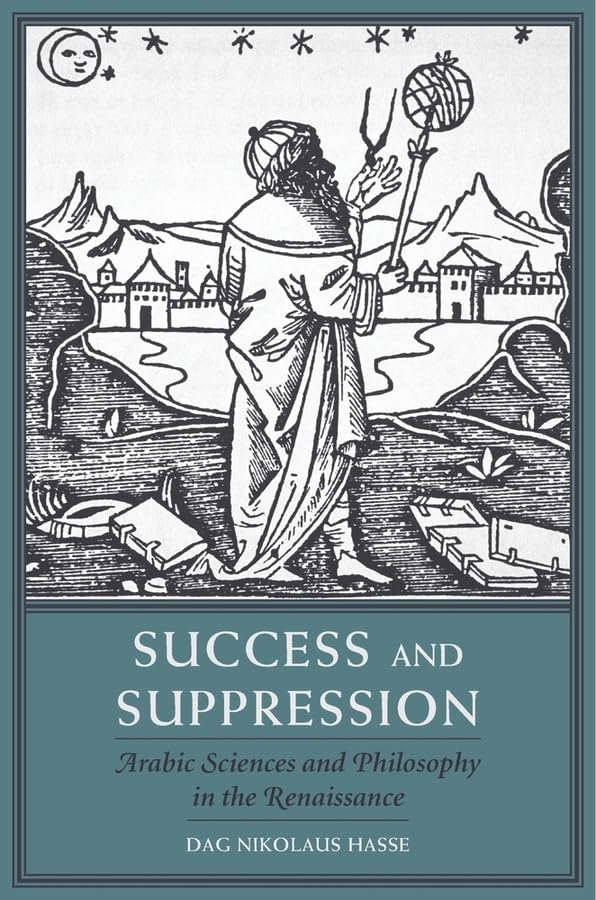
The Renaissance marked a turning point in Europes relationship to Arabic thought. On the one hand, Dag Nikolaus Hasse argues, it was the period in which important Arabic traditions reached the peak of their influence in Europe. On the other hand, it is the time when the West began to forget, and even actively suppress, its debt to Arabic culture. Success and Suppression traces the complex story of Arabic influence on Renaissance thought.It is often assumed that the Renaissance had little interest in Arabic sciences and philosophy, because humanist polemics from the period attacked Arabic learning and championed Greek civilization. Yet Hasse shows that Renaissance denials of Arabic influence emerged not because scholars of the time rejected that intellectual tradition altogether but because a small group of antiArab hardliners strove to suppress its powerful and persuasive influence. The period witnessed a boom in new translations and multivolume editions of Arabic authors, and European philosophers and scientists incorporatedand often celebratedArabic thought in their work, especially in medicine, philosophy, and astrology. But the famous Arabic authorities were a prominent obstacle to the Renaissance project of renewing European academic culture through Greece and Rome, and radical reformers accused Arabic science of linguistic corruption, plagiarism, or irreligion. Hasse shows how a mixture of ideological and scientific motives led to the decline of some Arabic traditions in important areas of European culture, while others continued to flourish.
⚠️ WARNING (California Proposition 65):
This product may contain chemicals known to the State of California to cause cancer,
birth defects, or other reproductive harm.
For MAP (Minimum Advertised Price) violations and Intellectual Property (IP) or Trademark concerns, please contact:
support@ergodebooks.com
⚠️ California Proposition 65 Warning: Some products sold on this website may expose you to chemicals known to the State of California to cause cancer, birth defects, or other reproductive harm. For more information, visit www.P65Warnings.ca.gov.