
Title
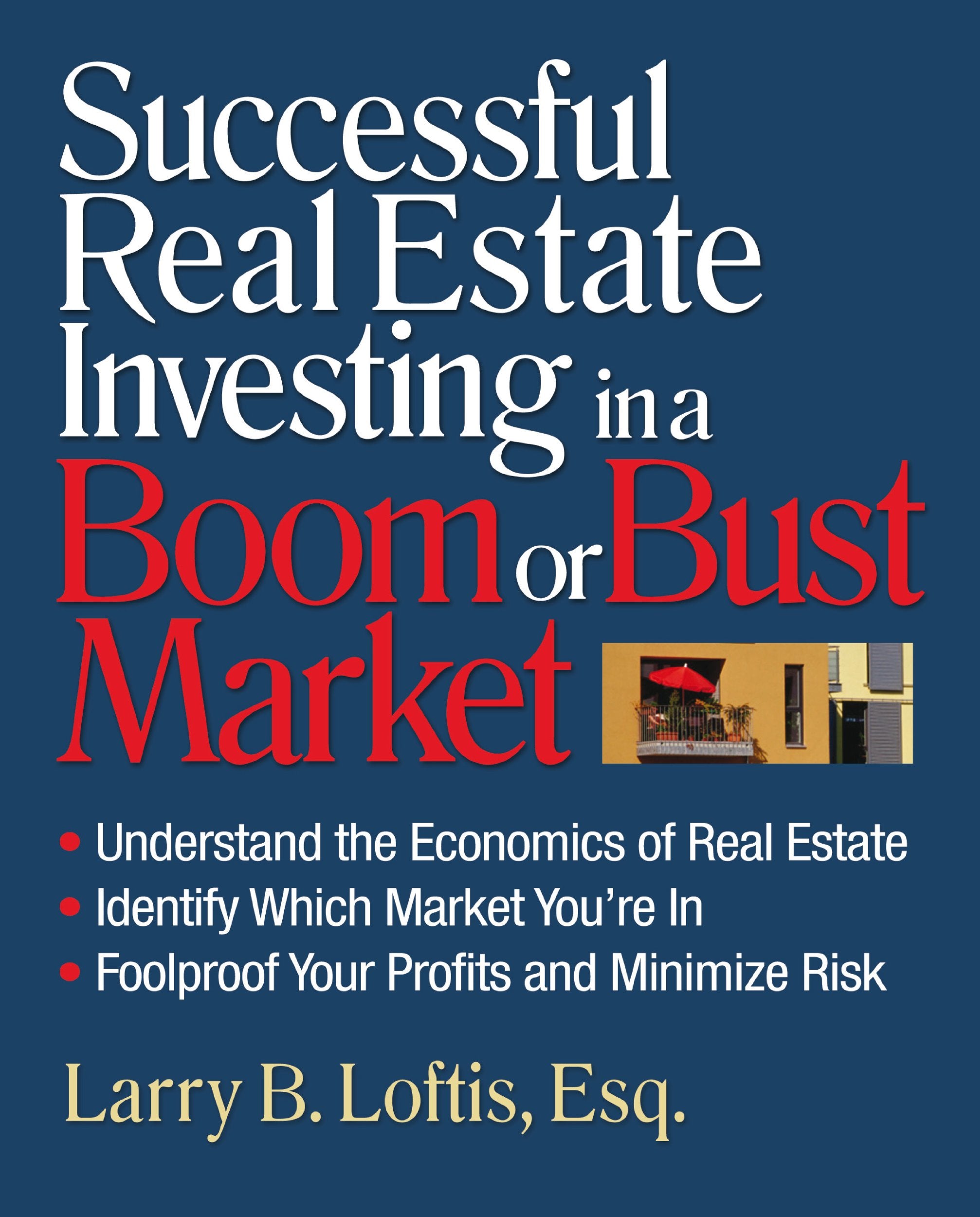
Successful Real Estate Investing in a Boom or Bust Market: Understand the Economics of Real Estate, Identify Which Market You're,Used
Sold by Ergodebooks, an authorized reseller.
Returns accepted within 30 days | support@ergodebooks.com
Shipping Information
- Free Standard Shipping — United States only
- Processing Time: 3–5 business days
- Estimated Delivery: 6–10 business days after dispatch
- Double-boxed, fully insured & discreetly packaged
- Tracking number sent via email once dispatched
Returns & Refund
Returns accepted within 30 days of delivery.
Damaged or Defective Item
Free return shipping + replacement or full refund
Wrong Item Received
Free return shipping + replacement or full refund
Change of Mind
Return shipping at customer's expense · 25% restocking fee applies
Payment Option

Good real estate investors make money in every type of market, whether it is a normal, boom, or bust market their techniques and strategies are just different for each market. Successful Real Estate Investing in a Boom or Bust Market begins by explaining the economics of real estate. Real estate demand, sales prices, and sales volume are all affected by (and to some extent controlled by) interest rates, inflation, real estate cycles, and state and local economies (and tax laws, if changed). For example, recall that when President Jimmy Carter left office interest rates had skyrocketed to 21.5%. Conventional borrowing for real estate was virtually eliminated. Recall the failure of oil companies and the S & L collapse (triggered in part by the 1986 changes in tax laws affecting real estate) that destroyed the real estate markets in Texas and Oklahoma. On the other side of the ledger, consider the recent boom markets in places like San Diego, San Francisco, Las Vegas, Phoenix, Orlando, and Naples.Successful Real Estate Investing in a Boom or Bust Market will also help the reader identify which market he or she is faced with and describe what the author calls the 'Equalization Effect.' This means that each type of market will equalize in a very short period of time. Every type of market brings advantages and disadvantages, and techniques to adjust to them. For example, in 1980, when interest rates climbed to over 21 percent, the real estate market had to adjust, or 'equalize.' If you were a seller, you had to either offer seller financing at reasonable rates (say 1012 percent) or you couldn't sell your property. At conventional rates, buyers couldn't cash flow properties. So all serious sellers offered financing and the market equalized. Deals were still closed. When interest rates are very low, as we've seen in the last few years (mortgage rates at 40 year lows), this huge buying advantage is adjusted, or equalized, by higher prices. Mortgage payments come out fairly close in either scenario because the bust market gives low prices but high interest rates, while the boom market gives high prices but low interest rates. The remainder of the book will describe techniques to succeed in each specific market, and techniques that will help the reader succeed in ANY market.
⚠️ WARNING (California Proposition 65):
This product may contain chemicals known to the State of California to cause cancer, birth defects, or other reproductive harm.
For more information, please visit www.P65Warnings.ca.gov.