If you have any questions, you are always welcome to contact us. We'll get back to you as soon as possible, withing 24 hours on weekdays.
Customer service
All questions about your order, return and delivery must be sent to our customer service team by e-mail at yourstore@yourdomain.com
Sale & Press
If you are interested in selling our products, need more information about our brand or wish to make a collaboration, please contact us at press@yourdomain.com
Help
If you have any questions, you are always welcome to contact us. We'll get back to you as soon as possible, withing 24 hours on weekdays.
Customer service
All questions about your order, return and delivery must be sent to our customer service team by e-mail at yourstore@yourdomain.com
Sale & Press
If you are interested in selling our products, need more information about our brand or wish to make a collaboration, please contact us at press@yourdomain.com
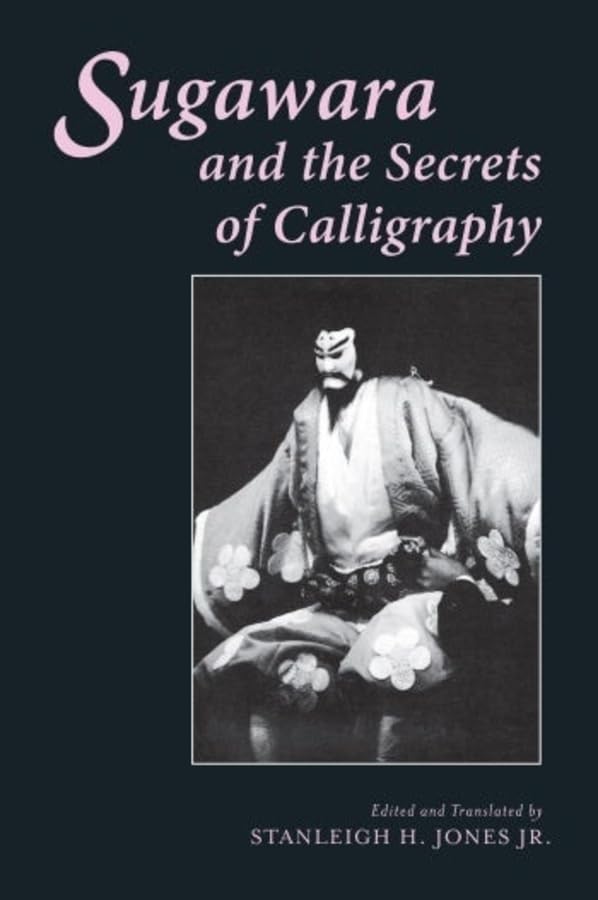
Sugawara and the Secrets of Calligraphy is a classic play from Japan's golden age of puppet theater. Written in the eighteenth century, it tells the tale of Sugawara no Michizane, a wronged scholarofficial who, in death, joins the Shinto pantheon as a nurturer of scholarship and calligraphy. The story recounts Sugawara's entanglement with the powerful Fujiwara family, who accuse Sugawara of plotting against the emperor, resulting in his exile and death in 903. After a series of misfortunes befall those who conspired against him, Sugawara's enemies appease his spirit through deification. Sugawara and the Secrets of Calligraphy centers on three archetypical brothers and their wives. Their fates unfold against the intrigues surrounding Sugawara and his foes, which reflect the cultural values of the Edo period woven into a stylized past. This annotated translation by Stanleigh H. Jones Jr. replicates the play's poetic and idiomatic language and its original mix of register while also clarifying the drama's complex story and dialogue for students of Japanese literature and drama. An introduction situates the play within its eighteenthcentury context and ninthcentury setting and describes the relationship between bunraku puppet theater and kabuki. A unique illustrated appendix delves into the construction of puppets and the art of puppetry.
⚠️ WARNING (California Proposition 65):
This product may contain chemicals known to the State of California to cause cancer,
birth defects, or other reproductive harm.
For MAP (Minimum Advertised Price) violations and Intellectual Property (IP) or Trademark concerns, please contact:
support@ergodebooks.com
⚠️ California Proposition 65 Warning: Some products sold on this website may expose you to chemicals known to the State of California to cause cancer, birth defects, or other reproductive harm. For more information, visit www.P65Warnings.ca.gov.