
Title
Suitably Modern: Making MiddleClass Culture in a New Consumer Society,New
Sold by Ergodebooks, an authorized reseller.
Returns accepted within 30 days | support@ergodebooks.com
Shipping Information
- Free Standard Shipping — United States only
- Processing Time: 3–5 business days
- Estimated Delivery: 6–10 business days after dispatch
- Double-boxed, fully insured & discreetly packaged
- Tracking number sent via email once dispatched
Returns & Refund
Returns accepted within 30 days of delivery.
Damaged or Defective Item
Free return shipping + replacement or full refund
Wrong Item Received
Free return shipping + replacement or full refund
Change of Mind
Return shipping at customer's expense · 25% restocking fee applies
Payment Option

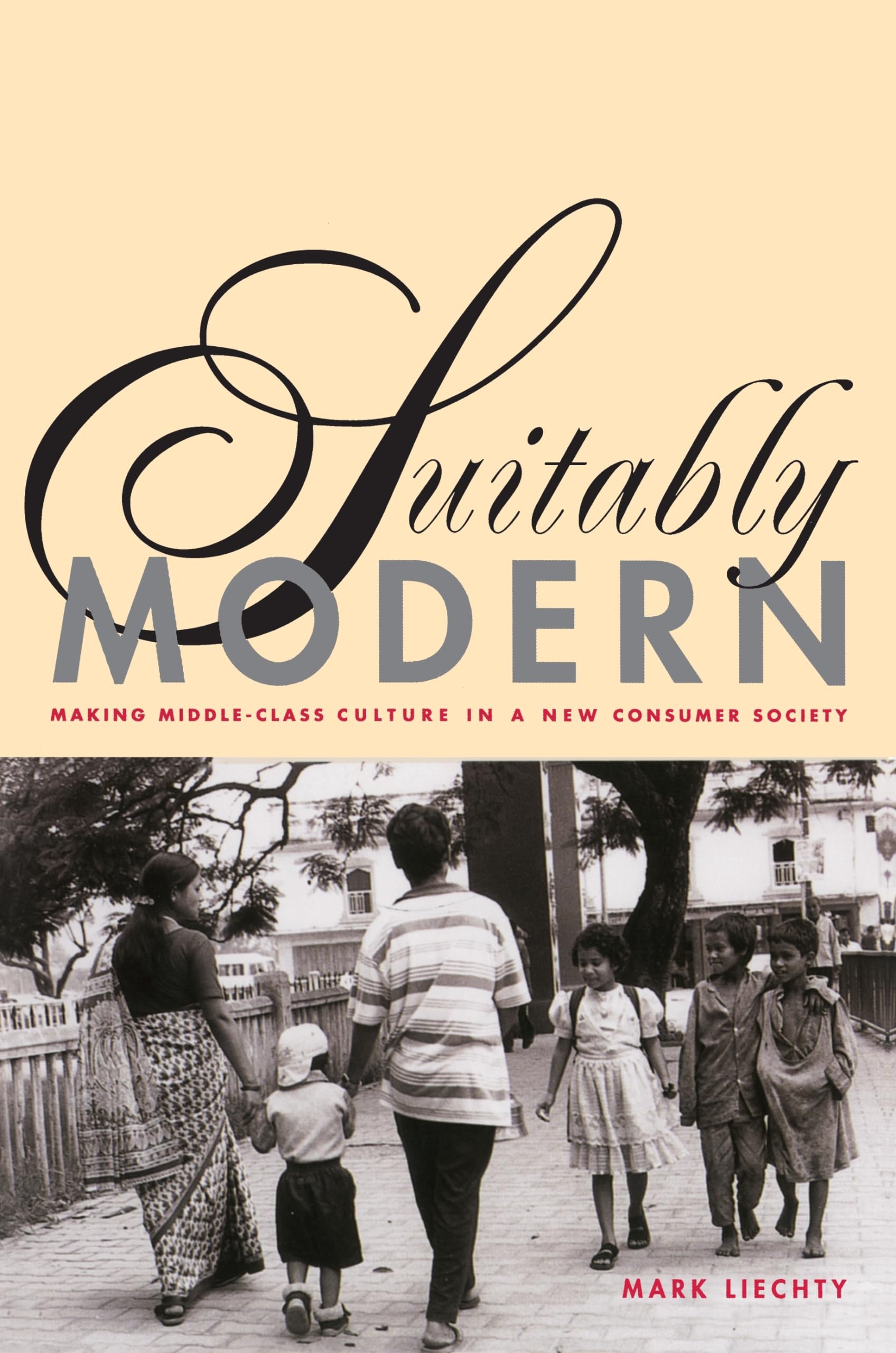
Suitably Modern traces the growth of a new middle class in Kathmandu as urban Nepalis harness the modern cultural resources of mass media and consumer goods to build modern identities and pioneer a new sociocultural space in one of the world's 'least developed countries.'Since Nepal's 'opening' in the 1950s, a new urban population of bureaucrats, service personnel, small business owners, and others have worked to make a space between Kathmandu's old (and still privileged) elites and its large (and growing) urban poor. Mark Liechty looks at the cultural practices of this new middle class, examining such phenomena as cinema and video viewing, popular music, film magazines, local fashion systems, and advertising. He explores three interactive and mutually constitutive ethnographic terrains: a burgeoning local consumer culture, a growing massmediated popular imagination, and a recently emerging youth culture. He shows how an array of local cultural narrativesstories of honor, value, prestige, and pietyflow in and around global narratives of 'progress,' modernity, and consumer fulfillment. Urban Nepalis simultaneously adopt and critique these narrative strands, braiding them into local middleclass cultural life.Building on both Marxian and Weberian understandings of class, this study moves beyond them to describe the lived experience of 'middle classness'how class is actually produced and reproduced in everyday practice. It considers how people speak and act themselves into cultural existence, carving out real and conceptual spaces in which to produce class culture.
⚠️ WARNING (California Proposition 65):
This product may contain chemicals known to the State of California to cause cancer, birth defects, or other reproductive harm.
For more information, please visit www.P65Warnings.ca.gov.