
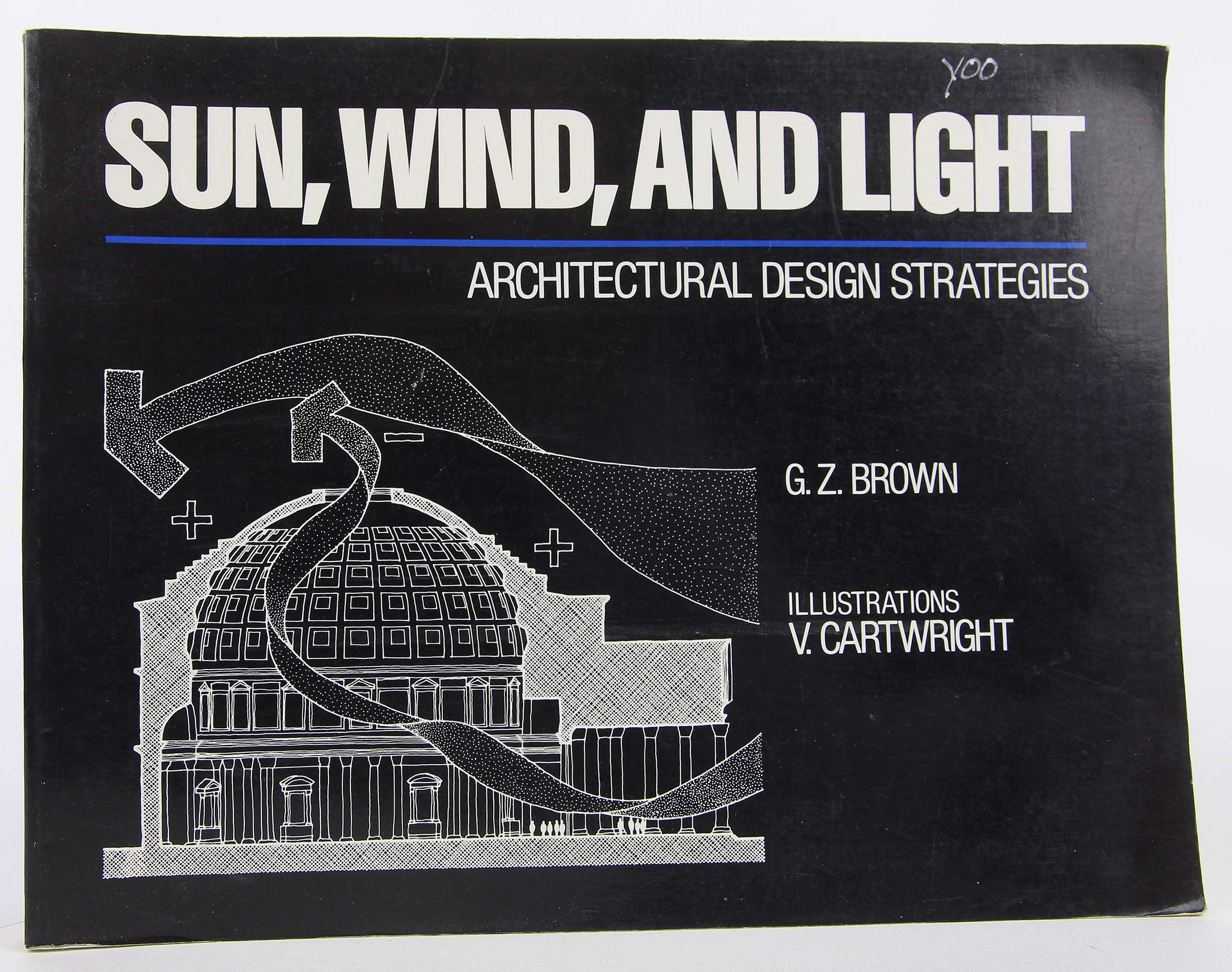
Title
Sun, Wind, And Light: Architectural Design Strategies , Professional Ed.,Used
Sold by Ergodebooks, an authorized reseller.
Returns accepted within 30 days | support@ergodebooks.com
Shipping Information
- Free Standard Shipping — United States only
- Processing Time: 3–5 business days
- Estimated Delivery: 6–10 business days after dispatch
- Double-boxed, fully insured & discreetly packaged
- Tracking number sent via email once dispatched
Returns & Refund
Returns accepted within 30 days of delivery.
Damaged or Defective Item
Free return shipping + replacement or full refund
Wrong Item Received
Free return shipping + replacement or full refund
Change of Mind
Return shipping at customer's expense · 25% restocking fee applies
Payment Option

Sun, Wind, And Light: Architectural Design Strategies G. Z. Brown This Book Is For Designers Who Want To Consider The Formgenerating Potential Of Sun, Wind, And Light In The Earliest Stages Of The Design Process. It Is Designed To Fit With The Rapid, Conceptual, Exploratory, And Synthetic Thinking That Characterizes The Beginning Of The Design Process. The Book Stresses The Energy Implications Of Using Sun, Wind, And Light. However, It Is Organized By The Architectural Elements Designers Manipulatestreets, Open Spaces And Buildings, Rooms And Courtyards, And Walls, Roofs, Floors, And Windows. These Elements Are Discussed In Terms Of Their Organizationlayered, Elongated, Dispersed, Compact, And Zonedand Their Attributesshape, Orientation, Enclosure, Edge, And Size. In Addition, The Contents Are Matched To The Scale That Is Being Consideredbuilding Groups, Individual Buildings, And Building Parts. Sun, Wind, And Light Is Divided Into Three Parts: The Design Strategies Section Is Intended To Help The Designer Formulate The Basic Concept For A Project. This Section Uses A One Or Twopage Format That Contains A Simple Memorable Statement Of The Strategy, A Clear, Concise Explanation Of The Strategy, Several Provocative Historical And Contemporary Architectural Illustrations Of The Potential Impact Of The Strategy On A Buildings Form And Organization, And A Rule Of Thumb That Allows The Designer To Size Elements Instantly, Without Calculation. This Format Makes The Strategies Stimulating, Fast To Use, And Easy To Integrate With Other Design Concerns. The Analysis Techniques Section Helps The Designer Define The Context Of The Problem By Understanding The Sun, Wind, And Light Resources Of A Particular Site And Climate, And How Those Resources Can Be Used In A Particular Building To Reduce The Energy Used For Heating, Cooling, And Lighting. The Third Section, Strategies For Supplementing Passive Systems, Addresses The Ways Design Strategies Can Be Supplemented With Conventional Heating, Cooling, And Lighting Systems. The Book Is Extensively Referenced So That More Detailed Information Can Be Located Easily. It Contains A Glossary Of Energyrelated Terms So That It Can Be Used Effectively By Those Who Are Not Energy Experts. For Easy Retrieval Of Information, The Book Is Indexed By Subject, Building, And Architect, And By Charts, Graphs, And Tables.
⚠️ WARNING (California Proposition 65):
This product may contain chemicals known to the State of California to cause cancer, birth defects, or other reproductive harm.
For more information, please visit www.P65Warnings.ca.gov.
- Q: How many pages does this book have? A: This book has one hundred ninety-two pages. It offers a comprehensive exploration of architectural design strategies.
- Q: What are the dimensions of the book? A: The book measures eight point four six inches in length, zero point five one inches in width, and eleven point one inches in height.
- Q: What type of binding does this book have? A: This book has a paperback binding. It is designed for easy reading and handling.
- Q: What is the main focus of the book? A: The book focuses on architectural design strategies related to sun, wind, and light. It aims to guide designers in integrating these elements early in the design process.
- Q: Who is the author of this book? A: The author of the book is G. Z. Brown. He is known for his expertise in architectural design.
- Q: What features does this book highlight? A: The book highlights design strategies, analysis techniques, and supplementary methods for passive systems. It provides practical insights for designers.
- Q: Is this book suitable for beginners in architecture? A: Yes, this book is suitable for beginners. It presents concepts in a clear and accessible manner, making it easy for new designers to understand.
- Q: Can this book be used as a reference for energy-related design? A: Yes, the book serves as a valuable reference for energy-related design strategies. It includes a glossary of energy-related terms for better understanding.
- Q: What kind of illustrations are included in the book? A: The book includes historical and contemporary architectural illustrations. These visuals help demonstrate the impact of design strategies on building forms.
- Q: How should I store this book to keep it in good condition? A: Store the book in a cool, dry place away from direct sunlight. Avoid stacking heavy items on top to prevent damage.
- Q: Are there any specific cleaning instructions for this book? A: Yes, gently wipe the cover with a dry cloth to remove dust. Avoid using liquids or cleaners that could damage the pages.
- Q: What if I want to return the book? A: Check the return policy of the seller. Typically, you can return the book within a specified period if it's in good condition.
- Q: What if the book arrives damaged? A: If the book arrives damaged, contact the seller for a return or replacement. Keep the packaging for reference.
- Q: Is this book indexed for easy reference? A: Yes, the book is indexed by subject, building, architect, and includes charts, graphs, and tables for easy retrieval of information.
- Q: Does this book discuss modern architectural practices? A: Yes, it includes contemporary architectural illustrations and strategies relevant to today's design practices.