
Title
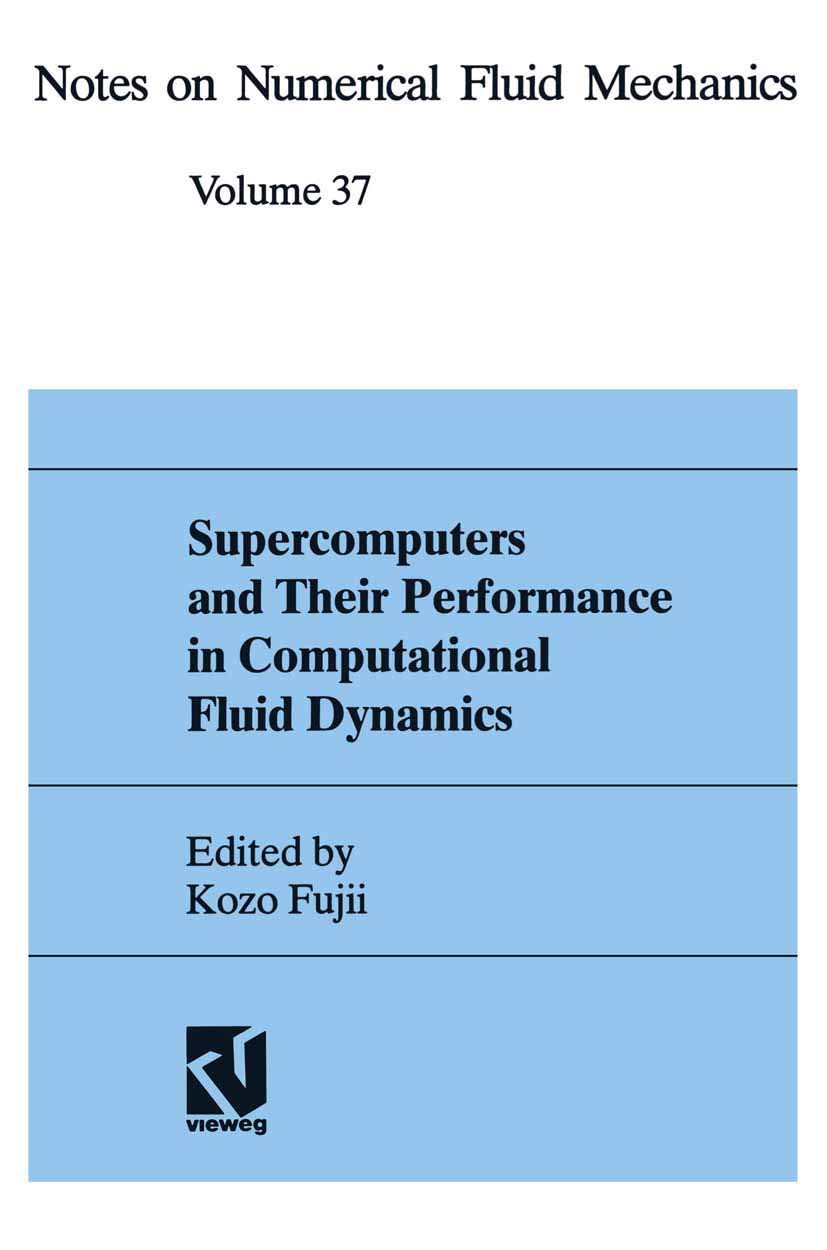
Supercomputers and Their Performance in Computational Fluid Dynamics (Notes on Numerical Fluid Mechanics and Multidisciplinary D,Used
Sold by Ergodebooks, an authorized reseller.
Returns accepted within 30 days | support@ergodebooks.com
Shipping Information
- Free Standard Shipping — United States only
- Processing Time: 3–5 business days
- Estimated Delivery: 6–10 business days after dispatch
- Double-boxed, fully insured & discreetly packaged
- Tracking number sent via email once dispatched
Returns & Refund
Returns accepted within 30 days of delivery.
Damaged or Defective Item
Free return shipping + replacement or full refund
Wrong Item Received
Free return shipping + replacement or full refund
Change of Mind
Return shipping at customer's expense · 25% restocking fee applies
Payment Option

Supercomputer technologies have evolved rapidly since the first commercialbased supercomputer, CRAY1 was introduced in 1976. In early 1980's three Japanese super computers appeared, and Cray Research delivered the XMP series. These machines including the laterannounced CRAY2 and NEC SX series created one generation of supercomputers, and the market was spread dramatically. The peak performance was higher than 1 GFLOPS and the compiler improvement was remarkable. There appeared many articles and books that described their architecture and their performance on The late 1980's saw a new generation of supercomputers. several benchmark problems. Following CRAY YMP and Hitachi S820 delivered in 1988, NEC announced SX3 and Fujitsu announced the VP2000 series in 1990. In addition, Cray Research announced the YMP C90 late in 1991. The peak performance of these machines reached several to a few ten's GFLOPS. The hardware characteristics of these machines are known, but their practical performance has not been well documented so far. Computational Fluid Dynamics (CFD) is one of the important research fields that have been progressing with the growth of supercomputers. Today's fluid dynamic re search cannot be discussed without supercomputers and since CFD is one of the im portant users of supercomputers, future development of supercomputers has to take the requirements of CFD into account. There are many benchmark reports available today. However, they mostly use so called kernels. For fluid dynamics researchers, benchmark test on real fluid dynamic codes are necessary.
⚠️ WARNING (California Proposition 65):
This product may contain chemicals known to the State of California to cause cancer, birth defects, or other reproductive harm.
For more information, please visit www.P65Warnings.ca.gov.