
Title
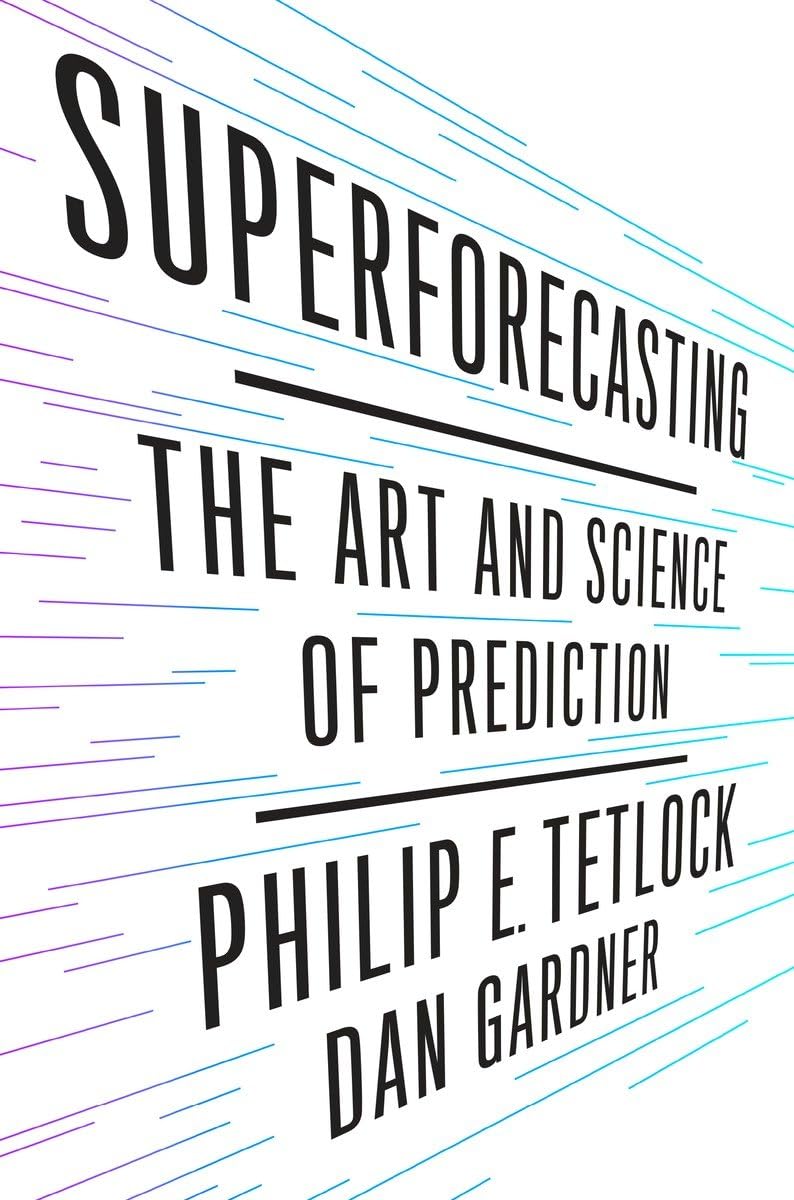
Superforecasting: The Art And Science Of Prediction-used
Sold by Ergodebooks, an authorized reseller.
Returns accepted within 30 days | support@ergodebooks.com
Shipping Information
- Free Standard Shipping — United States only
- Processing Time: 3–5 business days
- Estimated Delivery: 6–10 business days after dispatch
- Double-boxed, fully insured & discreetly packaged
- Tracking number sent via email once dispatched
Returns & Refund
Returns accepted within 30 days of delivery.
Damaged or Defective Item
Free return shipping + replacement or full refund
Wrong Item Received
Free return shipping + replacement or full refund
Change of Mind
Return shipping at customer's expense · 25% restocking fee applies
Payment Option

New York Times Bestseller Named One Of The Best Books Of The Year By The Economistthe Most Important Book On Decision Making Since Daniel Kahneman'S Thinking, Fast And Slow.Jason Zweig, The Wall Street Journaleveryone Would Benefit From Seeing Further Into The Future, Whether Buying Stocks, Crafting Policy, Launching A New Product, Or Simply Planning The Weeks Meals. Unfortunately, People Tend To Be Terrible Forecasters. As Wharton Professor Philip Tetlock Showed In A Landmark 2005 Study, Even Experts Predictions Are Only Slightly Better Than Chance. However, An Important And Underreported Conclusion Of That Study Was That Some Experts Do Have Real Foresight, And Tetlock Has Spent The Past Decade Trying To Figure Out Why. What Makes Some People So Good? And Can This Talent Be Taught?In Superforecasting, Tetlock And Coauthor Dan Gardner Offer A Masterwork On Prediction, Drawing On Decades Of Research And The Results Of A Massive, Governmentfunded Forecasting Tournament. The Good Judgment Project Involves Tens Of Thousands Of Ordinary Peopleincluding A Brooklyn Filmmaker, A Retired Pipe Installer, And A Former Ballroom Dancerwho Set Out To Forecast Global Events. Some Of The Volunteers Have Turned Out To Be Astonishingly Good. Theyve Beaten Other Benchmarks, Competitors, And Prediction Markets. Theyve Even Beaten The Collective Judgment Of Intelligence Analysts With Access To Classified Information. They Are 'Superforecasters.'In This Groundbreaking And Accessible Book, Tetlock And Gardner Show Us How We Can Learn From This Elite Group. Weaving Together Stories Of Forecasting Successes (The Raid On Osama Bin Ladens Compound) And Failures (The Bay Of Pigs) And Interviews With A Range Of Highlevel Decision Makers, From David Petraeus To Robert Rubin, They Show That Good Forecasting Doesnt Require Powerful Computers Or Arcane Methods. It Involves Gathering Evidence From A Variety Of Sources, Thinking Probabilistically, Working In Teams, Keeping Score, And Being Willing To Admit Error And Change Course.Superforecasting Offers The First Demonstrably Effective Way To Improve Our Ability To Predict The Futurewhether In Business, Finance, Politics, International Affairs, Or Daily Lifeand Is Destined To Become A Modern Classic.
⚠️ WARNING (California Proposition 65):
This product may contain chemicals known to the State of California to cause cancer, birth defects, or other reproductive harm.
For more information, please visit www.P65Warnings.ca.gov.
- Q: What is the page count of Superforecasting? A: This book has three hundred fifty-two pages. It offers extensive insights into the art and science of prediction.
- Q: What type of binding does Superforecasting have? A: Superforecasting is available in hardcover binding. This ensures durability and a premium reading experience.
- Q: Who is the author of Superforecasting? A: The author of this book is Philip E. Tetlock. He is a renowned Wharton professor known for his work in forecasting.
- Q: How can I use the predictions from Superforecasting? A: You can apply the techniques from Superforecasting in various areas like business, finance, and personal planning. The book teaches methods to improve your forecasting abilities.
- Q: Is Superforecasting suitable for beginners in forecasting? A: Yes, this book is suitable for beginners. It presents complex ideas in an accessible manner, making it easy for anyone to understand.
- Q: What age group is Superforecasting appropriate for? A: Superforecasting is suitable for adults and older teens. Its themes revolve around decision-making and forecasting, which are relevant for mature audiences.
- Q: How do I store Superforecasting to keep it in good condition? A: Store Superforecasting in a cool, dry place away from direct sunlight. This helps preserve the book's condition and prevents fading.
- Q: Are there any safety concerns with Superforecasting? A: No, there are no safety concerns associated with this book. It is a standard paperback intended for educational purposes.
- Q: What should I do if Superforecasting arrives damaged? A: If Superforecasting arrives damaged, you should contact the retailer for return instructions. Most sellers have policies in place to handle such issues.
- Q: Can I return Superforecasting if I'm not satisfied? A: Yes, you can typically return Superforecasting if not satisfied. Check the specific return policy of the seller for details.
- Q: How does Superforecasting compare to other forecasting books? A: Superforecasting stands out for its research-backed insights and practical applications. It is often praised for its depth compared to other forecasting literature.
- Q: Is Superforecasting useful for business professionals? A: Yes, Superforecasting is highly useful for business professionals. It provides practical strategies for making better predictions in business contexts.
- Q: What makes Superforecasting a bestseller? A: Superforecasting became a bestseller due to its insightful content and practical advice on improving forecasting skills. It has received acclaim from various reputable sources.
- Q: Does Superforecasting include real-life examples? A: Yes, Superforecasting includes real-life examples to illustrate key concepts. These examples help readers understand and apply forecasting techniques effectively.
- Q: Is there a digital version of Superforecasting available? A: Yes, a digital version of Superforecasting is available. It can be purchased in eBook format from various online retailers.