If you have any questions, you are always welcome to contact us. We'll get back to you as soon as possible, withing 24 hours on weekdays.
Customer service
All questions about your order, return and delivery must be sent to our customer service team by e-mail at yourstore@yourdomain.com
Sale & Press
If you are interested in selling our products, need more information about our brand or wish to make a collaboration, please contact us at press@yourdomain.com
Help
If you have any questions, you are always welcome to contact us. We'll get back to you as soon as possible, withing 24 hours on weekdays.
Customer service
All questions about your order, return and delivery must be sent to our customer service team by e-mail at yourstore@yourdomain.com
Sale & Press
If you are interested in selling our products, need more information about our brand or wish to make a collaboration, please contact us at press@yourdomain.com
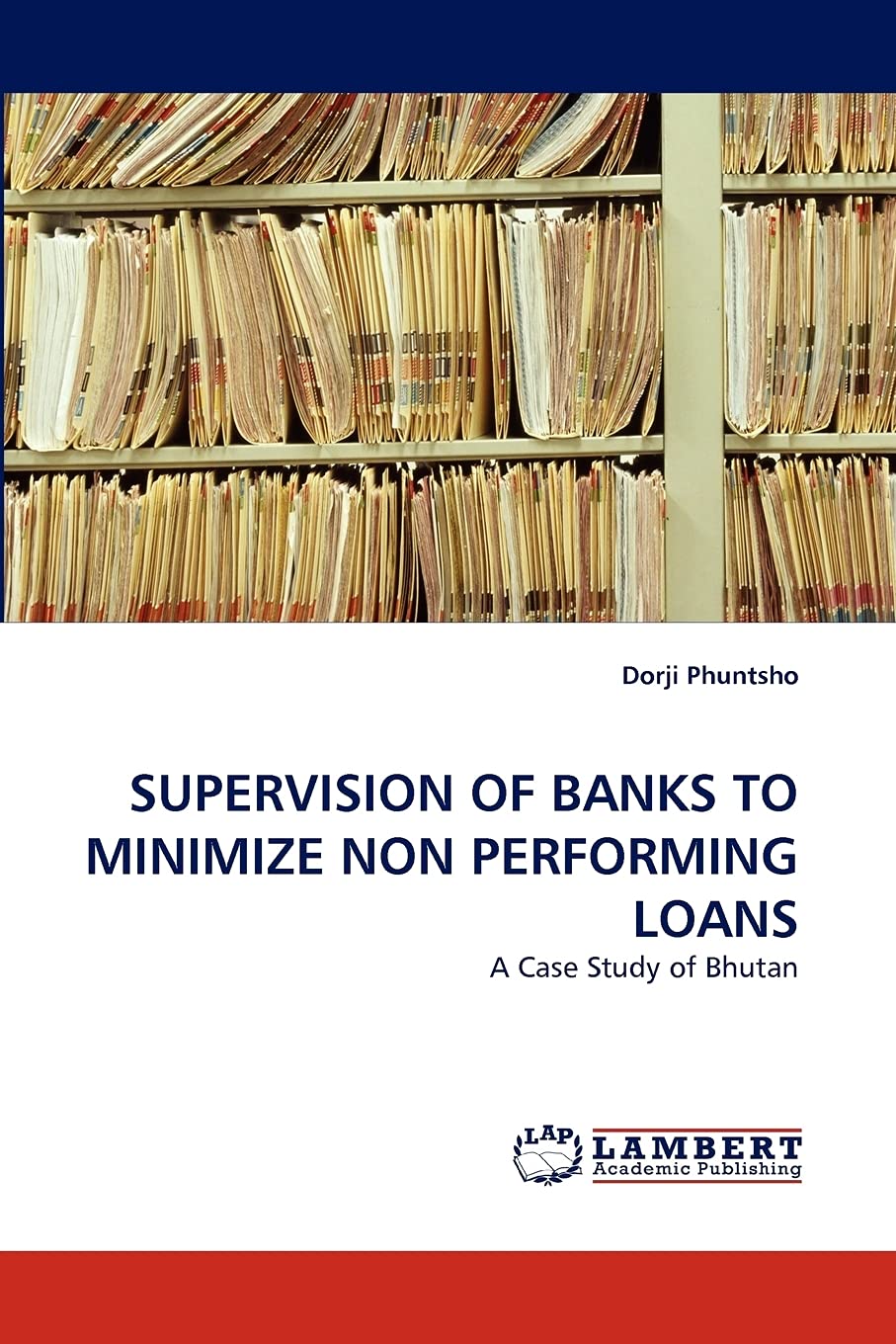
Banks face various risks due to the dynamic nature of the modern financial markets and these risks prohibit the banks to operate to its optimum. One such risk is credit risk that includes default and portfolio risk. The total loans and advances form a major chunk of banks' assets, and failure to maintain the quality of such assets has proven to be disastrous for the banks as well as to the economy. In long run the success of banking sector depend on how well the bank can manage the credit risk and maintain its quality of assets. Therefore, the extent of NonPerforming Loan (NPL) assumes critical importance for the overall stability of a bank. The level of NPL of a bank reflects the quality of assets, credit risk and efficiency in the allocation of financial resources for productive purposes. This paper establishes the nature and the extent of NPL in Bhutanese banks and analyze the causes of NPL and its consequences on the performances of the banks.
⚠️ WARNING (California Proposition 65):
This product may contain chemicals known to the State of California to cause cancer,
birth defects, or other reproductive harm.
For MAP (Minimum Advertised Price) violations and Intellectual Property (IP) or Trademark concerns, please contact:
support@ergodebooks.com
⚠️ California Proposition 65 Warning: Some products sold on this website may expose you to chemicals known to the State of California to cause cancer, birth defects, or other reproductive harm. For more information, visit www.P65Warnings.ca.gov.