
Title
Supplementary Education: The Hidden Curriculum of High Academic Achievement,Used
Sold by Ergodebooks, an authorized reseller.
Returns accepted within 30 days | support@ergodebooks.com
Shipping Information
- Free Standard Shipping — United States only
- Processing Time: 3–5 business days
- Estimated Delivery: 6–10 business days after dispatch
- Double-boxed, fully insured & discreetly packaged
- Tracking number sent via email once dispatched
Returns & Refund
Returns accepted within 30 days of delivery.
Damaged or Defective Item
Free return shipping + replacement or full refund
Wrong Item Received
Free return shipping + replacement or full refund
Change of Mind
Return shipping at customer's expense · 25% restocking fee applies
Payment Option

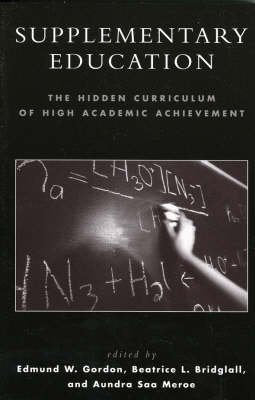
In Supplementary Education, the editors argue that while access to schools that enable and expect academic achievement is a necessary ingredient for the education of students, schools alone may not be sufficient to ensure universally high levels of academic development. Supplemental educational experiences may also be needed. The idea of supplementary education is based on the assumption that high academic achievement is closely associated with exposure to family and communitybased activities and learning experiences that occur both in and out of school in support of academic learning. For low income and some ethnic minority student groups, opportunities to participate in such activities are generally underresourced and underutilized in comparison to the access to and participation in such activities by many European and Asian Americans from mid to high socioeconomic backgrounds. This book makes the case for supplementary education. Specifically, it focuses on the need for universal access to high levels of academic achievement, and the challenge of reducing the 'achievement gap' that exists between Asian American and European American students and their African American, Latina/o, and Native American counterparts. Having posed the problem, the editors define the construct and provide indepth descriptions of some of the more colloquial expressions of supplementation in after school care, youth development, and other forms of supplemental education. The editors close with a discussion of the emerging institutionalization and need for more thoughtful and rigorous research of the supplementary education movement.
⚠️ WARNING (California Proposition 65):
This product may contain chemicals known to the State of California to cause cancer, birth defects, or other reproductive harm.
For more information, please visit www.P65Warnings.ca.gov.