
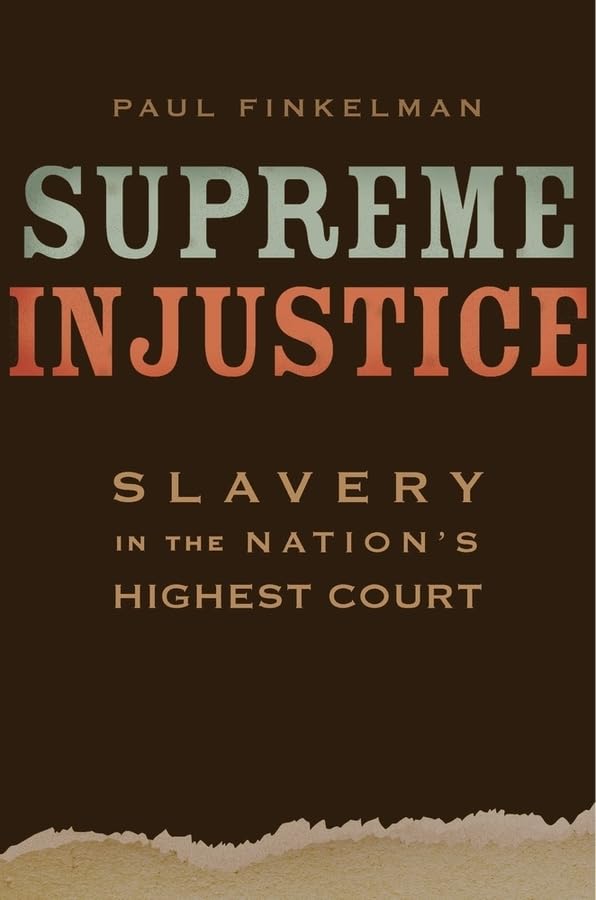
Title
Supreme Injustice: Slavery In The Nations Highest Court (The Nathan I. Huggins Lectures),New
Sold by Ergodebooks, an authorized reseller.
Returns accepted within 30 days | support@ergodebooks.com
Shipping Information
- Free Standard Shipping — United States only
- Processing Time: 3–5 business days
- Estimated Delivery: 6–10 business days after dispatch
- Double-boxed, fully insured & discreetly packaged
- Tracking number sent via email once dispatched
Returns & Refund
Returns accepted within 30 days of delivery.
Damaged or Defective Item
Free return shipping + replacement or full refund
Wrong Item Received
Free return shipping + replacement or full refund
Change of Mind
Return shipping at customer's expense · 25% restocking fee applies
Payment Option

The Three Most Important Supreme Court Justices Before The Civil Warchief Justices John Marshall And Roger B. Taney And Associate Justice Joseph Storyupheld The Institution Of Slavery In Ruling After Ruling. These Opinions Cast A Shadow Over The Court And The Legacies Of These Men, But Historians Have Rarely Delved Deeply Into The Personal And Political Ideas And Motivations They Held. In Supreme Injustice, The Distinguished Legal Historian Paul Finkelman Establishes An Authoritative Account Of Each Justices Proslavery Position, The Reasoning Behind His Opposition To Black Freedom, And The Incentives Created By Circumstances In His Private Life.Finkelman Uses Census Data And Other Sources To Reveal That Justice Marshall Aggressively Bought And Sold Slaves Throughout His Lifetimea Fact That Biographers Have Ignored. Justice Story Never Owned Slaves And Condemned Slavery While Riding Circuit, And Yet On The High Court He Remained Silent On Slave Trade Cases And Ruled Against Blacks Who Sued For Freedom. Although Justice Taney Freed Many Of His Own Slaves, He Zealously And Consistently Opposed Black Freedom, Arguing In Dred Scott That Free Blacks Had No Constitutional Rights And That Slave Owners Could Move Slaves Into The Western Territories. Finkelman Situates This Infamous Holding Within A Solid Record Of Support For Slavery And Hostility To Free Blacks.Supreme Injustice Boldly Documents The Entanglements That Alienated Three Major Justices From Americas Founding Ideals And Embedded Racism Ever Deeper In American Civic Life.
⚠️ WARNING (California Proposition 65):
This product may contain chemicals known to the State of California to cause cancer, birth defects, or other reproductive harm.
For more information, please visit www.P65Warnings.ca.gov.
- Q: What is the page count of this book? A: This book contains three hundred four pages. It provides an in-depth exploration of slavery and the Supreme Court.
- Q: What are the dimensions of 'Supreme Injustice'? A: The dimensions of this book are five point five one inches in length, one point one inches in width, and eight point two seven inches in height.
- Q: What type of binding does this book have? A: This book is bound in hardcover. This makes it durable for repeated reading and adds to its aesthetic appeal.
- Q: How do I read 'Supreme Injustice'? A: To read this book, simply open it up and begin from the first page. It is suitable for anyone interested in legal history.
- Q: Is this book suitable for young readers? A: This book is not specifically designed for children. It addresses complex historical and legal topics that may be better suited for adults.
- Q: What themes does 'Supreme Injustice' cover? A: This book explores themes of slavery, legal history, and the moral failures of historical Supreme Court Justices. It challenges readers to reflect on America's founding ideals.
- Q: How should I store 'Supreme Injustice'? A: Store this book in a cool, dry place away from direct sunlight. This will help preserve the binding and pages over time.
- Q: Can I clean the cover of the book? A: Yes, you can wipe the cover with a soft, dry cloth. Avoid using any liquids that could damage the cover or pages.
- Q: What do I do if the book arrives damaged? A: If the book arrives damaged, contact the retailer for their return policy. Most retailers offer replacements or refunds for damaged items.
- Q: Is there a warranty for this book? A: Typically, there is no warranty for books. However, check with the retailer for their specific return or exchange policies.
- Q: How does 'Supreme Injustice' compare to other historical books? A: This book offers a unique perspective on the Supreme Court's role in slavery, setting it apart from general history books that may not focus on legal aspects.
- Q: Is this book appropriate for academic use? A: Yes, this book is appropriate for academic use. It provides substantial research and historical context relevant to studies in law and history.
- Q: What age group is this book intended for? A: This book is intended for adults and serious students of history, particularly those over eighteen years old.
- Q: What if I have questions about the book's content? A: If you have questions, consider looking for a study guide or discussion group. Engaging with others can deepen your understanding.
- Q: How can I find more books like 'Supreme Injustice'? A: To find similar books, check with your local bookstore or library for recommendations in the legal history genre.