If you have any questions, you are always welcome to contact us. We'll get back to you as soon as possible, withing 24 hours on weekdays.
Customer service
All questions about your order, return and delivery must be sent to our customer service team by e-mail at yourstore@yourdomain.com
Sale & Press
If you are interested in selling our products, need more information about our brand or wish to make a collaboration, please contact us at press@yourdomain.com
Help
If you have any questions, you are always welcome to contact us. We'll get back to you as soon as possible, withing 24 hours on weekdays.
Customer service
All questions about your order, return and delivery must be sent to our customer service team by e-mail at yourstore@yourdomain.com
Sale & Press
If you are interested in selling our products, need more information about our brand or wish to make a collaboration, please contact us at press@yourdomain.com
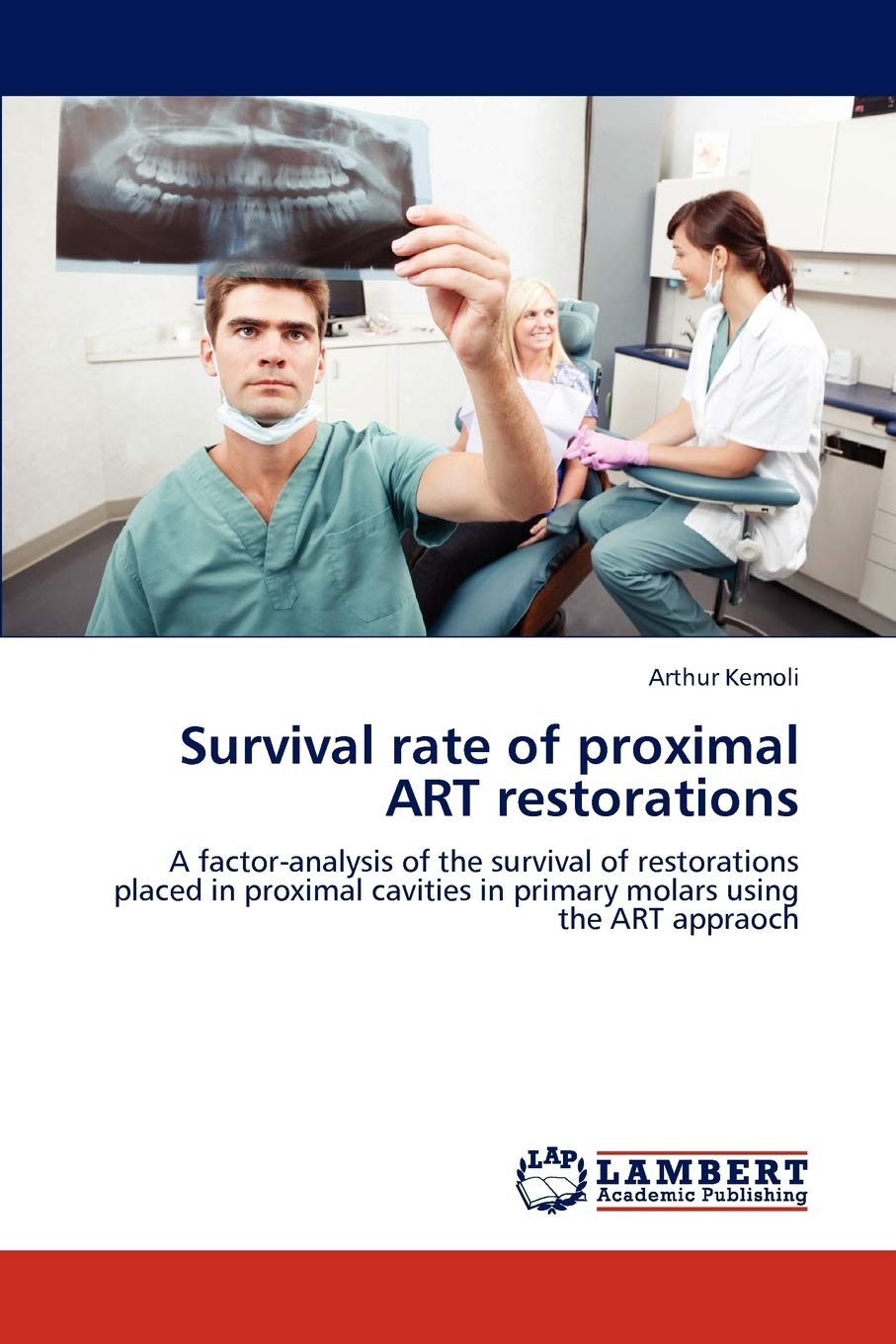
Dental caries has been on the increase in many developing nations and even in the poor communities in the developed nations. Dental restorations have been used to manage dental caries, especially, in their early cavitation stages of its development. Atraumatic restorative treatment (ART) has been used as an alternative treatment approach for dental caries in areas where traditional dental treatment is lacking as a result of economic difficulties. Restorations placed in singlesurface dental cavities using this ART approach, have been found to have good survival rates in the short to medium term. However, the survival of restorations placed in multisurface cavities using the same method has been poor. It is important to establish the factors behind the poor survival of these multisurface restorations, and to use the results of such findings to improve on their survival. This monograph discusses some of the factors influencing the survival rate of proximal ART restorations (example of multisurface restorations) placed in primary molars.
⚠️ WARNING (California Proposition 65):
This product may contain chemicals known to the State of California to cause cancer,
birth defects, or other reproductive harm.
For MAP (Minimum Advertised Price) violations and Intellectual Property (IP) or Trademark concerns, please contact:
support@ergodebooks.com
⚠️ California Proposition 65 Warning: Some products sold on this website may expose you to chemicals known to the State of California to cause cancer, birth defects, or other reproductive harm. For more information, visit www.P65Warnings.ca.gov.