
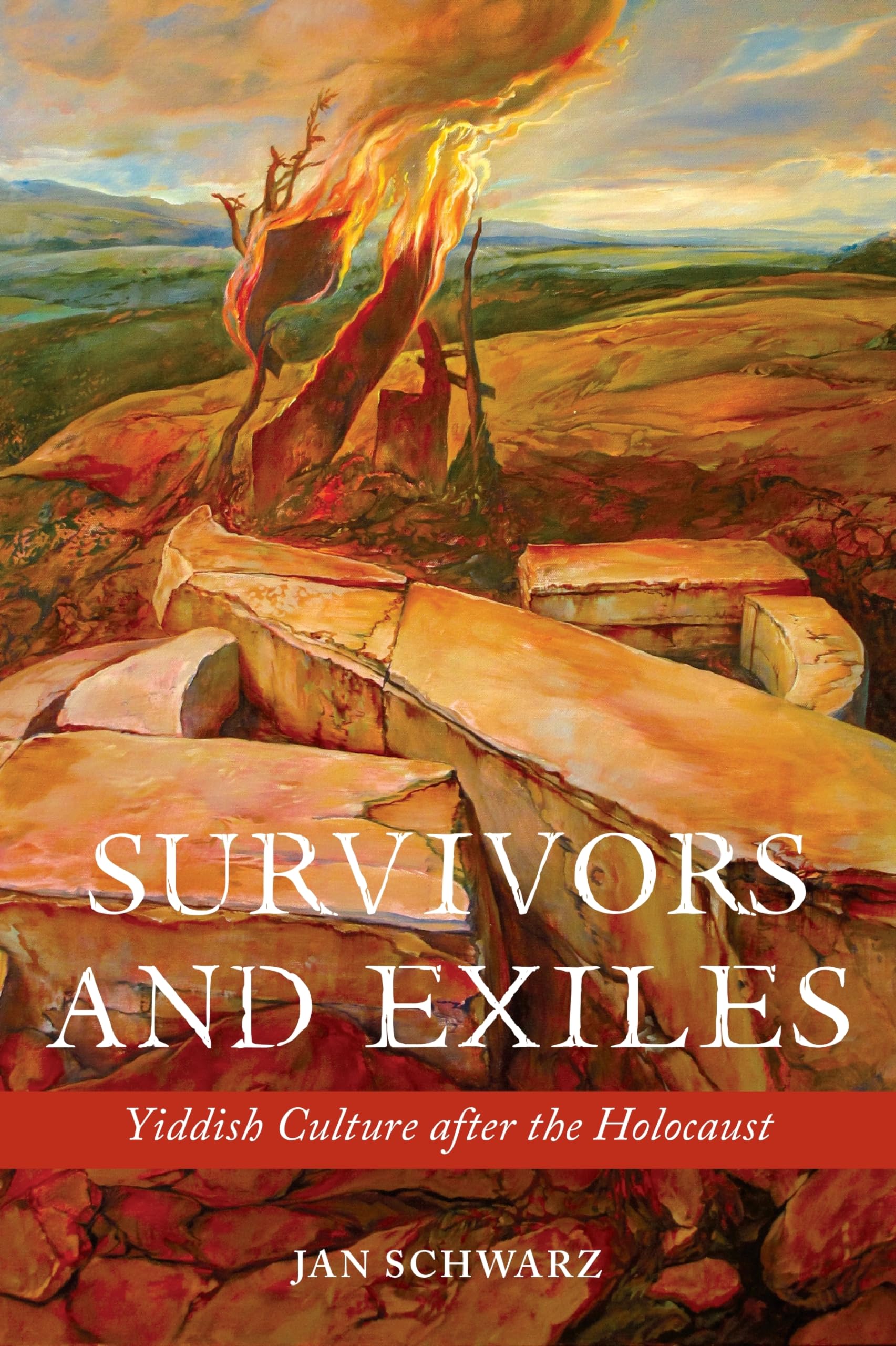
Title
Survivors And Exiles: Yiddish Culture After The Holocaust (Title Not In Series),Used
Sold by Ergodebooks, an authorized reseller.
Returns accepted within 30 days | support@ergodebooks.com
Shipping Information
- Free Standard Shipping — United States only
- Processing Time: 3–5 business days
- Estimated Delivery: 6–10 business days after dispatch
- Double-boxed, fully insured & discreetly packaged
- Tracking number sent via email once dispatched
Returns & Refund
Returns accepted within 30 days of delivery.
Damaged or Defective Item
Free return shipping + replacement or full refund
Wrong Item Received
Free return shipping + replacement or full refund
Change of Mind
Return shipping at customer's expense · 25% restocking fee applies
Payment Option

After the Holocaust's near complete destruction of European Yiddish cultural centers, the Yiddish language was largely viewed as a remnant of the past, tragically eradicated in its prime. In Survivors and Exiles: Yiddish Culture after the Holocaust, Jan Schwarz reveals that, on the contrary, Yiddish culture in the two and a half decades after the Holocaust was in dynamic flux. Yiddish writers and cultural organizations maintained a staggering level of activity in fostering publications and performances, collecting archival and historical materials, and launching young literary talents.Schwarz traces the transition from the Old World to the New through the works of seven major Yiddish writersincluding wellknown figures (Isaac Bashevis Singer, Avrom Sutzkever, Yankev Glatshteyn, and Chaim Grade) and some who are less well known (Leib Rochman, Aaron Zeitlin, and Chava Rosenfarb). The first section, Ground Zero, presents writings forged by the crucible of ghettos and concentration camps in Vilna, Lodz, and MinskMazowiecki. Subsequent sections, Transnational Ashkenaz and Yiddish Letters in New York, examine Yiddish culture behind the Iron Curtain, in Israel and the Americas. Two appendixes list Yiddish publications in the book series Dos poylishe yidntum (published in Buenos Aires, 194666) and offer transliterations of Yiddish quotes.Survivors and Exiles charts a transnational postHolocaust network in which the conflicting trends of fragmentation and globalization provided a context for Yiddish literature and artworks of great originality. Schwarz includes a wealth of examples and illustrations from the works under discussion, as well as photographs of creators, making this volume not only a critical commentary on Yiddish culture but also an anthology of sorts. Readers interested in Yiddish studies, Holocaust studies, and modern Jewish studies will find Survivors and Exiles a compelling contribution to these fields.
⚠️ WARNING (California Proposition 65):
This product may contain chemicals known to the State of California to cause cancer, birth defects, or other reproductive harm.
For more information, please visit www.P65Warnings.ca.gov.