
Title
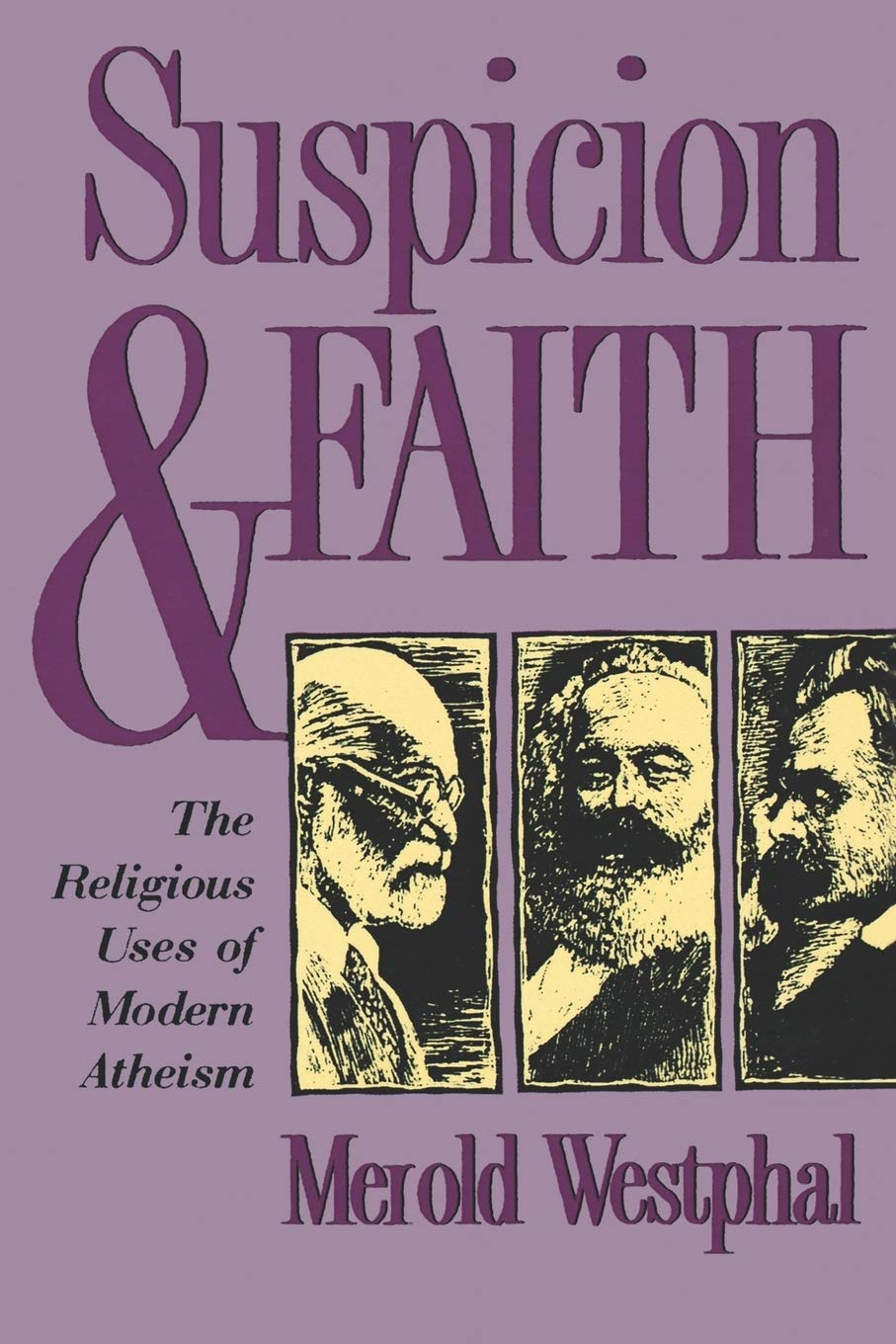
Suspicion and Faith: The Religious Uses of Modern Atheism,Used
Sold by Ergodebooks, an authorized reseller.
Returns accepted within 30 days | support@ergodebooks.com
Shipping Information
- Free Standard Shipping — United States only
- Processing Time: 3–5 business days
- Estimated Delivery: 6–10 business days after dispatch
- Double-boxed, fully insured & discreetly packaged
- Tracking number sent via email once dispatched
Returns & Refund
Returns accepted within 30 days of delivery.
Damaged or Defective Item
Free return shipping + replacement or full refund
Wrong Item Received
Free return shipping + replacement or full refund
Change of Mind
Return shipping at customer's expense · 25% restocking fee applies
Payment Option

Marx, Nietzche, and Freud are among the most influential of modern atheists. The distinctive feature of their challenge to theistic and specifically Christian belief is expressed by Paul Ricoeur when he calls them the "masters of suspicion." While skepticism directs its critique to the truth or evidential basis of belief, suspicion asks two different, intimately intertwined questions: what are the motives that lead to this belief? and what function does it play, what work does it do for the individuals and communities that adopt it.What suspicion suspects is that the survival value of religious beliefs depends on satisfying desires and interests that the believing soul and the believing community are not eager to acknowledge because they violate the values they profess, as when, for example, talk about justice is a mask for deepseated resentment and the desire for revenge. For this reason, the hermeneutics of suspicion is a theory, or group of theories, of selfdeception: ideology critique in Marx, genealogy in Nietzsche, and psychoanalysis in Freud.Suspicion and Faith argues that the appropriate religious response ("the religious uses of modern atheism") to these critiques is not to try to refute or deflect them, but rather to acknowledge their force in a process of selfexamination.
⚠️ WARNING (California Proposition 65):
This product may contain chemicals known to the State of California to cause cancer, birth defects, or other reproductive harm.
For more information, please visit www.P65Warnings.ca.gov.
- Q: What is the page count of this book? A: This book has two hundred ninety-six pages. It provides an in-depth exploration of modern atheism and its religious implications.
- Q: What are the dimensions of this book? A: The book measures five point nine one inches in length, one inch in width, and nine point zero two inches in height. These dimensions make it suitable for easy handling and reading.
- Q: What is the binding type of this book? A: The book is available in paperback binding. This makes it lightweight and flexible for reading.
- Q: Who is the author of this book? A: The author of the book is Merold Westphal. He delves into the intersections of faith and skepticism.
- Q: What is the genre of this book? A: This book falls under the genre of Christianity. It examines themes of belief, skepticism, and self-examination.
- Q: Is this book suitable for college courses? A: Yes, this book is suitable for college courses. It addresses complex philosophical ideas that are often discussed in higher education.
- Q: How do I read this book on an e-reader? A: You can read this book on an e-reader that supports reflowable text. This format ensures optimal viewing on various devices.
- Q: Is there any specific audience this book targets? A: This book primarily targets individuals interested in philosophy and theology. It is ideal for those seeking deeper understanding of faith and atheism.
- Q: What themes does this book explore? A: The book explores themes of skepticism, self-deception, and the motives behind belief. It engages with the critiques of modern atheism.
- Q: How do I care for this paperback book? A: To care for this paperback book, keep it in a cool, dry place and avoid exposure to direct sunlight. This will help maintain its condition.
- Q: Can this book be used for group discussions? A: Yes, this book can be used for group discussions. Its thought-provoking content encourages dialogue around faith and skepticism.
- Q: What should I do if I receive a damaged copy? A: If you receive a damaged copy, you should contact customer service for a replacement or refund. Ensure you have your order details ready.
- Q: Is this book recommended for beginners in philosophy? A: Yes, this book can be recommended for beginners in philosophy. It provides insights into complex ideas in an accessible manner.
- Q: How often should I read this book to fully understand it? A: Reading this book multiple times will enhance understanding. Engaging with the material over several weeks is advisable.
- Q: Are there any other works by the same author? A: Yes, Merold Westphal has authored several other works on philosophy and theology. His writings often explore similar themes.