
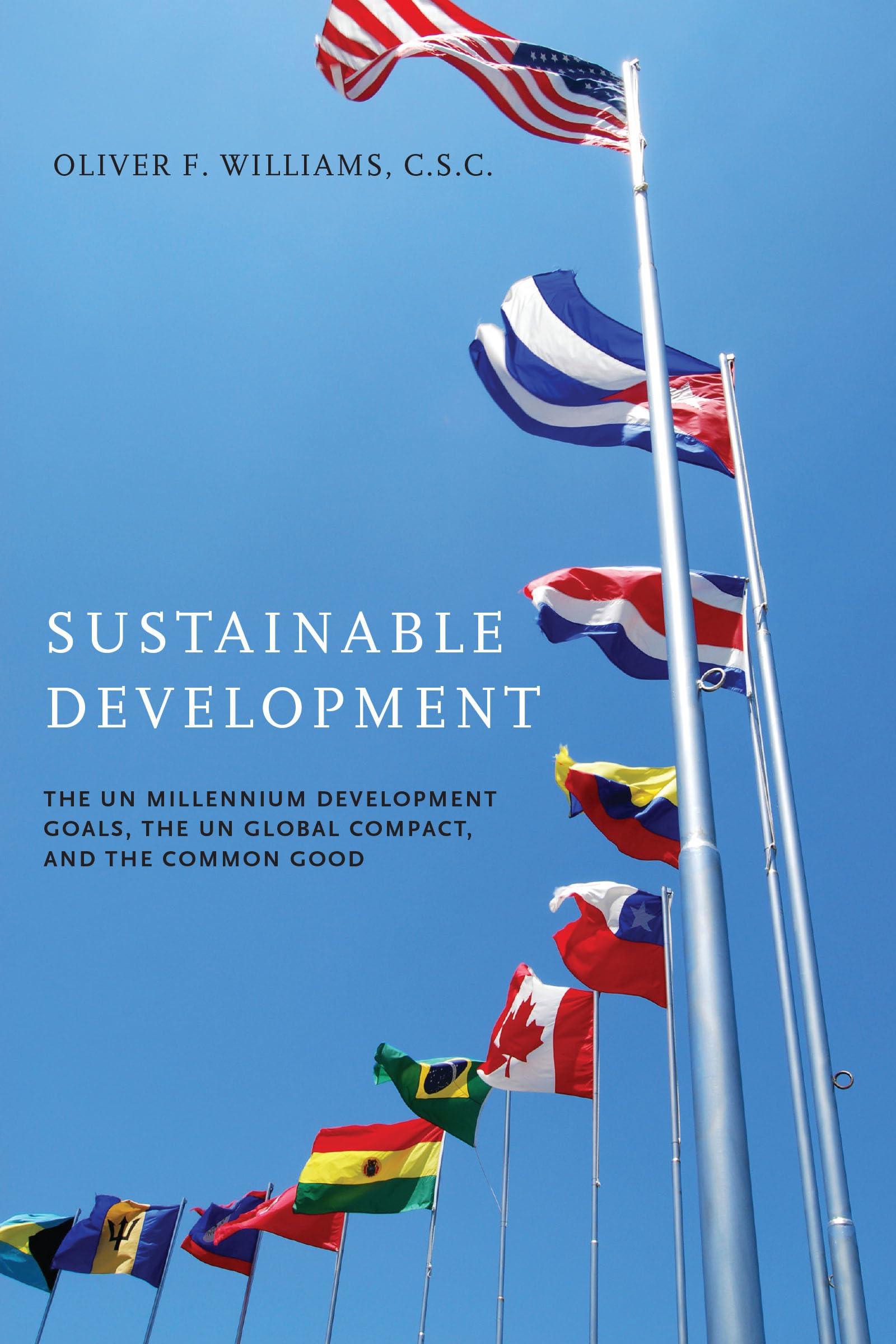
Title
Sustainable Development: The UN Millennium Development Goals, the UN Global Compact, and the Common Good (John W. Houck Notre Da,New
Sold by Ergodebooks, an authorized reseller.
Returns accepted within 30 days | support@ergodebooks.com
Shipping Information
- Free Standard Shipping — United States only
- Processing Time: 3–5 business days
- Estimated Delivery: 6–10 business days after dispatch
- Double-boxed, fully insured & discreetly packaged
- Tracking number sent via email once dispatched
Returns & Refund
Returns accepted within 30 days of delivery.
Damaged or Defective Item
Free return shipping + replacement or full refund
Wrong Item Received
Free return shipping + replacement or full refund
Change of Mind
Return shipping at customer's expense · 25% restocking fee applies
Payment Option

For business to flourish, society must flourish. In today's global economy, business serves the common good not only by producing goods and services but also by reaching out to the many who are not even in the market because they lack marketable skills and the resources to acquire them. Sustainable Development: The UN Millennium Development Goals, the UN Global Compact, and the Common Good contains twentytwo essays that document the work of Western companies, working through the UN Global Compact and its Principles of Responsible Investment and the Principles for Responsible Management Education, to shape more peaceful and just societies. Seven case studies by leading businesses and privatepublic partnershipsincluding Microsoft, Merck, Sumitomo Chemical, Nestl, CocaCola, Novartis, and Levi Straussoutline their projects, especially those advancing the MDGs (Millennium Development Goals) designed to alleviate dire poverty. Twelve chapters reflect on some of the conceptual issues involved with the MDGs, and the three concluding essays examine the future of the UN Global Compact, of the Millennium Development Goals, and of the role of business enterprise in society.
⚠️ WARNING (California Proposition 65):
This product may contain chemicals known to the State of California to cause cancer, birth defects, or other reproductive harm.
For more information, please visit www.P65Warnings.ca.gov.
- Q: How many pages does this book have? A: This book contains four hundred twenty-one pages. It is a comprehensive exploration of sustainable development and business ethics.
- Q: What is the binding type of this book? A: The binding type is paperback. This makes it lightweight and easy to handle for readers.
- Q: What are the dimensions of this book? A: The dimensions are eight point nine five inches in length, six point one two inches in width, and zero point nine one inches in height. These dimensions make it portable for reading.
- Q: Is this book suitable for beginners in business ethics? A: Yes, this book is suitable for beginners. It introduces key concepts of sustainable development and business ethics through accessible essays and case studies.
- Q: What themes does this book cover? A: The book covers themes such as the UN Millennium Development Goals, corporate social responsibility, and the role of business in society. It combines theory with practical case studies.
- Q: Who is the author of this book? A: The author is Oliver F. Williams C.S.C. He is known for his work in business ethics and sustainable development.
- Q: How should I store this book to keep it in good condition? A: Store this book in a cool, dry place away from direct sunlight. This will help preserve the binding and pages.
- Q: Can this book be used as a reference for academic studies? A: Yes, this book can be used as a reference. It provides valuable insights and case studies relevant to business ethics and sustainable development.
- Q: Does this book include case studies from well-known companies? A: Yes, it includes case studies from leading companies like Microsoft, Coca-Cola, and Nestlé. These examples illustrate practical applications of the discussed concepts.
- Q: Is there a warranty or return policy for this book? A: Typically, books do not come with a warranty. However, check with the seller for their specific return policy if you encounter any issues.
- Q: What is the target audience for this book? A: The target audience includes students, professionals, and anyone interested in business ethics and sustainable development. It's suitable for a wide range of readers.
- Q: What kind of essays are included in this book? A: The book contains twenty-two essays that discuss various aspects of sustainable development and corporate responsibility. They provide a mix of theory and practice.
- Q: What is the significance of the UN Global Compact in this book? A: The UN Global Compact is significant as it serves as a framework for businesses to align their operations with universal principles. The book discusses its impact on corporate behavior.
- Q: How does this book address poverty alleviation? A: The book discusses various projects aimed at alleviating poverty, particularly through the lens of the Millennium Development Goals. It highlights successful corporate initiatives.
- Q: What is the main focus of the essays in this book? A: The main focus is on how businesses can contribute to the common good while achieving their goals. It explores the intersection of ethics and business practices.