If you have any questions, you are always welcome to contact us. We'll get back to you as soon as possible, withing 24 hours on weekdays.
Customer service
All questions about your order, return and delivery must be sent to our customer service team by e-mail at yourstore@yourdomain.com
Sale & Press
If you are interested in selling our products, need more information about our brand or wish to make a collaboration, please contact us at press@yourdomain.com
Help
If you have any questions, you are always welcome to contact us. We'll get back to you as soon as possible, withing 24 hours on weekdays.
Customer service
All questions about your order, return and delivery must be sent to our customer service team by e-mail at yourstore@yourdomain.com
Sale & Press
If you are interested in selling our products, need more information about our brand or wish to make a collaboration, please contact us at press@yourdomain.com
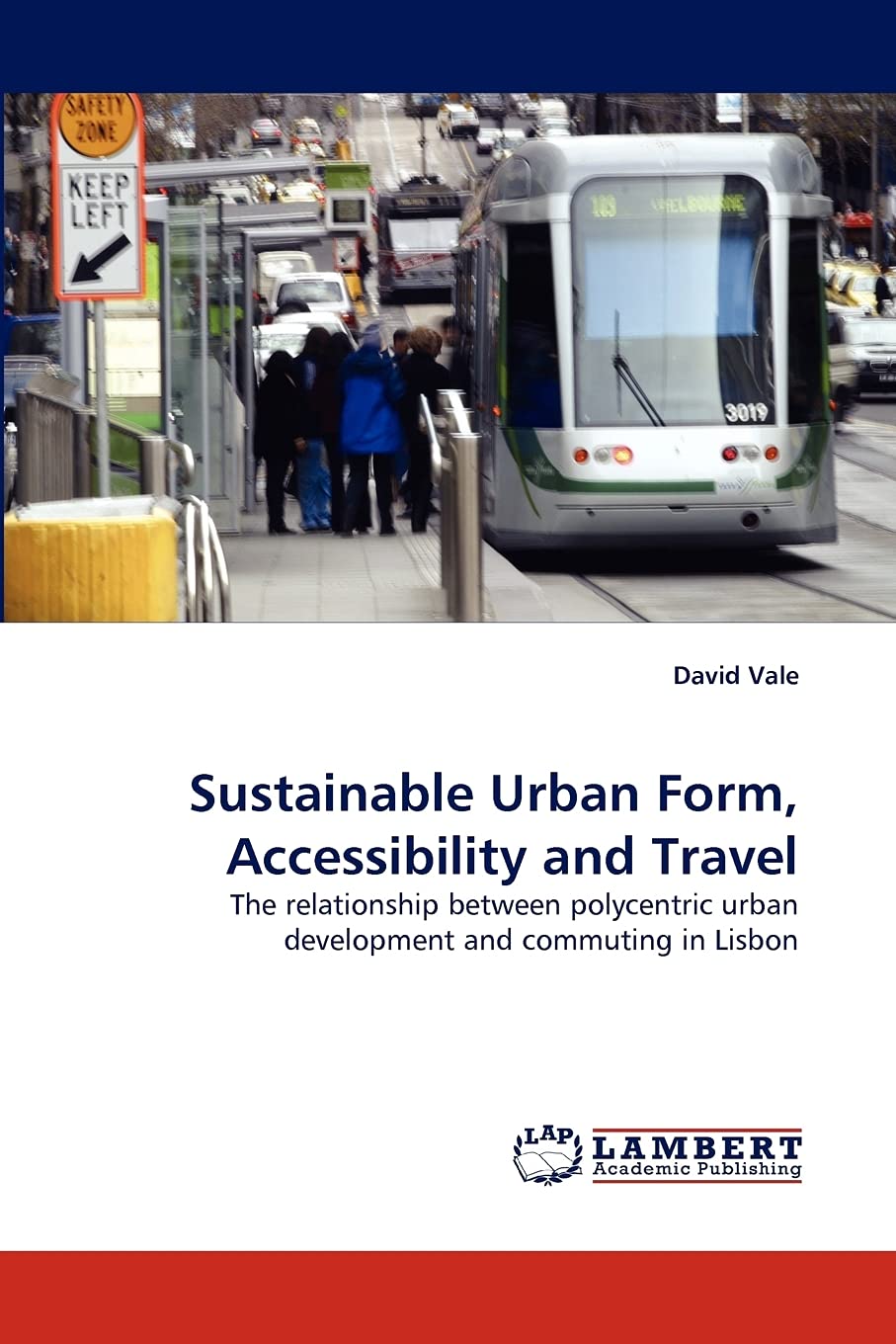
Cities around the world are implementing sustainable urban form policies to alter mobility patterns. In this book, we reframe these policies as ?multimodal accessible city' policies, emphasising accessibility as an important additional explanatory variable of travel behaviour. We focus our research on polycentric urban development policy, which can be seen as a feasible sustainable urban form policy to large cities and metropolitan areas. We found car commuting and public transport commuting to be phenomena explained by different variables, in which car commuting is mainly a socioeconomic driven phenomenon, while public transport commuting is mainly a landuse driven phenomenon. However, the analysis of commuting impacts resulting from the relocation of workers and residents points to a negligible commuting impact on residents, who are mainly car commuters, but a negative impact on the commuting patterns of workers, whose car usage has significantly increased as a result of the workplace relocation. Therefore, we argue that polycentric urban development is an important urban policy, but not sufficient, to achieve the desired sustainable commuting patterns.
⚠️ WARNING (California Proposition 65):
This product may contain chemicals known to the State of California to cause cancer,
birth defects, or other reproductive harm.
For MAP (Minimum Advertised Price) violations and Intellectual Property (IP) or Trademark concerns, please contact:
support@ergodebooks.com
⚠️ California Proposition 65 Warning: Some products sold on this website may expose you to chemicals known to the State of California to cause cancer, birth defects, or other reproductive harm. For more information, visit www.P65Warnings.ca.gov.