If you have any questions, you are always welcome to contact us. We'll get back to you as soon as possible, withing 24 hours on weekdays.
Customer service
All questions about your order, return and delivery must be sent to our customer service team by e-mail at yourstore@yourdomain.com
Sale & Press
If you are interested in selling our products, need more information about our brand or wish to make a collaboration, please contact us at press@yourdomain.com
Help
If you have any questions, you are always welcome to contact us. We'll get back to you as soon as possible, withing 24 hours on weekdays.
Customer service
All questions about your order, return and delivery must be sent to our customer service team by e-mail at yourstore@yourdomain.com
Sale & Press
If you are interested in selling our products, need more information about our brand or wish to make a collaboration, please contact us at press@yourdomain.com
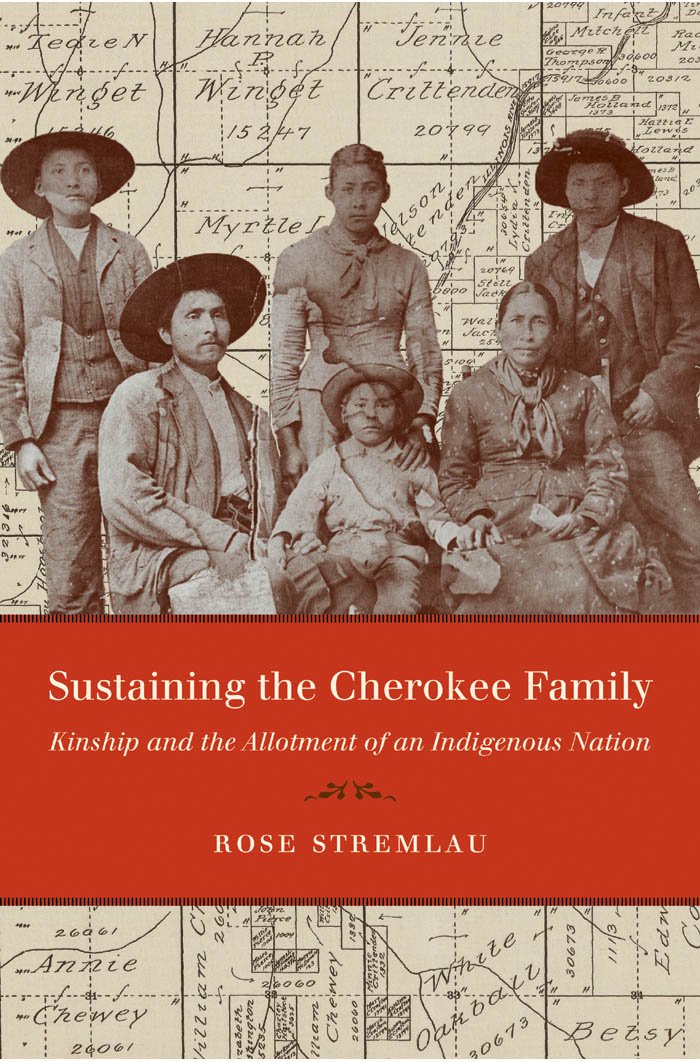
During the late nineteenth and early twentieth centuries, the federal government sought to forcibly assimilate Native Americans into American society through systematized land allotment. In Sustaining the Cherokee Family, Rose Stremlau illuminates the impact of this policy on the Cherokee Nation, particularly within individual families and communities in modernday northeastern Oklahoma.Emphasizing Cherokee agency, Stremlau reveals that Cherokee families' organization, cultural values, and social and economic practices allowed them to adapt to private land ownership by incorporating elements of the new system into existing domestic and communitybased economies. Drawing on evidence from a range of sources, including Cherokee and United States censuses, federal and tribal records, local newspapers, maps, county probate records, family histories, and contemporary oral histories, Stremlau demonstrates that Cherokee management of land perpetuated the values and behaviors associated with their sense of kinship, therefore uniting extended families. And, although the loss of access to land and communal resources slowly impoverished the region, it reinforced the Cherokees' interdependence. Stremlau argues that the persistence of extended family bonds allowed indigenous communities to retain a collective focus and resist aspects of federal assimilation policy during a period of great social upheaval.
⚠️ WARNING (California Proposition 65):
This product may contain chemicals known to the State of California to cause cancer,
birth defects, or other reproductive harm.
For MAP (Minimum Advertised Price) violations and Intellectual Property (IP) or Trademark concerns, please contact:
support@ergodebooks.com
⚠️ California Proposition 65 Warning: Some products sold on this website may expose you to chemicals known to the State of California to cause cancer, birth defects, or other reproductive harm. For more information, visit www.P65Warnings.ca.gov.