If you have any questions, you are always welcome to contact us. We'll get back to you as soon as possible, withing 24 hours on weekdays.
Customer service
All questions about your order, return and delivery must be sent to our customer service team by e-mail at yourstore@yourdomain.com
Sale & Press
If you are interested in selling our products, need more information about our brand or wish to make a collaboration, please contact us at press@yourdomain.com
Help
If you have any questions, you are always welcome to contact us. We'll get back to you as soon as possible, withing 24 hours on weekdays.
Customer service
All questions about your order, return and delivery must be sent to our customer service team by e-mail at yourstore@yourdomain.com
Sale & Press
If you are interested in selling our products, need more information about our brand or wish to make a collaboration, please contact us at press@yourdomain.com
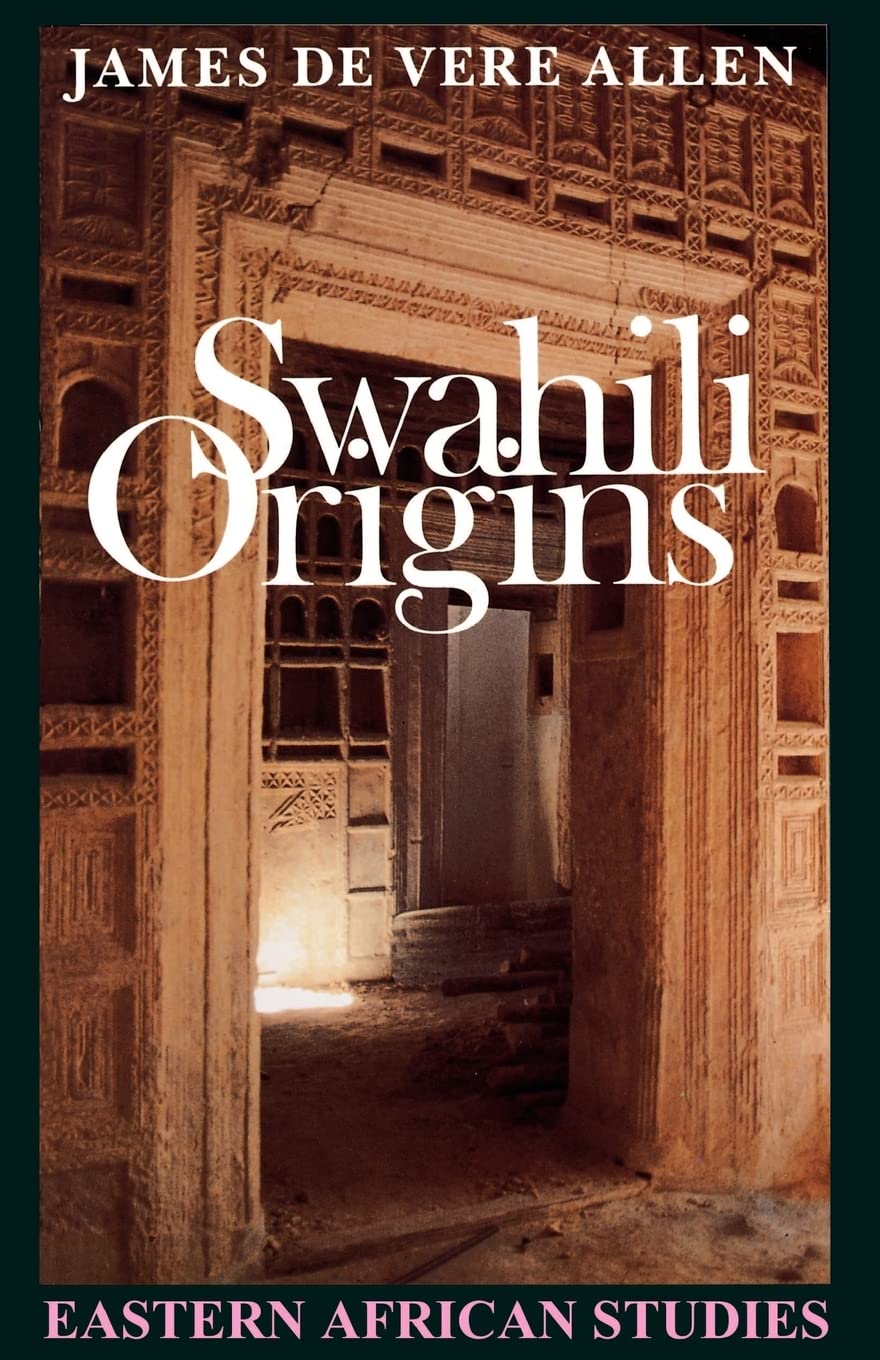
Kiswahili has become the lingua franca of eastern Africa. Yet there can be few historic peoples whose identity is as elusive as that of the Swahili. Some have described themselves as Arabs, as Persians or even, in one place, as Portuguese. It is doubtful whether, even today, most of the people about whom this book is written would unhesitatingly and in all contexts accept the name Swahili.This book was central to the thought and lifework of the late James de Vere Allen. It is his major study of the origin of the Swahili and of their cultural identity. He focuses on how the African element in their cultural patrimony was first modified by Islam and later changed until many Swahili themselves lost sight of it.They share a language and they share a culture. Their territory stretches from the coast of southern Somalia to the Lamu archipelago in Kenya, to the Rovuma River in modern Mozambique and out into the islands of the Indian Ocean. But they lack a shared historical experience.James de Vere Allen, in this study of contentious originality, set out to give modern Swahili evidence of their shared history during a period of eight centuries.
⚠️ WARNING (California Proposition 65):
This product may contain chemicals known to the State of California to cause cancer,
birth defects, or other reproductive harm.
For MAP (Minimum Advertised Price) violations and Intellectual Property (IP) or Trademark concerns, please contact:
support@ergodebooks.com
⚠️ California Proposition 65 Warning: Some products sold on this website may expose you to chemicals known to the State of California to cause cancer, birth defects, or other reproductive harm. For more information, visit www.P65Warnings.ca.gov.