
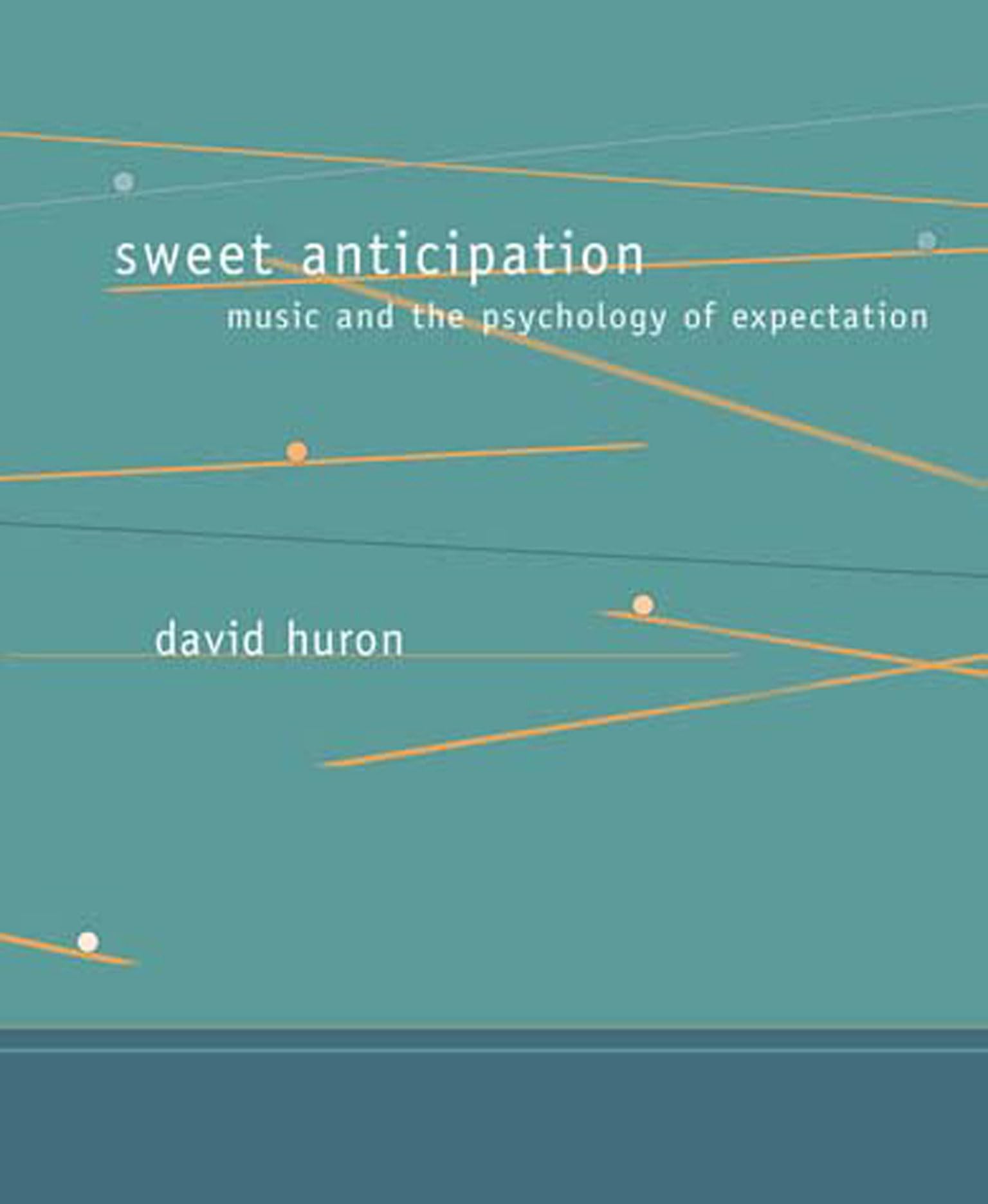
Title
Sweet Anticipation: Music and the Psychology of Expectation (Bradford Books),Used
Sold by Ergodebooks, an authorized reseller.
Returns accepted within 30 days | support@ergodebooks.com
Shipping Information
- Free Standard Shipping — United States only
- Processing Time: 3–5 business days
- Estimated Delivery: 6–10 business days after dispatch
- Double-boxed, fully insured & discreetly packaged
- Tracking number sent via email once dispatched
Returns & Refund
Returns accepted within 30 days of delivery.
Damaged or Defective Item
Free return shipping + replacement or full refund
Wrong Item Received
Free return shipping + replacement or full refund
Change of Mind
Return shipping at customer's expense · 25% restocking fee applies
Payment Option

The psychological theory of expectation that David Huron proposes in Sweet Anticipation grew out of the author's experimental efforts to understand how music evokes emotions. These efforts evolved into a general theory of expectation that will prove informative to readers interested in cognitive science and evolutionary psychology as well as those interested in music. The book describes a set of psychological mechanisms and illustrates how these mechanisms work in the case of music. All examples of notated music can be heard on the Web.Huron proposes that emotions evoked by expectation involve five functionally distinct response systems: reaction responses (which engage defensive reflexes); tension responses (where uncertainty leads to stress); prediction responses (which reward accurate prediction); imagination responses (which facilitate deferred gratification); and appraisal responses (which occur after conscious thought is engaged). For realworld events, these five response systems typically produce a complex mixture of feelings. The book identifies some of the aesthetic possibilities afforded by expectation, and shows how common musical devices (such as syncopation, cadence, meter, tonality, and climax) exploit the psychological opportunities. The theory also provides new insights into the physiological psychology of awe, laughter, and spinetingling chills. Huron traces the psychology of expectations from the patterns of the physical/cultural world through imperfectly learned heuristics used to predict that world to the phenomenal qualia we experienced as we apprehend the world.
⚠️ WARNING (California Proposition 65):
This product may contain chemicals known to the State of California to cause cancer, birth defects, or other reproductive harm.
For more information, please visit www.P65Warnings.ca.gov.
- Q: How many pages does this book have? A: This book has four hundred seventy-four pages. It provides an in-depth exploration of music and psychology.
- Q: What is the size of the book? A: The book measures seven inches by nine inches and is zero point eight eight inches thick. Its dimensions make it easy to handle.
- Q: What type of binding does this book have? A: This book is paperback bound. This binding offers flexibility and makes it lightweight for easy reading.
- Q: Who is the author of this book? A: The author of this book is David Huron. He is known for his research in music psychology.
- Q: What is the main subject of this book? A: The main subject is the psychology of expectation in music. It explores how music evokes emotions based on psychological theories.
- Q: What genres does this book belong to? A: This book belongs to the History and Criticism genre. It is ideal for readers interested in cognitive science and music.
- Q: How can I apply the theories discussed in this book? A: You can apply the theories by analyzing musical pieces through the lens of expectation. It offers insights on emotional responses to music.
- Q: Is this book suitable for beginners? A: Yes, this book is suitable for beginners. It explains complex psychological concepts in an accessible manner.
- Q: What age group is this book appropriate for? A: This book is appropriate for adults and college students. It delves into advanced topics in psychology and music.
- Q: How should I store this book? A: Store this book in a dry, cool place away from direct sunlight. This will help preserve the quality of the pages and binding.
- Q: Can I clean this book if it gets dirty? A: Yes, you can clean the book gently. Use a soft, dry cloth to wipe the cover and avoid using water or cleaners.
- Q: What should I do if the book arrives damaged? A: If the book arrives damaged, contact customer support for return instructions. They will guide you through the return process.
- Q: Is there a warranty on this book? A: No, there is typically no warranty on books. However, customer satisfaction policies may apply.
- Q: Are there any special features of this book? A: Yes, the book includes audio examples of music available online. This enhances understanding of the discussed concepts.
- Q: How does this book compare to other music psychology books? A: This book uniquely integrates cognitive science with music theory. It offers a comprehensive view of emotional responses not found in other texts.