If you have any questions, you are always welcome to contact us. We'll get back to you as soon as possible, withing 24 hours on weekdays.
Customer service
All questions about your order, return and delivery must be sent to our customer service team by e-mail at yourstore@yourdomain.com
Sale & Press
If you are interested in selling our products, need more information about our brand or wish to make a collaboration, please contact us at press@yourdomain.com
Help
If you have any questions, you are always welcome to contact us. We'll get back to you as soon as possible, withing 24 hours on weekdays.
Customer service
All questions about your order, return and delivery must be sent to our customer service team by e-mail at yourstore@yourdomain.com
Sale & Press
If you are interested in selling our products, need more information about our brand or wish to make a collaboration, please contact us at press@yourdomain.com
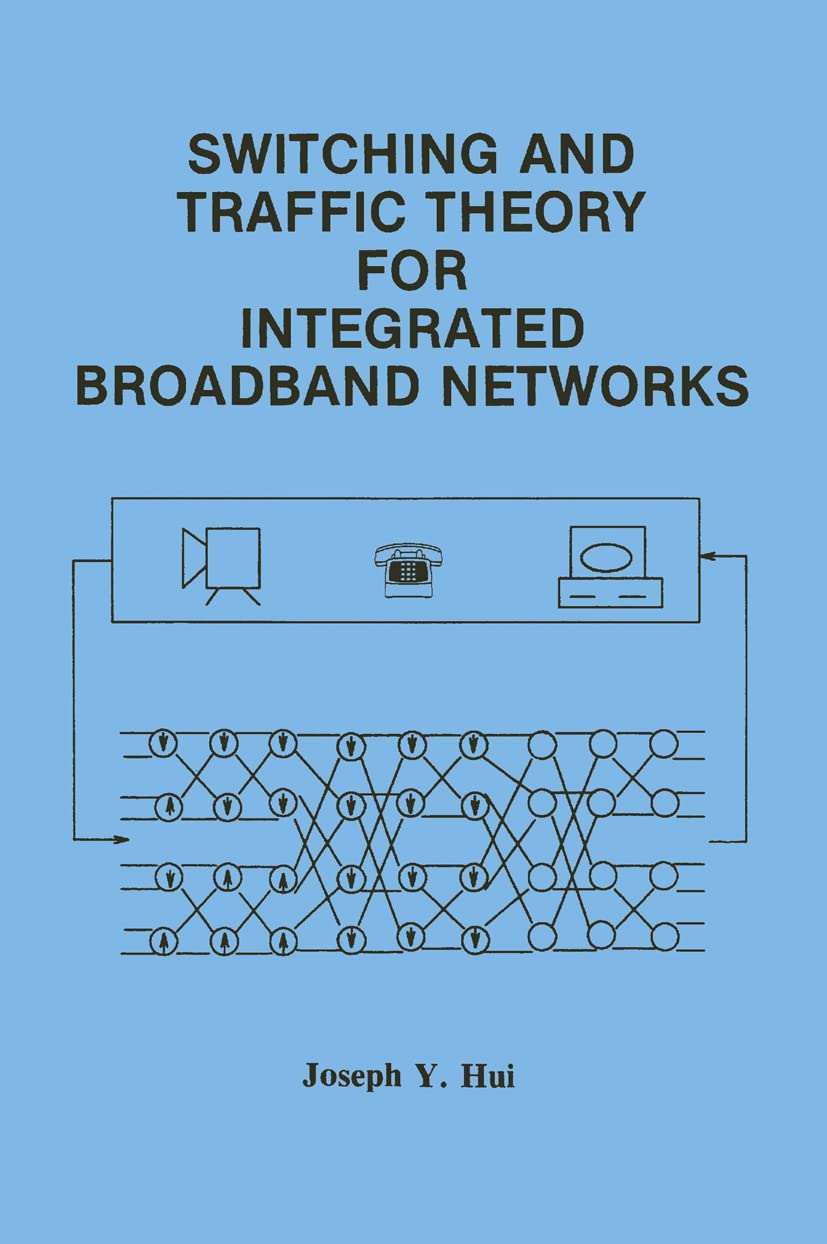
The Rapid Development Of Optical Fiber Transmission Technology Has Created The Possibility For Constructing Digital Networks That Are As Ubiquitous As The Current Voice Network But Which Can Carry Video, Voice, And Data In Massive Qljantities. How And When Such Networks Will Evolve, Who Will Pay For Them, And What New Applications Will Use Them Is Anyone'S Guess. There Appears To Be No Doubt, However, That The Trend In Telecommunication Networks Is Toward Far Greater Transmission Speeds And Toward Greater Heterogeneity In The Requirements Of Different Applications. This Book Treats Some Of The Central Problems Involved In These Networks Of The Future. First, How Does One Switch Data At Speeds Orders Of Magnitude Faster Than That Of Existing Networks? This Problem Has Roots In Both Classical Switching For Telephony And In Switching For Packet Networks. There Are A Number Of New Twists Here, However. The First Is That The High Speeds Necessitate The Use Of Highly Parallel Processing And Place A High Premium On Computational Simplicity. The Second Is That The Required Data Speeds And Allowable Delays Of Different Applications Differ By Many Orders Of Magnitude. The Third Is That It Might Be Desirable To Support Both Point To Point Applications And Also Applications Involving Broadcast From One Source To A Large Set Of Destinations.
⚠️ WARNING (California Proposition 65):
This product may contain chemicals known to the State of California to cause cancer,
birth defects, or other reproductive harm.
For MAP (Minimum Advertised Price) violations and Intellectual Property (IP) or Trademark concerns, please contact:
support@ergodebooks.com
⚠️ California Proposition 65 Warning: Some products sold on this website may expose you to chemicals known to the State of California to cause cancer, birth defects, or other reproductive harm. For more information, visit www.P65Warnings.ca.gov.